
Science
New Research Uncovers Origins of Moon’s Precursor Planet Theia

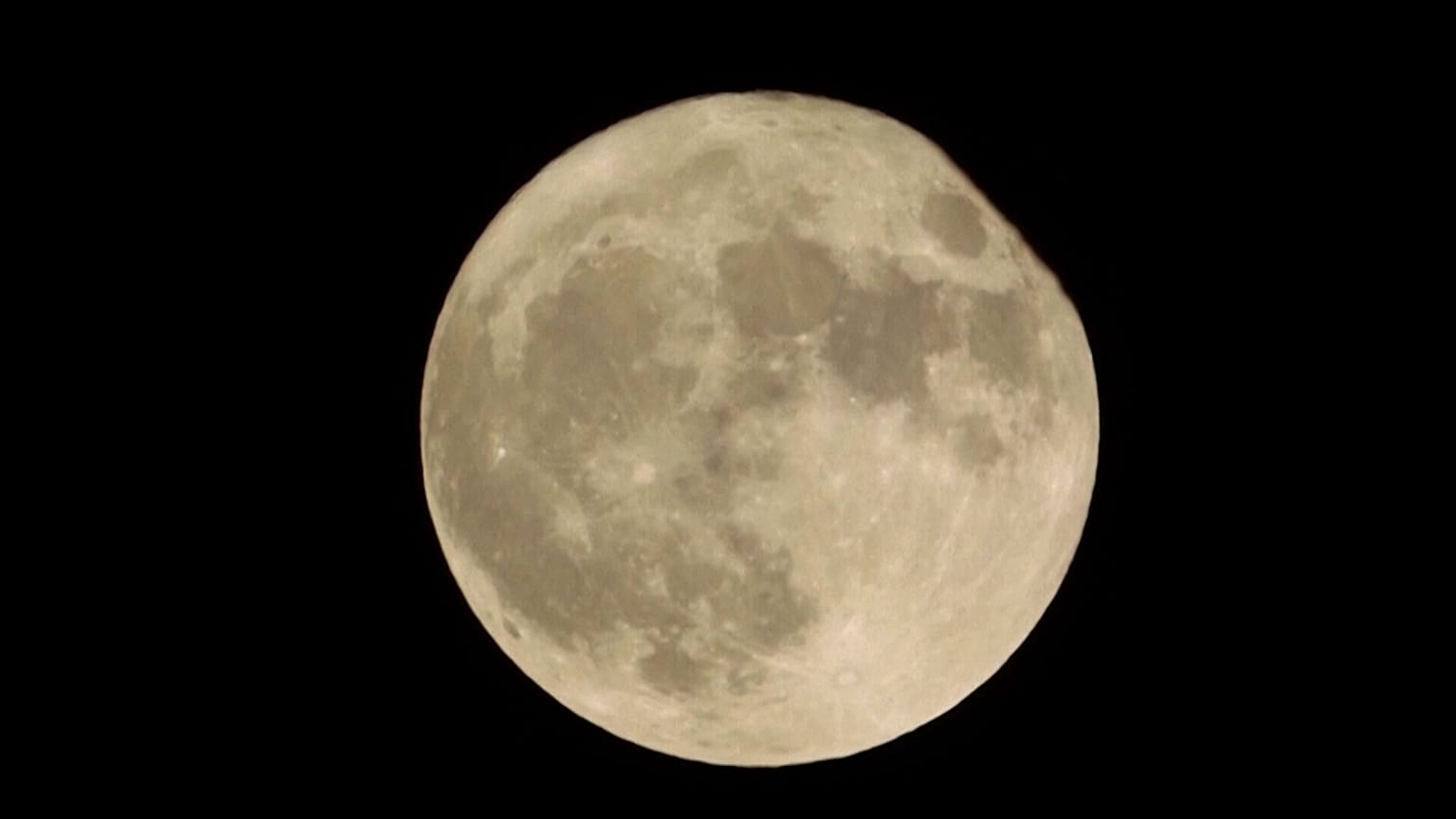
A recent study reveals that Theia, the long-lost planet believed to have played a crucial role in the formation of the Moon, likely originated much closer to the Sun than previously thought. This new insight comes from a collaborative effort by astronomers in France, Germany, and the United States, who have analyzed ancient lunar and terrestrial rocks to trace Theia’s origins.
For decades, the dominant theory regarding the Moon’s birth has been the giant impact hypothesis. This theory posits that around 4.5 billion years ago, Theia collided with the early Earth, resulting in debris that eventually formed the Moon. Despite extensive research, the exact origin and composition of Theia remain elusive due to the lack of direct chemical evidence.
New Insights Through Isotope Analysis
The research team utilized rock samples collected from both the Earth and the Moon, particularly those returned by the Apollo missions, to examine isotopes—chemical signatures that serve as fingerprints of the materials. While scientists had known that the metal isotope ratios in Earth and Moon rocks are nearly identical, this similarity posed a challenge in distinguishing between material from Earth and that from Theia.
Jake Foster, an astronomer at the Royal Observatory Greenwich in the UK, who was not involved in the study, highlighted the importance of the research: “One of the things about this research that does make it so exciting is not only is it helping to paint a picture of what happened to the Earth 4.5 billion years ago, but also it’s able to almost exactly pinpoint where this object came from.” He emphasized the significance of identifying a planet that has not existed for billions of years.
The research involved a process of planetary reverse engineering. By examining isotopes of iron, chromium, zirconium, and molybdenum, the team modeled hundreds of scenarios for the early Earth and Theia. They tested various combinations to see which could produce the identified isotope signatures.
Researchers discovered that materials formed closer to the Sun display distinct isotope patterns compared to those from the outer regions of the Solar System. By comparing these patterns, they concluded that Theia most likely originated in the inner Solar System, potentially even nearer to the Sun than Earth itself.
Implications for Planetary Formation Understanding
This finding challenges previous notions that Theia may have formed farther out in the Solar System. The implications of this research extend beyond the Moon’s formation; it may also enhance understanding of how planets develop, collide, and evolve in the early stages of a solar system.
As scientists continue to analyze the origins of celestial bodies, this groundbreaking study may pave the way for future research into planetary formation. The results underscore the complexity of our Solar System’s history and the ongoing quest to understand its evolution.
For more on this story, a video summary is available in the media player above.

Study Highlights Importance of Foot Health for Midlife Wellness

Save Money This Christmas with Creative Wrapping Ideas

Sarah Ferguson Faces New Living Arrangements at Daughter’s Home

European Project Releases Policy Brief to Protect Pollinators

Leny Yoro Receives Support from Manchester United Teammates

Crowd Jeers at Culture Minister’s Speech at Festival Opening

Kellogg’s Reduces Cereal Size but Keeps Prices Steady, Sparking Outrage

Daily Orange Juice May Enhance Heart Health and Longevity

Audience Disapproves of Minister’s Speech at “Jagoš Marković” Festival Opening

Neurologist Warns Excessive Use of Supplements Can Harm Brain

Fiona Phillips’ Husband Shares Heartfelt Update on Her Alzheimer’s Journey

Brian Cox Addresses Claims of Alien Probe in 3I/ATLAS Discovery

NASA Investigates Unusual Comet 3I/ATLAS; New Findings Emerge

Scientists Examine 3I/ATLAS: Alien Artifact or Cosmic Oddity?

NASA Investigates Speedy Object 3I/ATLAS, Sparking Speculation

Kerry Katona Discusses Future Baby Plans and Brian McFadden’s Wedding

Emmerdale Faces Tension as Dylan and April’s Lives Hang in the Balance

Cole Palmer’s Cryptic Message to Kobbie Mainoo Following Loan Talks
-
 Health3 months ago
Neurologist Warns Excessive Use of Supplements Can Harm Brain
-
 Health3 months ago
Fiona Phillips’ Husband Shares Heartfelt Update on Her Alzheimer’s Journey
-
 Science1 month ago
Brian Cox Addresses Claims of Alien Probe in 3I/ATLAS Discovery
-
 Science1 month ago
NASA Investigates Unusual Comet 3I/ATLAS; New Findings Emerge
-
 Science1 month ago
Scientists Examine 3I/ATLAS: Alien Artifact or Cosmic Oddity?
-
 Science1 month ago
NASA Investigates Speedy Object 3I/ATLAS, Sparking Speculation
-
 Entertainment5 months ago
Kerry Katona Discusses Future Baby Plans and Brian McFadden’s Wedding
-
 Entertainment4 months ago
Emmerdale Faces Tension as Dylan and April’s Lives Hang in the Balance
-
 World3 months ago
Cole Palmer’s Cryptic Message to Kobbie Mainoo Following Loan Talks
-
 Science1 month ago
NASA Scientists Explore Origins of 3I/ATLAS, a Fast-Moving Visitor
-

 Entertainment2 months ago
Lewis Cope Addresses Accusations of Dance Training Advantage
-

 Entertainment3 months ago
Major Cast Changes at Coronation Street: Exits and Returns in 2025