
Lifestyle
Religious Right’s Influence in UK Politics Raises Questions

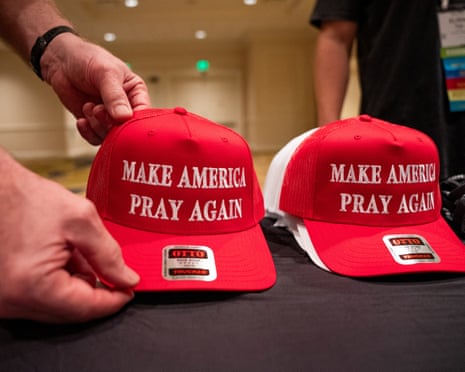
The rise of devout Christian figures within UK politics, particularly through the Reform UK party, has ignited discussions about the potential influence of the religious right in the country. Prominent among these figures are Danny Kruger, the party’s head of policy, and James Orr, a senior adviser to Nigel Farage. Both men, known for their distinctive appearances, share a commitment to their faith and hold conservative views on social issues such as abortion and family structure.
Kruger, who left the Conservative Party in September, and Orr, an academic from Cambridge, also serve on the advisory board of the Alliance for Responsible Citizenship. This rightwing think tank is led by Philippa Stroud, a Conservative peer with strong religious convictions. Another notable member is Paul Marshall, a hedge fund manager and owner of GB News and The Spectator, who is also a committed Christian.
The influence of religious conservatism has been deeply rooted in United States politics, with Protestant evangelism forming a critical support base for former President Donald Trump. Observers are now questioning whether the UK might be following a similar trajectory. Orr’s connections to figures like JD Vance and involvement in the National Conservatism movement further highlight these ties to American religious populism.
Despite these connections, significant differences remain between the two countries. Current polling indicates that while approximately 24% of adults in the United States identify as evangelicals, the figure in the UK is around 10%. Additionally, a recent survey conducted by the Evangelical Alliance (EA) provides insight into the political leanings of UK evangelicals. The poll, which included nearly 1,500 respondents, shows that the Labour Party leads with 26% support, followed closely by Reform UK and the Liberal Democrats at 20%, the Conservatives at 18%, and the Greens at 12%.
The EA’s Danny Webster, head of advocacy, notes that while UK evangelicals generally hold conservative views, their voting patterns may not always align with these beliefs. “Sometimes with evangelicals, there can be a dissonance between opinions on social issues and how people vote,” he explained. Many evangelicals, despite their strong views on issues like abortion, may prioritize economic concerns such as poverty when casting their votes.
Religious perspectives in UK politics are not restricted to the right. Figures like Tim Farron, former leader of the Liberal Democrats, and Rachael Maskell, a Labour MP, also represent the intersection of faith and politics from a left-leaning perspective. Maskell has been vocal about how her beliefs influence her stance on social justice issues, particularly concerning poverty.
There is a growing presence of a more aggressive form of religious nationalism in UK politics, mirroring trends seen in the United States. For instance, Tommy Robinson, known for his far-right activism, has begun to emphasize his Christian identity, often in opposition to Islam. Similarly, Nick Tenconi, leader of the UK branch of Turning Point, promotes messaging that calls for a “return to Christ” while targeting migrants and Islam.
In October 2023, a Christian nationalist group aligned with Turning Point, known as King’s Army, marched through Soho, a district recognized for its vibrant LGBT community, wearing branded attire. While such events attract attention, they remain limited in scope within the broader political landscape. Critics may label figures like Marshall as proponents of US-style evangelism, yet supporters argue he is merely a devout Anglican opposed to the politicization of faith.
Kruger himself has made controversial statements, suggesting that younger generations are being influenced by “a mix of Marxism, narcissism, and paganism.” Despite this, the general sentiment among many in the UK is that the influence of evangelicalism in politics is more nostalgic than radical. As Webster remarks, “In the UK, you do have some Christian nationalists, but politics often reflects a longing for our historic identity with the church that feels lost.”
A Christian MP aligned with the political right expressed skepticism regarding the potential for a robust evangelical movement within politics, noting that while faith can unite MPs on issues like assisted dying, it rarely translates into a broader political strategy. “For me, my faith is more a foundation for what I already believe. And here, religion is not really a vote winner,” they stated.
As discussions about the role of religion in UK politics continue, the dynamics remain complex. The presence of devout individuals like Kruger and Orr may suggest a shift, but the impact of their beliefs on the broader electorate is still uncertain.

Family Raises Over £6,000 for Air Ambulance NI at Scarva Event

Igalo Ends Kom’s Unbeaten Streak with 2-1 Victory

Family Raises Over £6,000 for Air Ambulance NI at Scarva Event

Astrophysicists Scrutinize 3I/ATLAS: Interstellar Comet Defies Expectations

Igalo Ends Kom’s Unbeaten Streak in Thrilling 2-1 Victory

At Least 7 Dead in Turkey Bus Crash on Motorway

Festive Cheer: Highlights from Bennetts Christmas Party in Portadown

Special Prosecutor Urged to Investigate Montenegro’s Development Bank

Festive Celebration: Bennetts Hosts Christmas Party in Portadown

Neurologist Warns Excessive Use of Supplements Can Harm Brain

Fiona Phillips’ Husband Shares Heartfelt Update on Her Alzheimer’s Journey

Brian Cox Addresses Claims of Alien Probe in 3I/ATLAS Discovery

NASA Investigates Unusual Comet 3I/ATLAS; New Findings Emerge

Scientists Examine 3I/ATLAS: Alien Artifact or Cosmic Oddity?

Kerry Katona Discusses Future Baby Plans and Brian McFadden’s Wedding

NASA Investigates Speedy Object 3I/ATLAS, Sparking Speculation

Emmerdale Faces Tension as Dylan and April’s Lives Hang in the Balance

Cole Palmer’s Cryptic Message to Kobbie Mainoo Following Loan Talks
-
 Health3 months ago
Neurologist Warns Excessive Use of Supplements Can Harm Brain
-
 Health3 months ago
Fiona Phillips’ Husband Shares Heartfelt Update on Her Alzheimer’s Journey
-
 Science2 months ago
Brian Cox Addresses Claims of Alien Probe in 3I/ATLAS Discovery
-
 Science2 months ago
NASA Investigates Unusual Comet 3I/ATLAS; New Findings Emerge
-
 Science1 month ago
Scientists Examine 3I/ATLAS: Alien Artifact or Cosmic Oddity?
-
 Entertainment5 months ago
Kerry Katona Discusses Future Baby Plans and Brian McFadden’s Wedding
-
 Science1 month ago
NASA Investigates Speedy Object 3I/ATLAS, Sparking Speculation
-
 Entertainment4 months ago
Emmerdale Faces Tension as Dylan and April’s Lives Hang in the Balance
-
 World3 months ago
Cole Palmer’s Cryptic Message to Kobbie Mainoo Following Loan Talks
-

 Science1 month ago
NASA Scientists Explore Origins of 3I/ATLAS, a Fast-Moving Visitor
-

 Entertainment2 months ago
Lewis Cope Addresses Accusations of Dance Training Advantage
-

 Entertainment4 months ago
Major Cast Changes at Coronation Street: Exits and Returns in 2025