
Business
China Accelerates Global Expansion of Clean Energy Giants

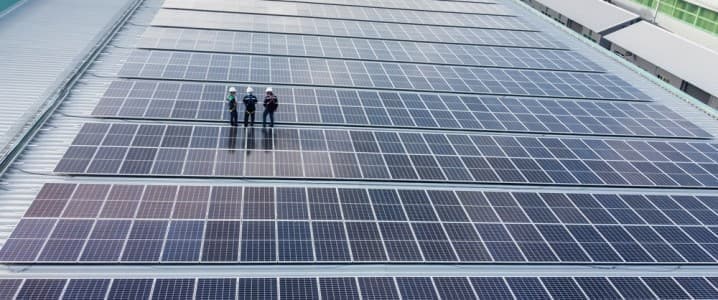
China is intensifying its commitment to clean energy by enhancing multilateral cooperation on green technologies and supporting its new energy vehicle (NEV), battery, and photovoltaic companies in their global expansion. This initiative aims to expedite the low-carbon transition within China’s extensive manufacturing sector. According to Li Lecheng, the Minister of Industry and Information Technology, this push underscores China’s resolve to cultivate high-quality development amid global challenges in climate governance.
In a recent article for China Daily, Li emphasized that China will actively encourage competitive enterprises in sectors such as photovoltaics, wind power, lithium batteries, and NEVs to invest and develop green energy projects, particularly in regions involved in the Belt and Road Initiative. This strategy reflects China’s ambition to maintain its dominant position in clean technology manufacturing, which currently accounts for over 70 percent of the global capacity in vital clean-tech segments.
The impact of China’s clean technology exports has made renewable energy solutions more affordable for many nations, especially emerging economies. Over the past decade, the prices of solar panels have significantly decreased, a trend largely driven by the scale and efficiency of Chinese manufacturing. Data from energy think tanks reveal that the reduced costs have facilitated a quicker adoption of renewable energy sources in developing regions across Asia, Africa, and Latin America, promoting both economic growth and emissions reduction.
In the first seven months of 2025, China’s exports of the “new three” industries—electric vehicles, solar panels, and batteries—surged to over $120 billion. This increase highlights a rising export volume, even as unit prices continue to fall, according to figures provided by the UK-based energy think tank Ember. The global energy landscape is shifting, with 92.5 percent of newly installed power capacity worldwide in 2024 deriving from renewable sources.
Despite this aggressive expansion, Chinese companies face growing protectionist measures in Western markets. The European Union and the United States have expressed concerns over what they characterize as excessive state subsidies that enable Chinese firms to export goods at prices that undercut local manufacturers. Research from organizations like Bruegel and BloombergNEF indicates that extensive state support, including direct funding and low-interest loans, has created a significant cost advantage for Chinese manufacturers. This competitive edge has contributed to a global overcapacity in sectors such as solar energy and batteries.
In response, the European Commission has introduced tariffs on Chinese electric vehicle imports following an investigation into alleged unfair subsidies. Similarly, the U.S. has sustained high tariffs and proposed measures to restrict Chinese hardware and software in connected vehicles, citing national security concerns. Antoine Vagneur-Jones, head of trade and supply chains at BloombergNEF, noted that while global clean energy deployment continues to increase, “overcapacity will define clean technology supply chains for years to come.”
China’s export ambitions are closely tied to its extensive domestic climate goals, as outlined in its updated Nationally Determined Contributions (NDCs). The country aims to enhance its combined installed capacity of wind and solar power to approximately 3,600 gigawatts (GW) by 2035, which is more than six times the level recorded in 2020. To meet this ambitious target, China must install new wind and solar capacity at a rate of around 200 GW annually. Although this target may seem ambitious on a global scale—given that total global capacity was about 1,400 GW at the end of 2024—some analysts argue that it is relatively conservative considering China’s recent installation pace, which has exceeded 300 GW in certain years.
The true challenge lies not only in the manufacturing of equipment but also in the integration of such a substantial amount of fluctuating power into the world’s largest electricity system. Experts from the University of California San Diego have indicated that significant upgrades to grid integration, energy storage, and power market mechanisms will be necessary to ensure reliability.
China’s strategy aims to bolster international cooperation in green infrastructure while strategically advancing industries such as hydrogen energy, energy storage, and carbon capture, utilization, and storage (CCUS). This initiative is part of China’s broader goal to modernize its industrial system and sustain its influence in the global clean energy sector.

Elon Musk’s DOGE Initiative Ends Abruptly Amid Controversy

China Accelerates Global Expansion of Clean Energy Giants

Fitness Influencer Dmitry Nuyanzin Dies After Extreme Challenge

North East NHS Maintains Gluten-Free Support for Under-25s

Newcastle’s Heart Unit Clinic Transformed to Support Young Patients

Elon Musk’s DOGE Initiative Fails: Baby Pandas Analogy Sparks Controversy

Researchers Unveil Noise-Proof Quantum Sensor with Calcium Ions

Tom Aspinall Accuses Ciryl Gane of Intentional Eye Poke at UFC 321

Iconic Paintings Reimagined with AI: A Modern Beauty Revival

Neurologist Warns Excessive Use of Supplements Can Harm Brain

Fiona Phillips’ Husband Shares Heartfelt Update on Her Alzheimer’s Journey

Brian Cox Addresses Claims of Alien Probe in 3I/ATLAS Discovery

NASA Investigates Unusual Comet 3I/ATLAS; New Findings Emerge

Scientists Examine 3I/ATLAS: Alien Artifact or Cosmic Oddity?

NASA Investigates Speedy Object 3I/ATLAS, Sparking Speculation

Kerry Katona Discusses Future Baby Plans and Brian McFadden’s Wedding

Emmerdale Faces Tension as Dylan and April’s Lives Hang in the Balance

Cole Palmer’s Cryptic Message to Kobbie Mainoo Following Loan Talks
-
 Health3 months ago
Neurologist Warns Excessive Use of Supplements Can Harm Brain
-
 Health3 months ago
Fiona Phillips’ Husband Shares Heartfelt Update on Her Alzheimer’s Journey
-
 Science1 month ago
Brian Cox Addresses Claims of Alien Probe in 3I/ATLAS Discovery
-
 Science1 month ago
NASA Investigates Unusual Comet 3I/ATLAS; New Findings Emerge
-
 Science1 month ago
Scientists Examine 3I/ATLAS: Alien Artifact or Cosmic Oddity?
-
 Science1 month ago
NASA Investigates Speedy Object 3I/ATLAS, Sparking Speculation
-
 Entertainment5 months ago
Kerry Katona Discusses Future Baby Plans and Brian McFadden’s Wedding
-
 Entertainment4 months ago
Emmerdale Faces Tension as Dylan and April’s Lives Hang in the Balance
-
 World3 months ago
Cole Palmer’s Cryptic Message to Kobbie Mainoo Following Loan Talks
-

 Science1 month ago
NASA Scientists Explore Origins of 3I/ATLAS, a Fast-Moving Visitor
-

 Entertainment2 months ago
Lewis Cope Addresses Accusations of Dance Training Advantage
-

 Entertainment3 months ago
Major Cast Changes at Coronation Street: Exits and Returns in 2025