
Science
NASA Investigates Unusual Comet 3I/ATLAS; New Findings Emerge

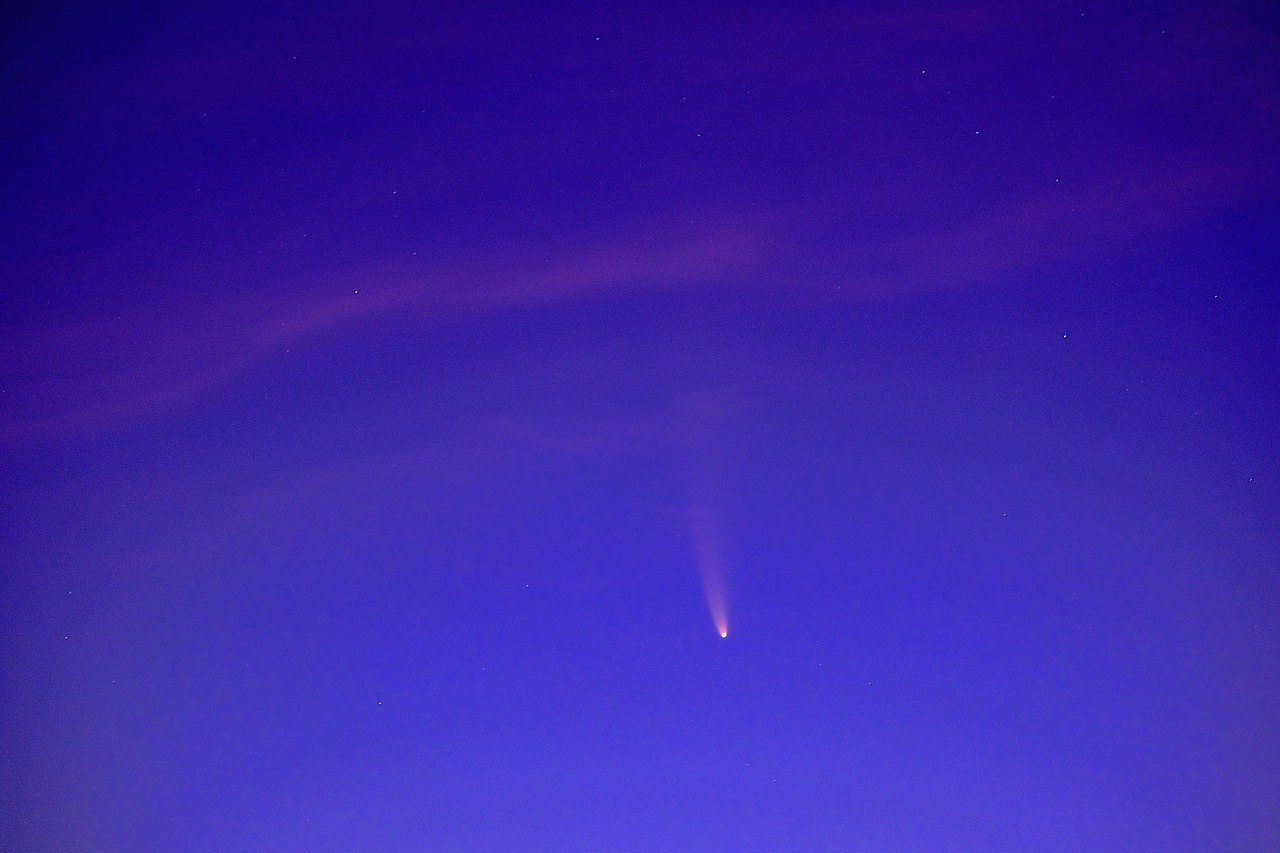
A recent photograph of the comet 3I/ATLAS has ignited discussions among scientists and space enthusiasts, raising questions about its unusual characteristics. The image, shared on October 20, 2025, by a space enthusiast known as Dobsonian Power, reveals a circular shape adjacent to the comet, suggesting there may be more to 3I/ATLAS than previously understood. This photo includes NASA’s official coordinates, marking the comet’s position at 16:00 UTC on that date.
In the tweet accompanying the image, the user described the observation made through a solar telescope, noting what appeared to be a “front heated shield” directed towards the sun, along with a faint puff resembling a small cone. The account emphasized the image’s authenticity by stating it was a raw, unprocessed photograph, which has drawn both intrigue and skepticism from the scientific community.
Potential Alien Connections and Rare Alloy Emissions
While some speculate that 3I/ATLAS could harbor alien life forms, experts are exploring more grounded explanations for its peculiar behavior. Reports from the New York Post indicate that the comet may be emitting a rare alloy known as nickel tetracarbonyl. Dr. Avi Loeb, an astrophysicist from Harvard University, pointed out that this alloy is typically produced through human industrial processes, making its presence in a comet highly unusual.
Images taken of 3I/ATLAS by the Keck II telescope in August revealed that the comet is releasing approximately four grams of nickel per second without any detectable iron—a phenomenon not commonly seen in comets. Dr. Loeb remarked, “There is only one place where that is known to exist, and that is in industrially produced nickel alloys.” This discovery adds to the mystery surrounding 3I/ATLAS, which was first documented by the Hubble Telescope on July 21, 2025.
Absence of a Tail and Implications for Research
Dr. Loeb noted the comet’s lack of a tail, a typical feature of comets that is usually observed extending away from the sun. This absence raises further questions, as he stated, “We usually see beautiful tails extending from the object away from the sun, and in this case, there was no evidence for such a tail.”
Experts typically expect comets to contain certain minerals, including nickel and iron. The distinct mineral composition of 3I/ATLAS sets it apart from other recent comets that have passed near Earth. Although the presence of nickel tetracarbonyl is unusual, researchers from the Keck Observatory suggest that the phenomenon may be a natural occurrence rather than an indication of extraterrestrial involvement.
The investigation into 3I/ATLAS is ongoing, with scientists eager to gather more data as the comet approaches the sun in the coming weeks. Observatories around the world are preparing for further observations, hoping to unravel the mysteries surrounding this enigmatic celestial body.

Niksic Celebrates Cultural Legacy with Folklore Milestone

NLC Demands Urgent Wage Adjustments Amid Rising Living Costs

‘One Battle After Another’ Triumphs with Six Oscars at 98th Academy Awards

Rainy Monday in Alton Clears for Sunshine by Midweek

Residents Push for New Supermarket in Overcrowded Town

Jimmy Kimmel Critiques Trump at 98th Academy Awards Ceremony

Young People Face Job Market Challenges Due to Health Issues

Stars Shine at the 2026 Oscars: Adorable Couples Take Center Stage

Brooklyn Beckham Faces Backlash for Mother’s Day Message Snub

Andrew Pierce Confirms Departure from ITV’s Good Morning Britain

Coronation Street Reveals Audrey Roberts’ Absence Explained

Fiona Phillips’ Husband Shares Heartfelt Update on Her Alzheimer’s Journey

Gogglebox Star Helena Worthington Announces Break After Loss

Neurologist Warns Excessive Use of Supplements Can Harm Brain

Brian Cox Addresses Claims of Alien Probe in 3I/ATLAS Discovery

NASA Investigates Unusual Comet 3I/ATLAS; New Findings Emerge

EastEnders Welcomes Back Mark Fowler Jr. with New Actor

Tess Daly Honoured with MBE, Announces Departure from Strictly
-
 Entertainment6 months ago
Andrew Pierce Confirms Departure from ITV’s Good Morning Britain
-
 Entertainment3 months ago
Coronation Street Reveals Audrey Roberts’ Absence Explained
-
 Health9 months ago
Fiona Phillips’ Husband Shares Heartfelt Update on Her Alzheimer’s Journey
-
 Entertainment6 months ago
Gogglebox Star Helena Worthington Announces Break After Loss
-
 Health9 months ago
Neurologist Warns Excessive Use of Supplements Can Harm Brain
-
 Science8 months ago
Brian Cox Addresses Claims of Alien Probe in 3I/ATLAS Discovery
-
 World5 months ago
EastEnders Welcomes Back Mark Fowler Jr. with New Actor
-
 Entertainment7 months ago
Tess Daly Honoured with MBE, Announces Departure from Strictly
-

 Health4 months ago
Gyles Brandreth Shares Heartfelt Journey Following Grandson’s Cancer Diagnosis
-

 Entertainment10 months ago
Major Cast Changes at Coronation Street: Exits and Returns in 2025
-

 World7 months ago
EastEnders’ Nicola Mitchell Faces Life-Changing Pregnancy Twist
-

 Health9 months ago
TOWIE Couple Sophie Kasaei and Jordan Brook Pursue Fertility Treatment Abroad