
Science
£1 Million Funding Boosts Research Capacity at Oxford Hospitals

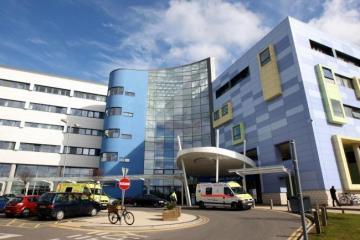
Oxford University Hospitals NHS Foundation Trust (OUH) has received a substantial funding award of £1,018,380 from the National Institute for Health and Care Research (NIHR). This investment aims to enhance the hospital’s clinical research capabilities through the acquisition of advanced equipment.
The funding will facilitate the purchase of cutting-edge technology that will support a variety of research areas, including respiratory care, vaccine development, imaging, and experimental medicine. Dr. Chris Bray, head of research and development operations at OUH, expressed his enthusiasm, stating, “We are absolutely delighted that the NIHR has agreed to fund this equipment.”
Expanding Research and Patient Care
Dr. Bray highlighted that this new equipment will enable OUH, in collaboration with the University of Oxford, to broaden its research portfolio. He emphasized the importance of this funding in meeting the increasing demand for commercially sponsored trials. “This will allow us to expand our capacity and press ahead with a wide range of new studies that will benefit NHS patients,” he added.
The funding follows a competitive selection process and reinforces OUH’s position as a key host for NIHR infrastructure, including the NIHR Oxford Biomedical Research Centre (BRC) and the NIHR Oxford Clinical Research Facility (CRF). This investment not only supports research initiatives but is also expected to enhance operational efficiency in patient care.
Professor Andrew Brent, chief medical officer at OUH, noted the significance of research and innovation in the hospital’s strategy. He remarked, “I am delighted at this latest award which supports our teams in delivering high-impact clinical research.” The additional funding will alleviate pressure on equipment used for clinical work while simultaneously expanding the research capabilities of OUH.
Broad Range of Upgrades Planned
The funding will facilitate numerous upgrades across various research areas. Projects include the establishment of facilities for early-phase clinical trials, advanced imaging equipment for respiratory studies, and tools for lung function and endoscopic research. Additionally, enhanced PCR and sequencing technologies will expedite vaccine research efforts.
Other significant investments include the provision of DXA scanners to support metabolic and liver studies, high-resolution imaging for retinal research, increased sample storage and analysis capacity, and home telemetry kits that will aid in remote monitoring for epilepsy trials.
Professor Chris Buckley, director of the NIHR Oxford CRF and lead applicant for this funding, emphasized the collaborative nature of the work being carried out. “This funding for new infrastructure will give an important boost to the work being carried out by the NIHR Oxford BRC and NIHR Oxford CRF, who, working with patients and the public, are translating innovative scientific ideas into tangible new treatments and diagnostic tools for our patients,” he stated.
This investment aligns with broader NHS objectives to enhance clinical research capabilities across the health service. The government supports this initiative as part of a programme designed to “turbocharge” clinical research, aiming to elevate the standards of care and innovation in the NHS.

Niksic Celebrates Cultural Legacy with Folklore Milestone

NLC Demands Urgent Wage Adjustments Amid Rising Living Costs

‘One Battle After Another’ Triumphs with Six Oscars at 98th Academy Awards

Rainy Monday in Alton Clears for Sunshine by Midweek

Residents Push for New Supermarket in Overcrowded Town

Jimmy Kimmel Critiques Trump at 98th Academy Awards Ceremony

Young People Face Job Market Challenges Due to Health Issues

Stars Shine at the 2026 Oscars: Adorable Couples Take Center Stage

Brooklyn Beckham Faces Backlash for Mother’s Day Message Snub

Andrew Pierce Confirms Departure from ITV’s Good Morning Britain

Coronation Street Reveals Audrey Roberts’ Absence Explained

Fiona Phillips’ Husband Shares Heartfelt Update on Her Alzheimer’s Journey

Gogglebox Star Helena Worthington Announces Break After Loss

Neurologist Warns Excessive Use of Supplements Can Harm Brain

Brian Cox Addresses Claims of Alien Probe in 3I/ATLAS Discovery

NASA Investigates Unusual Comet 3I/ATLAS; New Findings Emerge

EastEnders Welcomes Back Mark Fowler Jr. with New Actor

Tess Daly Honoured with MBE, Announces Departure from Strictly
-
 Entertainment6 months ago
Andrew Pierce Confirms Departure from ITV’s Good Morning Britain
-
 Entertainment3 months ago
Coronation Street Reveals Audrey Roberts’ Absence Explained
-
 Health9 months ago
Fiona Phillips’ Husband Shares Heartfelt Update on Her Alzheimer’s Journey
-
 Entertainment6 months ago
Gogglebox Star Helena Worthington Announces Break After Loss
-
 Health9 months ago
Neurologist Warns Excessive Use of Supplements Can Harm Brain
-
 Science8 months ago
Brian Cox Addresses Claims of Alien Probe in 3I/ATLAS Discovery
-
 Science8 months ago
NASA Investigates Unusual Comet 3I/ATLAS; New Findings Emerge
-
 World5 months ago
EastEnders Welcomes Back Mark Fowler Jr. with New Actor
-
 Entertainment7 months ago
Tess Daly Honoured with MBE, Announces Departure from Strictly
-

 Health4 months ago
Gyles Brandreth Shares Heartfelt Journey Following Grandson’s Cancer Diagnosis
-

 Entertainment10 months ago
Major Cast Changes at Coronation Street: Exits and Returns in 2025
-

 World7 months ago
EastEnders’ Nicola Mitchell Faces Life-Changing Pregnancy Twist