
Science
Scientists Examine Signals from 3I/ATLAS, Debunk Alien Theories

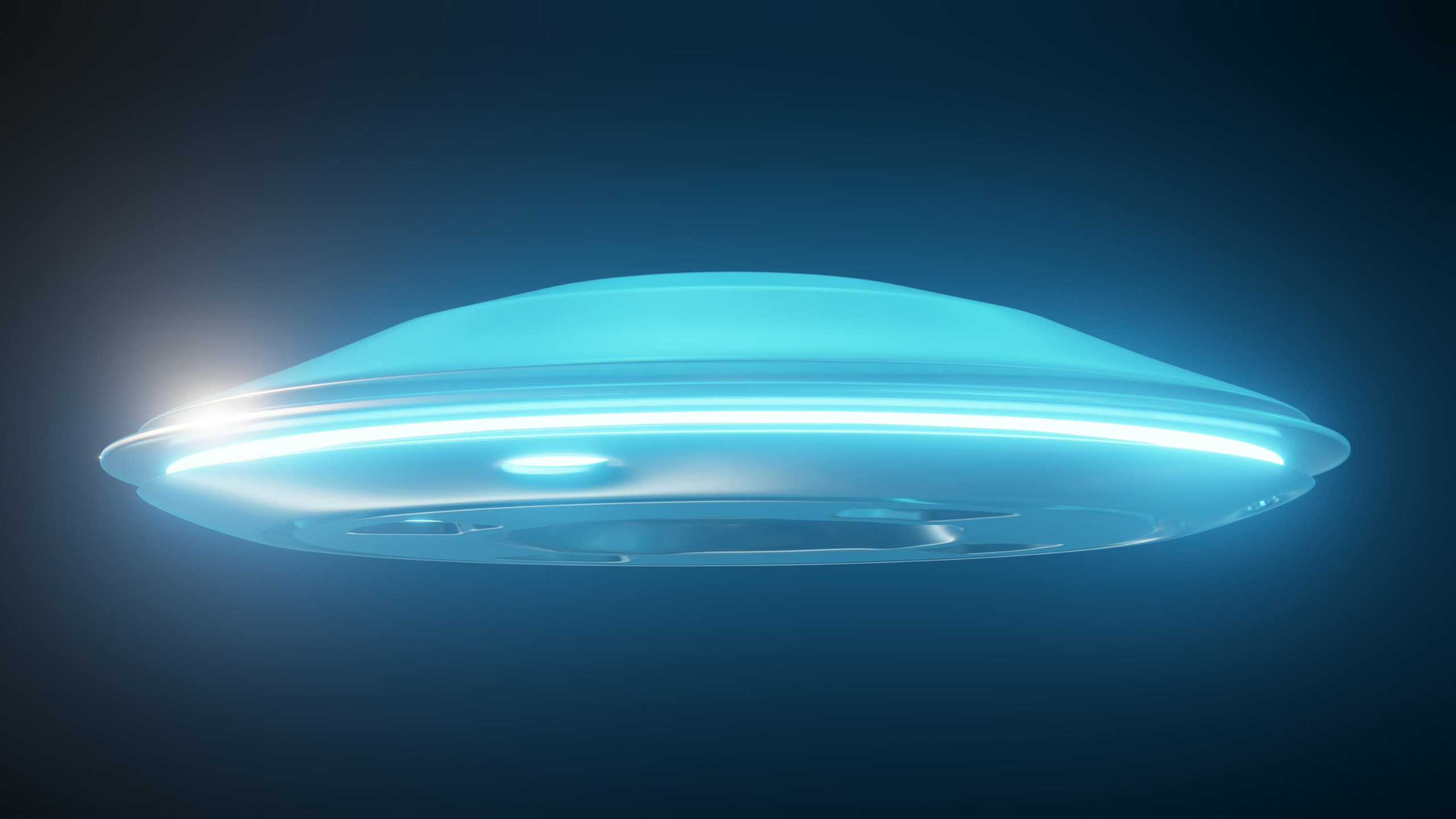
The interstellar object known as 3I/ATLAS is currently traversing beyond our solar system, concluding its two-year journey through space. While this might seem like a straightforward event, it has sparked ongoing speculation among some observers who propose that this object is not merely a comet but rather a piece of alien technology. Prominent figures like Avi Loeb, a professor at Harvard University, continue to advocate for the idea that 3I/ATLAS represents an extraterrestrial spacecraft, despite major space agencies, including NASA, classifying it as a typical comet.
The debate surrounding 3I/ATLAS highlights a broader conflict between speculation and scientific evidence. Leslie Looney, a professor of astronomy and director of the Laboratory for Astronomical Imaging at the University of Illinois Urbana-Champaign, asserts, “It’s acting just like a piece of rock and ice would.” Comets are often described as massive, dirty snowballs that produce long tails as they approach the sun due to solar wind. The significance of 3I/ATLAS lies in its interstellar origin, providing a glimpse into materials from another solar system.
Despite a widespread yearning for proof of extraterrestrial life, scientists adhere to the principle articulated by the late astronomer Carl Sagan: “Extraordinary claims require extraordinary evidence.” Looney emphasizes this point, stating, “You have to make sure you have the data.” He acknowledges the vastness of the cosmos, noting, “I think aliens are out there,” and recognizes the potential for life among the estimated 100 to 400 billion stars in our galaxy.
In response to the ongoing search for extraterrestrial life, organizations like the SETI Institute play a crucial role in the scientific process. This Silicon Valley-based non-profit supports researchers like Sofia Sheikh, a technosignature research scientist utilizing the Allen Telescope Array. This facility, composed of 42 dish antennas, is designed to detect signals that might indicate the presence of advanced technology beyond Earth.
Sheikh focuses on identifying narrowband radio signals, which could suggest technological origins. “If we were ever to see that and prove that it’s coming from beyond Earth, then that would be a really good sign that technology is making that signal and not the natural universe,” she explains. The challenge lies not in the vastness of space but in filtering out the noise generated by human technology on Earth.
Sheikh provides a candid overview of her daily work, stating, “I get millions of technological signals in a night, and I have not found millions of aliens, unfortunately.” The pursuit of understanding our place in the universe is fundamentally human. “It’s a question. Are we alone in the universe? Is there life out there?” she reflects, noting that it inspires creativity and excitement in the scientific community.
The field of astrobiology, which explores the potential for life beyond Earth, is also essential for future human exploration. Jack Pallotto, a student at the University of Illinois and president of the Astrobiology Club, emphasizes its practical applications, including developing ways for humans to live in space for extended periods, whether on the International Space Station or on Mars.
The sensationalism often surrounding objects like 3I/ATLAS contrasts sharply with the rigorous scientific approach taken by researchers. Communication expert Hank Green has highlighted the importance of prioritizing knowledge over belief, stating that the mindset of “I want to believe” must be balanced with “I want to know.” Looney concurs, stating, “I want to know more than I want to believe.”
Recent advancements in computing power and telescope technology have enhanced researchers’ capabilities, allowing them to examine more frequencies and larger areas of the sky simultaneously. Addressing the criticism that scientists have not found any evidence of extraterrestrial life despite decades of searching, Sheikh offers a crucial perspective: “The space we have to search is so vast that even though these searches have been going on since the ’60s, we have barely scratched the surface of the amount of searching that’s yet to be done.”
The quest for intelligent life is not a quick endeavor; it involves a long and methodical approach that unites various scientific disciplines. While the allure of objects like 3I/ATLAS may satisfy immediate curiosity, it is the dedicated, evidence-based work of researchers like Sheikh and Looney that will ultimately provide insights into our cosmic questions. As strange objects continue to traverse our skies, it remains important to distinguish between the desire to believe and the pursuit of knowledge.

Harvard Predicts 60,000 km Anti-Tail Extension of 3I/ATLAS

Liverpool Aims for Revival Against Leeds in Premier League Clash

Transformative £11.8 Billion Highway to Connect Five African Nations

Authorities Arrest Woman for Allegedly Exploiting Children

Newtown Plans Hotel and Pub as Part of Roadside Development

Crocs Launches Quirky Squidward Clogs Ahead of SpongeBob Movie

Scientists Examine Signals from 3I/ATLAS, Debunk Alien Theories

Is Alexander Isak the Next Luis Suarez? Liverpool’s Big Signing Struggles

James Acaster’s Saturday Kitchen Meltdown Sparks Viewer Outrage

Neurologist Warns Excessive Use of Supplements Can Harm Brain

Fiona Phillips’ Husband Shares Heartfelt Update on Her Alzheimer’s Journey

Brian Cox Addresses Claims of Alien Probe in 3I/ATLAS Discovery

NASA Investigates Unusual Comet 3I/ATLAS; New Findings Emerge

Scientists Examine 3I/ATLAS: Alien Artifact or Cosmic Oddity?

Kerry Katona Discusses Future Baby Plans and Brian McFadden’s Wedding

NASA Investigates Speedy Object 3I/ATLAS, Sparking Speculation

Emmerdale Faces Tension as Dylan and April’s Lives Hang in the Balance

Cole Palmer’s Cryptic Message to Kobbie Mainoo Following Loan Talks
-
 Health3 months ago
Neurologist Warns Excessive Use of Supplements Can Harm Brain
-
 Health3 months ago
Fiona Phillips’ Husband Shares Heartfelt Update on Her Alzheimer’s Journey
-
 Science2 months ago
Brian Cox Addresses Claims of Alien Probe in 3I/ATLAS Discovery
-
 Science2 months ago
NASA Investigates Unusual Comet 3I/ATLAS; New Findings Emerge
-
 Science1 month ago
Scientists Examine 3I/ATLAS: Alien Artifact or Cosmic Oddity?
-
 Entertainment5 months ago
Kerry Katona Discusses Future Baby Plans and Brian McFadden’s Wedding
-
 Science1 month ago
NASA Investigates Speedy Object 3I/ATLAS, Sparking Speculation
-
 Entertainment4 months ago
Emmerdale Faces Tension as Dylan and April’s Lives Hang in the Balance
-
 World3 months ago
Cole Palmer’s Cryptic Message to Kobbie Mainoo Following Loan Talks
-
 Science1 month ago
NASA Scientists Explore Origins of 3I/ATLAS, a Fast-Moving Visitor
-

 Entertainment2 months ago
Lewis Cope Addresses Accusations of Dance Training Advantage
-

 Entertainment4 months ago
Major Cast Changes at Coronation Street: Exits and Returns in 2025