
Politics
Controversy Erupts Over ‘Medieval Fortress’ Plans in Norfolk Hamlet

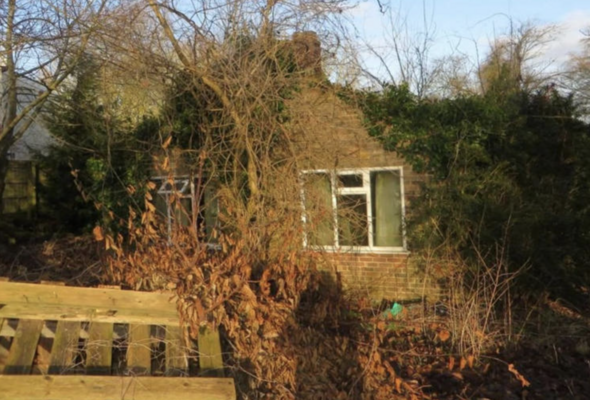
A significant planning dispute has arisen in the village of Brinton, Norfolk, following the approval by the North Norfolk District Council to construct a new home on the site of a dilapidated cottage. Local residents and the parish council have voiced strong opposition to the project, which they describe as a “medieval fortress.” The controversial development aims to replace the existing derelict structure on Sharrington Road with a three-bedroom residence featuring a distinct flint stair turret.
The design, characterized by its prominent turret, has sparked local outrage, with many comparing it to the fortifications of the Middle Ages rather than a modern home. During a recent council meeting, local resident Keith Parks urged planners to reconsider the proposal, arguing that the new dwelling would look incongruous against the rural backdrop of the area. He emphasized that the structure would be a “medieval fortress” that disrupts the village’s traditional aesthetic.
Residents have echoed these sentiments, asserting that the proposed building would dramatically alter the character of Brinton. The Brinton and Sharrington Parish Council formally objected to the plans, stating that both the scale and appearance of the new home are “alien” to the local environment. Concerns were particularly raised about its proximity to Brook House, a nearby Grade-II listed property, with parish councillors expressing fears that the new design could undermine the historical integrity of the heritage site.
Many residents have likened elements of the new design to castle ramparts, arguing that it would transform a tranquil rural plot into a structure reminiscent of an earlier era. Despite the vocal opposition, the application was approved by the council.
In addition to aesthetic concerns, potential flooding risks have also been a point of contention. Andrew Brown, a local councillor and cabinet member for planning, acknowledged that Brinton is located at the lowest point of the village. He noted that changes to ground levels associated with the new development could heighten the risk of water damage to surrounding homes.
Another major concern has been the potential removal of mature trees on the site, including a mulberry and a walnut tree. Residents have expressed alarm at the prospect of losing these trees, which they consider integral to the hamlet’s character. They argue that the removal of these specimens would exacerbate the impact of what they perceive as an overpowering structure.
In defense of the plans, architect Anthony Hudson explained that the design draws inspiration from “local traditions of building form and materials.” He asserted that the owners are committed to revitalizing what he described as an unkempt and neglected plot, claiming that the new home would enhance the area rather than detract from it.
As the planning row continues, the community remains divided on the implications of this development for the future of Brinton. Residents and local officials will likely keep a close watch on the project’s progress, as the debate over the architectural direction of their village unfolds.

Emmerdale Reveals Shocking Update on Tina Dingle After 30 Years

Perfume Enthusiast Reveals Must-Have Holiday Scent

Scientist Warns of New Chemical Weapons Development in Russia

Heating Plant Shutdown Scheduled Tomorrow in Pljevlja

PGE Secures Approval for Price Increase on 1GW Energy Storage Projects

Emmerdale Viewers Question Ray and Celia’s Inconsistent Storyline

Israeli Tech Firms Expand Operations Across Europe in 2023

Australian Sprint Star Gout Gout Celebrates £4.4M Home Purchase

Julia Bradbury Opens Up About Cancer Journey and Lifestyle Change

Andrew Pierce Confirms Departure from ITV’s Good Morning Britain

Neurologist Warns Excessive Use of Supplements Can Harm Brain

Fiona Phillips’ Husband Shares Heartfelt Update on Her Alzheimer’s Journey

Brian Cox Addresses Claims of Alien Probe in 3I/ATLAS Discovery

Gogglebox Star Helena Worthington Announces Break After Loss

NASA Investigates Unusual Comet 3I/ATLAS; New Findings Emerge

Tess Daly Honoured with MBE, Announces Departure from Strictly

Scientists Examine 3I/ATLAS: Alien Artifact or Cosmic Oddity?

Lewis Cope Addresses Accusations of Dance Training Advantage
-
 Entertainment3 weeks ago
Andrew Pierce Confirms Departure from ITV’s Good Morning Britain
-
 Health4 months ago
Neurologist Warns Excessive Use of Supplements Can Harm Brain
-
 Health4 months ago
Fiona Phillips’ Husband Shares Heartfelt Update on Her Alzheimer’s Journey
-
 Science2 months ago
Brian Cox Addresses Claims of Alien Probe in 3I/ATLAS Discovery
-
 Entertainment2 weeks ago
Gogglebox Star Helena Worthington Announces Break After Loss
-
 Science2 months ago
NASA Investigates Unusual Comet 3I/ATLAS; New Findings Emerge
-
 Entertainment2 months ago
Tess Daly Honoured with MBE, Announces Departure from Strictly
-
 Science2 months ago
Scientists Examine 3I/ATLAS: Alien Artifact or Cosmic Oddity?
-
 Entertainment3 months ago
Lewis Cope Addresses Accusations of Dance Training Advantage
-

 Entertainment6 months ago
Kerry Katona Discusses Future Baby Plans and Brian McFadden’s Wedding
-

 Science2 months ago
NASA Investigates Speedy Object 3I/ATLAS, Sparking Speculation
-

 Entertainment5 months ago
Emmerdale Faces Tension as Dylan and April’s Lives Hang in the Balance