
Science
Ancient Artefacts Unearthed in Queensland Reveal Indigenous Resilience

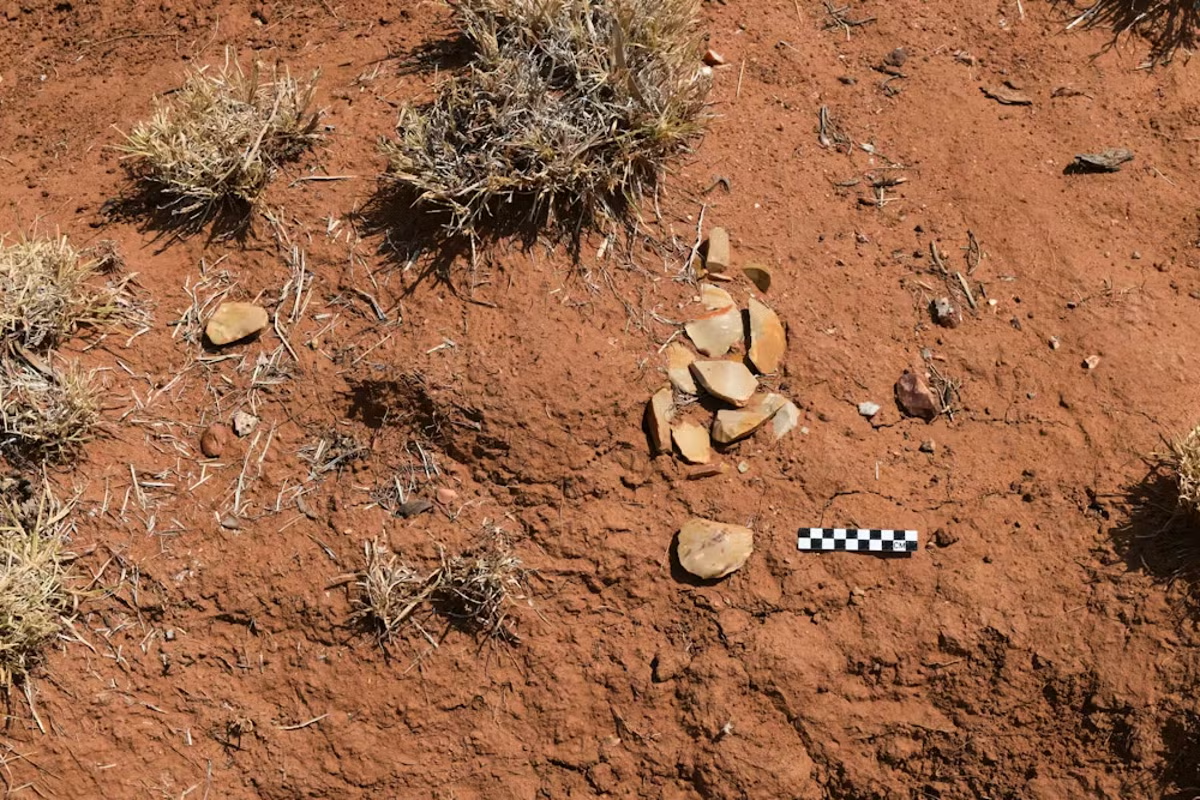
A significant discovery in far-west Queensland has uncovered a cache of Indigenous artefacts buried approximately 170 years ago. This archaeological site, located near a waterhole north of Boulia, contains 60 large stone “tulas” that reveal insights into the survival strategies of the Pitta Pitta people. The excavation, conducted in 2023, highlights the trade and innovation that characterized Indigenous life in the Australian outback.
The artefacts, known as tulas, are special flaked-stone tools, integral to woodworking. These tools were essential in crafting various objects, including boomerangs, coolamon dishes, shields, and clapsticks. The excavation team, which included members of the Pitta Pitta community, utilized scientific methods to analyze the tools, with the necessary approvals from local property owners.
The excavation took place during a challenging period, as bushfires raged to the north of the site. The team raced against time to recover the artefacts before seasonal floods could wash them away. The region’s climate poses significant challenges; heavy rains from the north can inundate the landscape, temporarily transforming it into a vast sea of water.
Insights into Indigenous Practices and Trade
The Pitta Pitta people developed stone-based shelters to protect themselves from the harsh elements. Evidence suggests that they engaged in extensive trade networks, bartering goods such as stone axes, ochre, and pearl shells. Notably, a native tobacco called pituri was highly valued, reportedly worth enough to trade for multiple spouses or goods. The cache of tulas may have been intended for similar trading purposes, suggesting a planned approach to resource management.
Historical records indicate that European colonization in the late 1800s severely disrupted Indigenous practices. The state-sanctioned Native Mounted Police operated in the area, enforcing control over Aboriginal communities with extreme violence. The nearby abandoned Burke River police camp serves as a stark reminder of this tumultuous period.
Interestingly, this is not the first time such artefacts have been unearthed in the region. In 1988, an archaeological team excavated a similar cache less than eight kilometers from the current site. That discovery, containing 34 tulas among other artefacts, raised questions about whether these finds represented isolated events or a broader cultural practice.
The recent excavation revealed that the 60 tulas found were complete, with some fitting together, indicating they were crafted from the same piece of stone. This finding confirms that the practice of caching unused tools was a repeated cultural behaviour rather than a singular occurrence.
Scientific Analysis and Future Research
To determine when the tulas were buried, the team employed a method known as optically stimulated luminescence (OSL). This technique measures the decay rates of quartz grains to estimate the last time they were exposed to sunlight. Samples collected from the centre of the cache were dated, revealing a 95% probability that the tools were buried between 1793 and 1913.
The nearby town of Boulia was established in 1879, and the Burke River police camp operated from 1878 to 1886, providing historical context for the findings. The tulas may have originally been stored in containers made of kangaroo skin, bark, or woven materials, though no organic traces were found during examinations by expert Kim Vernon. The arid conditions of the desert likely inhibited the preservation of such materials.
Future research will focus on uncovering additional microscopic traces that may shed light on the lives of these tools. The findings highlight how Indigenous peoples managed resources and cooperated within their communities, allowing them to adapt and thrive in a region defined by fire and flood.
This excavation underscores the resilience and ingenuity of the Pitta Pitta ancestors, who likely intended to trade these tools but were possibly hindered by the disruptions caused by European arrival. The research not only contributes to our understanding of Indigenous culture but also emphasizes the importance of preserving these historical narratives.
For further exploration, 3D models of the entire cache are available online, offering an interactive glimpse into this remarkable discovery.

BAFTA Winner Sophie Willan Welcomes First Child, Baby Elijah

Cyber Monday Discounts Bring GPUs Closer to MSRP for Shoppers

Fans Demand Rule Change After Emotional ‘I’m A Celebrity’ Episode

Study Reveals Laughing Gas Offers Quick Relief for Severe Depression

Maximize Your Christmas Budget with Top E-Gift Card Deals

Angela Rayner Criticizes Starmer’s Reversal on Workers’ Rights

Astronomers Stunned by 3I/ATLAS Comet’s Unexplained Twin Jets

West Ham’s Mads Hermansen Faces Uncertain Future After Goalkeeping Change

Austrian Influencer Stefanie Pieper Found Dead in Slovenian Forest

Neurologist Warns Excessive Use of Supplements Can Harm Brain

Fiona Phillips’ Husband Shares Heartfelt Update on Her Alzheimer’s Journey

Brian Cox Addresses Claims of Alien Probe in 3I/ATLAS Discovery

NASA Investigates Unusual Comet 3I/ATLAS; New Findings Emerge

Scientists Examine 3I/ATLAS: Alien Artifact or Cosmic Oddity?

NASA Investigates Speedy Object 3I/ATLAS, Sparking Speculation

Kerry Katona Discusses Future Baby Plans and Brian McFadden’s Wedding

Emmerdale Faces Tension as Dylan and April’s Lives Hang in the Balance

Cole Palmer’s Cryptic Message to Kobbie Mainoo Following Loan Talks
-
 Health3 months ago
Neurologist Warns Excessive Use of Supplements Can Harm Brain
-
 Health3 months ago
Fiona Phillips’ Husband Shares Heartfelt Update on Her Alzheimer’s Journey
-
 Science1 month ago
Brian Cox Addresses Claims of Alien Probe in 3I/ATLAS Discovery
-
 Science1 month ago
NASA Investigates Unusual Comet 3I/ATLAS; New Findings Emerge
-
 Science1 month ago
Scientists Examine 3I/ATLAS: Alien Artifact or Cosmic Oddity?
-
 Science1 month ago
NASA Investigates Speedy Object 3I/ATLAS, Sparking Speculation
-
 Entertainment5 months ago
Kerry Katona Discusses Future Baby Plans and Brian McFadden’s Wedding
-
 Entertainment4 months ago
Emmerdale Faces Tension as Dylan and April’s Lives Hang in the Balance
-
 World3 months ago
Cole Palmer’s Cryptic Message to Kobbie Mainoo Following Loan Talks
-
 Science1 month ago
NASA Scientists Explore Origins of 3I/ATLAS, a Fast-Moving Visitor
-

 Entertainment2 months ago
Lewis Cope Addresses Accusations of Dance Training Advantage
-

 Entertainment3 months ago
Major Cast Changes at Coronation Street: Exits and Returns in 2025