
Science
China’s Lunar Soil Bricks Return from Space, Advancing Moon Base Plans

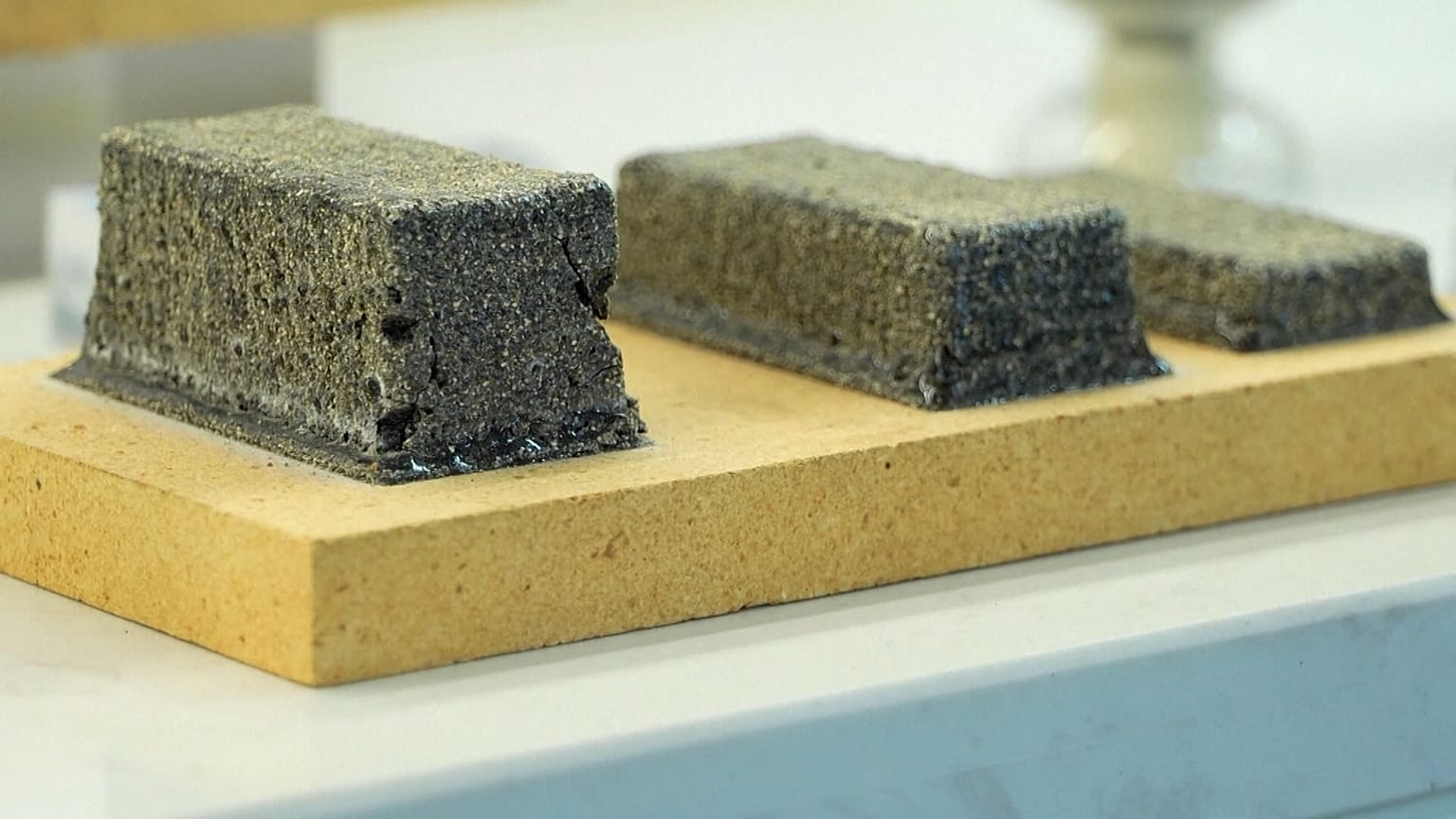
China has taken a significant step toward its ambitious goal of establishing infrastructure on the Moon. The first set of experimental ‘lunar soil bricks’ returned to Earth after spending a year exposed to the harsh conditions of space. This pioneering experiment took place aboard the Shenzhou-21 spacecraft, which safely landed last week, bringing back not only the bricks but also three astronauts who completed a six-month mission.
Initial assessments of the 34 lunar soil bricks indicate that they survived their year in orbit remarkably well. Researchers describe this as an encouraging early proof-of-concept for future lunar construction projects. According to Zhou Yan, an associate professor at Huazhong University of Science and Technology in Wuhan, “Upon opening the lid, we found that the samples were in good condition. There were no dents, holes, or other visible defects that we thought they might have because of impacts by meteorites or space debris.”
The bricks, each weighing approximately 100 grams, were engineered to mimic the composition of lunar regolith. They were compacted using advanced techniques such as hot pressing, electromagnetic induction, and microwave sintering. These methods enhance their compressive strength to about three times that of standard bricks, making them more suitable for the extreme lunar environment.
Evaluating Long-Term Viability
The project aims to assess how these bricks will perform over time on the lunar surface, particularly their mechanical properties, thermal behavior, and radiation resistance. Qin Yiheng, a graduate student involved in the project, explained, “Some of the samples that we sent into space were complete, while some had 45-degree symmetrical seams that we made in advance. By doing so, we wanted to see what changes they will undergo in terms of their mechanical properties after a year on the space station.”
A control group of bricks on Earth will provide a basis for comparison, allowing researchers to evaluate how space conditions alter the material. Zhou emphasized the significance of this analysis, stating, “After the return of the third batch of samples, based on more horizontal comparisons, we may be able to discover a pattern and ultimately build a model. This will help us predict what they will look like after five, ten, or twenty years of service.”
China’s Lunar Ambitions
China’s lunar program is committed to landing astronauts on the Moon by 2030 and constructing a basic version of its planned International Lunar Research Station by 2035. A crucial part of this plan involves utilizing in-situ resources such as lunar soil, solar energy, and surface minerals to minimize the substantial costs associated with transporting materials from Earth.
As research progresses, the success of these lunar soil bricks could be pivotal in transforming China’s vision of the “Guanghan Palace” into a tangible reality. The implications of this project extend beyond national achievements, potentially influencing international efforts in lunar exploration and construction.

Teen’s Cold Symptoms Mask Deadly Brain Infection, Urgent Surgery Needed

Viral 6-7 Trend Fades as Children Move On from Chaos

Trump Responds Abruptly to Journalist’s MRI Question

New Thorium Measurements May Reveal Variations in Fine Structure Constant

Second Round of Professional Training Program Completes Matching

Woman Arrested After Stealing €950 Ring, Selling for €100

OPEC Maintains Steady Oil Output for Q1 2026 Amid Supply Concerns

Sidharth Malhotra Reveals Daughter’s Name and Its Special Meaning

Co Down Man Shares HIV Journey, Urges Testing on World AIDS Day

Neurologist Warns Excessive Use of Supplements Can Harm Brain

Fiona Phillips’ Husband Shares Heartfelt Update on Her Alzheimer’s Journey

Brian Cox Addresses Claims of Alien Probe in 3I/ATLAS Discovery

NASA Investigates Unusual Comet 3I/ATLAS; New Findings Emerge

Scientists Examine 3I/ATLAS: Alien Artifact or Cosmic Oddity?

NASA Investigates Speedy Object 3I/ATLAS, Sparking Speculation

Kerry Katona Discusses Future Baby Plans and Brian McFadden’s Wedding

Emmerdale Faces Tension as Dylan and April’s Lives Hang in the Balance

Cole Palmer’s Cryptic Message to Kobbie Mainoo Following Loan Talks
-
 Health3 months ago
Neurologist Warns Excessive Use of Supplements Can Harm Brain
-
 Health3 months ago
Fiona Phillips’ Husband Shares Heartfelt Update on Her Alzheimer’s Journey
-
 Science1 month ago
Brian Cox Addresses Claims of Alien Probe in 3I/ATLAS Discovery
-
 Science1 month ago
NASA Investigates Unusual Comet 3I/ATLAS; New Findings Emerge
-
 Science1 month ago
Scientists Examine 3I/ATLAS: Alien Artifact or Cosmic Oddity?
-
 Science1 month ago
NASA Investigates Speedy Object 3I/ATLAS, Sparking Speculation
-
 Entertainment5 months ago
Kerry Katona Discusses Future Baby Plans and Brian McFadden’s Wedding
-
 Entertainment4 months ago
Emmerdale Faces Tension as Dylan and April’s Lives Hang in the Balance
-
 World3 months ago
Cole Palmer’s Cryptic Message to Kobbie Mainoo Following Loan Talks
-
 Science1 month ago
NASA Scientists Explore Origins of 3I/ATLAS, a Fast-Moving Visitor
-

 Entertainment2 months ago
Lewis Cope Addresses Accusations of Dance Training Advantage
-

 Entertainment3 months ago
Major Cast Changes at Coronation Street: Exits and Returns in 2025