
Science
Global Scientific Community Faces Threat from Targeted Assassinations


The targeted killings of scientists, particularly in politically sensitive fields, have emerged as a pressing concern for the global scientific community. Alireza Qaiumzadeh, an academic and advocate for the protection of scientists, emphasizes that science can only thrive when researchers are recognized and safeguarded as civilians. Recent events have shown that this principle is increasingly under threat, especially for Iranian scientists.
Since the early 2000s, Iranian physicists and engineers have faced deliberate targeting, leading to tragic outcomes. Notably, in 2007, Ardeshir Hosseinpour, a nuclear physicist at Shiraz University, died under suspicious circumstances, with widespread speculation of poisoning or radiation exposure. Following his death, at least five more Iranian researchers, including Masoud Ali-Mohammadi, who represented Iran at the SESAME project, have also been killed. The SESAME project is significant as it represents the only scientific collaboration between Iran and Israel in the Middle East.
The trend of violence escalated in June 2023, when Israeli airstrikes targeted residential areas in Tehran and Isfahan, resulting in the deaths of at least 14 Iranian scientists and their family members. These individuals worked in critical fields such as materials science, aerospace engineering, and laser physics. Qaiumzadeh asserts that this shift from covert assassinations to open military strikes represents a dangerous new reality, treating scientists as enemy combatants solely based on their expertise.
This violence against researchers is not an isolated phenomenon; it poses a direct threat to the integrity of scientific knowledge globally. Qaiumzadeh argues that such assassinations undermine the Geneva Convention and the foundational principles of international humanitarian law, which mandates the protection of civilians, including academics. Despite Iran’s involvement in the Nuclear Non-Proliferation Treaty and its status as a member of the International Atomic Energy Agency, its scientists remain vulnerable to attacks based on their research fields.
The normalization of targeting scientists raises alarming questions about the future of research. If the international community allows such preemptive assassinations to continue, it opens the door for similar actions against researchers in other countries, including the United States, China, and Germany. Qaiumzadeh warns that once knowledge is treated as a liability, no researcher will be safe.
The silence from international scientific organizations, including the UN, UNESCO, and national academies, is equally concerning. Their failure to condemn these killings legitimizes the notion of treating scientists as military assets and discourages collaboration on sensitive research. This silence fosters an environment of fear, particularly among younger researchers who may shy away from high-impact fields due to safety concerns.
The implications of these assassinations extend beyond Iran; they affect a global community of researchers. The scientists who have lost their lives were part of a broader network, collaborating on essential issues from climate change to public health. Their deaths should resonate with every nation that relies on scientific inquiry to solve global challenges.
Qaiumzadeh calls for urgent action from international scientific bodies. He advocates for a public condemnation of the assassinations, support for independent investigations, and the establishment of explicit protections for scientists and academic institutions in conflict zones. He also highlights the potential role of Israeli academics, who, committed to collaboration and academic freedom, can help bridge divides and advocate for the protection of researchers.
The ongoing violence against scientists is a litmus test for the future of global science. Allowing the targeting of researchers sets a perilous precedent that could have far-reaching consequences. Qaiumzadeh insists that the principle of science without borders can only survive if scientists are recognized and protected as civilians. The global community must draw a decisive line: the killing of scientists for their expertise is unacceptable. To ignore these attacks is to risk a future where knowledge becomes a weapon and those who create it are deemed expendable. Such a future is untenable and should be firmly rejected.

Comet 3I/ATLAS Reveals Rare Metal Composition, Suggests Cryovolcanism

Mike Vrabel Transforms Patriots into AFC Contenders in 2024

Search Intensifies for Missing British Teen Near Dracula’s Castle

Gerwyn Price Reclaims Stolen Coat After Social Media Appeal

Communities Unite: The Rise of Mutual Aid Efforts Worldwide

CD Projekt Red Confirms Ciri as Protagonist for The Witcher 4

Gordon Lyons MLA Tours Accessible Bungalow Development in Carrickfergus

Win a £1.15m Georgian Dream Home for Just £1 in Major Giveaway

Embrace “Good Enough”: The Key to Progress and Well-Being

Neurologist Warns Excessive Use of Supplements Can Harm Brain

Fiona Phillips’ Husband Shares Heartfelt Update on Her Alzheimer’s Journey

Brian Cox Addresses Claims of Alien Probe in 3I/ATLAS Discovery

NASA Investigates Unusual Comet 3I/ATLAS; New Findings Emerge

Scientists Examine 3I/ATLAS: Alien Artifact or Cosmic Oddity?

NASA Investigates Speedy Object 3I/ATLAS, Sparking Speculation

Kerry Katona Discusses Future Baby Plans and Brian McFadden’s Wedding

Emmerdale Faces Tension as Dylan and April’s Lives Hang in the Balance

Cole Palmer’s Cryptic Message to Kobbie Mainoo Following Loan Talks
-
 Health3 months ago
Neurologist Warns Excessive Use of Supplements Can Harm Brain
-
 Health3 months ago
Fiona Phillips’ Husband Shares Heartfelt Update on Her Alzheimer’s Journey
-
 Science1 month ago
Brian Cox Addresses Claims of Alien Probe in 3I/ATLAS Discovery
-
 Science1 month ago
NASA Investigates Unusual Comet 3I/ATLAS; New Findings Emerge
-
 Science1 month ago
Scientists Examine 3I/ATLAS: Alien Artifact or Cosmic Oddity?
-
 Science1 month ago
NASA Investigates Speedy Object 3I/ATLAS, Sparking Speculation
-
 Entertainment5 months ago
Kerry Katona Discusses Future Baby Plans and Brian McFadden’s Wedding
-
 Entertainment4 months ago
Emmerdale Faces Tension as Dylan and April’s Lives Hang in the Balance
-
 World3 months ago
Cole Palmer’s Cryptic Message to Kobbie Mainoo Following Loan Talks
-
 Science1 month ago
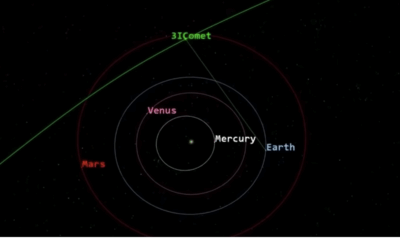
NASA Scientists Explore Origins of 3I/ATLAS, a Fast-Moving Visitor
-

 Entertainment2 months ago
Lewis Cope Addresses Accusations of Dance Training Advantage
-

 Entertainment3 months ago
Major Cast Changes at Coronation Street: Exits and Returns in 2025