
Science
Japan’s Multi-Ion Cancer Therapy Aims to Overcome LET Challenges

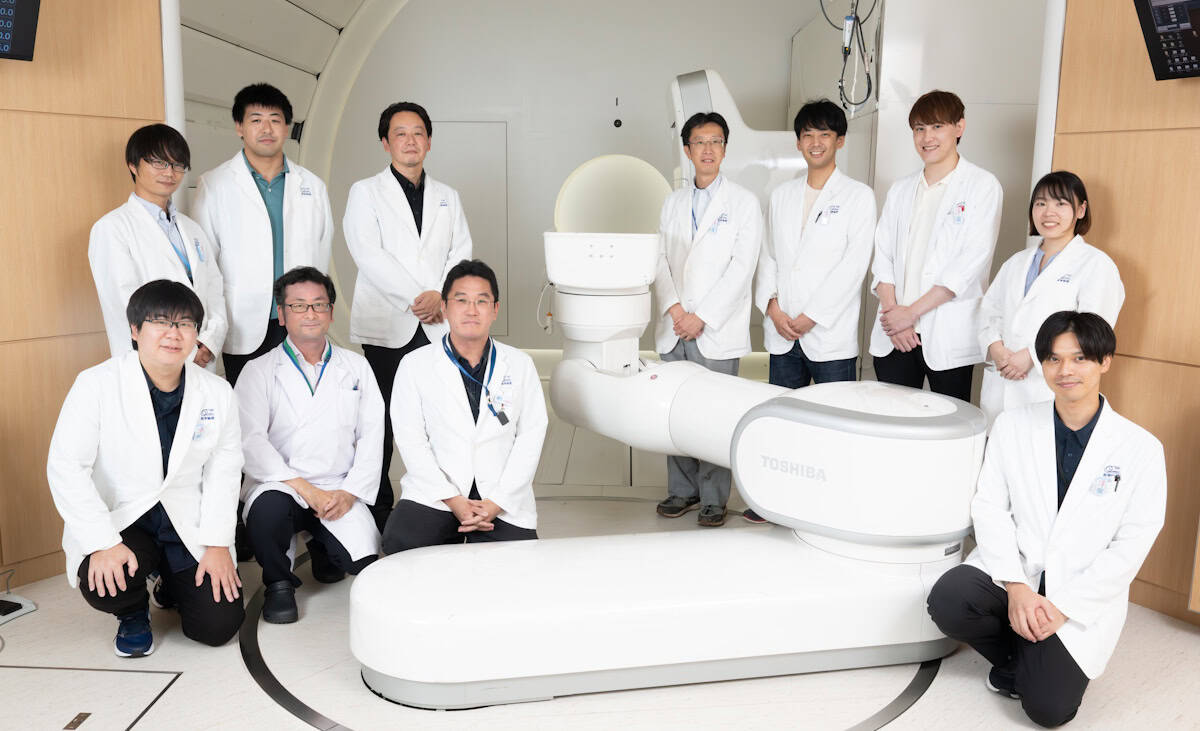
A groundbreaking study from the National Institutes for Quantum Science and Technology (QST) in Japan is investigating a novel multi-ion cancer therapy that combines different ion beams to enhance treatment precision. This approach aims to address the complex challenges associated with high linear energy transfer (LET) radiation, particularly for tumors that are difficult to treat with conventional methods.
Traditional proton therapy has its limitations, particularly in targeting tumors effectively. Heavy ion therapy, which utilizes particles like carbon, oxygen, and neon ions, offers advantages, including a sharper Bragg peak and minimal lateral scattering, which allow for precise tumor targeting. High-LET radiation is known to induce complex DNA damage in cancer cells, making it potentially effective against even hypoxic and radioresistant tumors.
Takamitsu Masuda, a researcher at QST, explains that “different ions exhibit distinct physical and biological characteristics.” By tailoring the ion combination to suit specific tumor characteristics, the therapy promises to improve tumor control while minimizing damage to surrounding healthy tissues.
Exploring Multi-Ion Therapy for Head-and-Neck Cancers
Currently, the QST team is conducting a phase I clinical trial to assess the safety and feasibility of this multi-ion approach for treating head-and-neck cancers. The researchers are focusing on increasing the dose-averaged LET (LETd) within tumors, a strategy that could enhance treatment efficacy. Despite the potential benefits, increasing LETd introduces challenges known as the “LET trilemma,” which involves balancing target dose homogeneity, range robustness, and high LETd.
In their recent publication in Physics in Medicine & Biology, Masuda and colleagues evaluated the impact of uncertainties in range and setup on multi-ion treatment plans. The study analyzed data from six patients who had previously undergone carbon-ion therapy, categorized by the size and location of their tumors.
The research team generated initial carbon-ion plans and then incorporated oxygen and neon ions to achieve a target LETd of 90 keV/μm for the gross tumor volume (GTV). They assessed the effects of range deviations—both overshoot and undershoot—along with various setup uncertainties. Their findings revealed that range uncertainty significantly affected plan quality, particularly in smaller, central tumors.
Strategies to Address the LET Trilemma
The researchers observed that range overshoot increased the dose delivered to the target, while undershoot had the opposite effect. For instance, patient #1, with a small central tumor, experienced a dose deviation of around ±6% due to range uncertainties, whereas patient #3 showed a deviation of just ±1%. Despite these variations, all dose constraints for the organs-at-risk (OARs) were met even under the largest error scenarios.
To enhance plan robustness, the team developed five alternative plans for patient #1, focusing on a small, central tumor that was particularly vulnerable to uncertainties. Modifications included expanding the target area, changing beam angles, increasing the number of irradiation fields, and employing a heavier-ion selection strategy. The latter, which utilized oxygen ions alone, proved most effective in reducing the effects of range uncertainty.
Masuda emphasizes that the use of heavier ions can lead to more reliable treatment delivery, especially for small, deeply seated tumors. This method could significantly improve the management of challenging cases, such as those located in the nasal cavity, where depth and anatomical variations complicate treatment.
Looking ahead, the QST research team plans to integrate advanced technologies, including robust optimization and in-beam PET imaging, to further minimize uncertainties in multi-ion therapy. This approach could be particularly beneficial for treating complex cancers, such as pancreatic cancer, where uncertainties are more pronounced.
As this innovative research continues to unfold, it holds the potential to reshape cancer treatment paradigms, offering new hope for patients facing difficult-to-treat tumors.

Niksic Celebrates Cultural Legacy with Folklore Milestone

NLC Demands Urgent Wage Adjustments Amid Rising Living Costs

‘One Battle After Another’ Triumphs with Six Oscars at 98th Academy Awards

Rainy Monday in Alton Clears for Sunshine by Midweek

Residents Push for New Supermarket in Overcrowded Town

Jimmy Kimmel Critiques Trump at 98th Academy Awards Ceremony

Young People Face Job Market Challenges Due to Health Issues

Stars Shine at the 2026 Oscars: Adorable Couples Take Center Stage

Brooklyn Beckham Faces Backlash for Mother’s Day Message Snub

Andrew Pierce Confirms Departure from ITV’s Good Morning Britain

Fiona Phillips’ Husband Shares Heartfelt Update on Her Alzheimer’s Journey

Neurologist Warns Excessive Use of Supplements Can Harm Brain

Gogglebox Star Helena Worthington Announces Break After Loss

Brian Cox Addresses Claims of Alien Probe in 3I/ATLAS Discovery

NASA Investigates Unusual Comet 3I/ATLAS; New Findings Emerge

EastEnders Welcomes Back Mark Fowler Jr. with New Actor

Coronation Street Reveals Audrey Roberts’ Absence Explained

Tess Daly Honoured with MBE, Announces Departure from Strictly
-
 Entertainment4 months ago
Andrew Pierce Confirms Departure from ITV’s Good Morning Britain
-
 Health7 months ago
Fiona Phillips’ Husband Shares Heartfelt Update on Her Alzheimer’s Journey
-
 Health7 months ago
Neurologist Warns Excessive Use of Supplements Can Harm Brain
-
 Entertainment4 months ago
Gogglebox Star Helena Worthington Announces Break After Loss
-
 Science6 months ago
Brian Cox Addresses Claims of Alien Probe in 3I/ATLAS Discovery
-
 Science6 months ago
NASA Investigates Unusual Comet 3I/ATLAS; New Findings Emerge
-
 World3 months ago
EastEnders Welcomes Back Mark Fowler Jr. with New Actor
-
 Entertainment1 month ago
Coronation Street Reveals Audrey Roberts’ Absence Explained
-
 Entertainment5 months ago
Tess Daly Honoured with MBE, Announces Departure from Strictly
-

 Health7 months ago
TOWIE Couple Sophie Kasaei and Jordan Brook Pursue Fertility Treatment Abroad
-

 World5 months ago
Bailey and Rebecca Announce Heartbreaking Split After MAFS Reunion
-

 Entertainment9 months ago
Coleen Nolan Reflects on Family Tragedy and Reconciliation