
Top Stories
Indigenous Leader Ignites Controversy by Burning Australian Flag

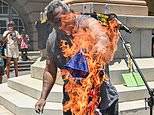
A First Nations man named Moojidji set the Australian flag on fire during an Invasion Day rally in Brisbane on January 26, 2026. His actions, which took place at Queens Gardens, have ignited significant controversy as Indigenous leaders and political figures react to the event. Despite public outcry, police have confirmed that no charges will be filed against Moojidji.
While addressing the gathered crowd, Moojidji expressed that the flag burning was a deliberate act aimed at challenging Australia’s legal legitimacy. He articulated that the Australian flag “doesn’t represent all of us,” emphasizing that the demonstration was about asserting sovereignty against what he described as an “illegal entity of law.” The crowd responded with cheers as the flames engulfed the flag, only to be extinguished moments later.
The incident drew swift condemnation from various political leaders, including Assistant Minister to the Prime Minister Patrick Gorman. He stated, “The overwhelming majority of Australians have no time for this divisive behaviour,” underscoring the importance of treating national symbols with respect. Gorman also noted that actions associated with flag desecration could be considered an offence under certain circumstances.
The federal government reiterated its disapproval of flag desecration, with One Nation leader Pauline Hanson labeling Moojidji’s actions as “un-Australian.” She expressed her disappointment, saying, “They can’t change history. No one can but we must unite. We’re all Australians.”
Opposition Leader Sussan Ley also weighed in, asserting that the flag should not be subject to “redefinition by anyone.” Ley criticized the recent failed attempt in parliament to ban flag burning, stating, “The Liberal Party moved to ban flag burning because we believe our national symbols deserve protection and respect.”
Yet, not all responses were negative. Greens councillor Trina Massey defended Moojidji’s actions, arguing that the Indigenous community should have the right to express themselves on a day that many consider a day of mourning.
The incident aligns with broader sentiments in Australia regarding national symbols. A poll from the Institute of Public Affairs conducted in August 2025 revealed that 77 percent of Australians believed that burning the national flag should be illegal. Among respondents aged 18 to 24, this figure was slightly lower at 76 percent. Furthermore, 63 percent of Australians indicated that individuals who burn the flag should face imprisonment.
Daniel Wild, Deputy Executive Director of the IPA, commented on the poll results, asserting that Australians are united in their pride for the flag. He emphasized that, while freedom of speech and peaceful protest are fundamental rights, the desecration of national symbols should not be tolerated.
On the day of the rally, tensions escalated as Queensland Police had to separate protesters when individuals carrying Australian flags approached the Invasion Day event. Police intervened as confrontations arose, with some rally attendees expressing their disapproval vocally.
The events of the Invasion Day rally underscore the ongoing complexities surrounding Australia’s national identity and the perspectives of its Indigenous population. As discussions continue, the response to Moojidji’s actions may further influence public discourse regarding national symbols and Indigenous rights in Australia.

Badminton England Launches Shuttle Stars to Engage Youth Across the UK

Keir Starmer Faces Backlash Over Potential EU Tuition Fee Discounts

Paul Mescal Celebrates 30th Birthday with Heartfelt Tribute from Mother

Alice Loxton Explores Georgian Healthcare’s Oddities and Insights

Alice Loxton Unveils Georgian Fashion and Early Celebrity Culture

David Goodwillie Faces Potential Private Rape Prosecution Soon

Scientists Accelerate Development of Metal-Based Antibiotics

Manchester United Attempts Late Bid for Liverpool’s Jacquet

Ifunanya Nwangene, Rising Star from The Voice Nigeria, Dies at 26

Andrew Pierce Confirms Departure from ITV’s Good Morning Britain

Fiona Phillips’ Husband Shares Heartfelt Update on Her Alzheimer’s Journey

Neurologist Warns Excessive Use of Supplements Can Harm Brain

Brian Cox Addresses Claims of Alien Probe in 3I/ATLAS Discovery

Gogglebox Star Helena Worthington Announces Break After Loss

NASA Investigates Unusual Comet 3I/ATLAS; New Findings Emerge

EastEnders Welcomes Back Mark Fowler Jr. with New Actor

Tess Daly Honoured with MBE, Announces Departure from Strictly

Kerry Katona Discusses Future Baby Plans and Brian McFadden’s Wedding
-
 Entertainment2 months ago
Andrew Pierce Confirms Departure from ITV’s Good Morning Britain
-
 Health5 months ago
Fiona Phillips’ Husband Shares Heartfelt Update on Her Alzheimer’s Journey
-
 Health5 months ago
Neurologist Warns Excessive Use of Supplements Can Harm Brain
-
 Science4 months ago
Brian Cox Addresses Claims of Alien Probe in 3I/ATLAS Discovery
-
 Entertainment2 months ago
Gogglebox Star Helena Worthington Announces Break After Loss
-
 Science3 months ago
NASA Investigates Unusual Comet 3I/ATLAS; New Findings Emerge
-
 World2 weeks ago
EastEnders Welcomes Back Mark Fowler Jr. with New Actor
-
 Entertainment3 months ago
Tess Daly Honoured with MBE, Announces Departure from Strictly
-
 Entertainment7 months ago
Kerry Katona Discusses Future Baby Plans and Brian McFadden’s Wedding
-
 Science3 months ago
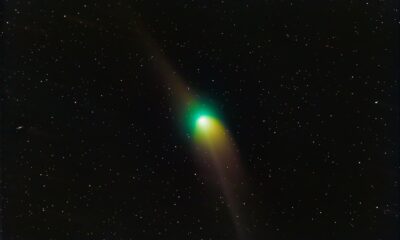
Scientists Examine 3I/ATLAS: Alien Artifact or Cosmic Oddity?
-

 Entertainment4 months ago
Lewis Cope Addresses Accusations of Dance Training Advantage
-

 World3 months ago
Bailey and Rebecca Announce Heartbreaking Split After MAFS Reunion