
Top Stories
Exhibition Revives Pljevlja’s Tambura Tradition Through Generations

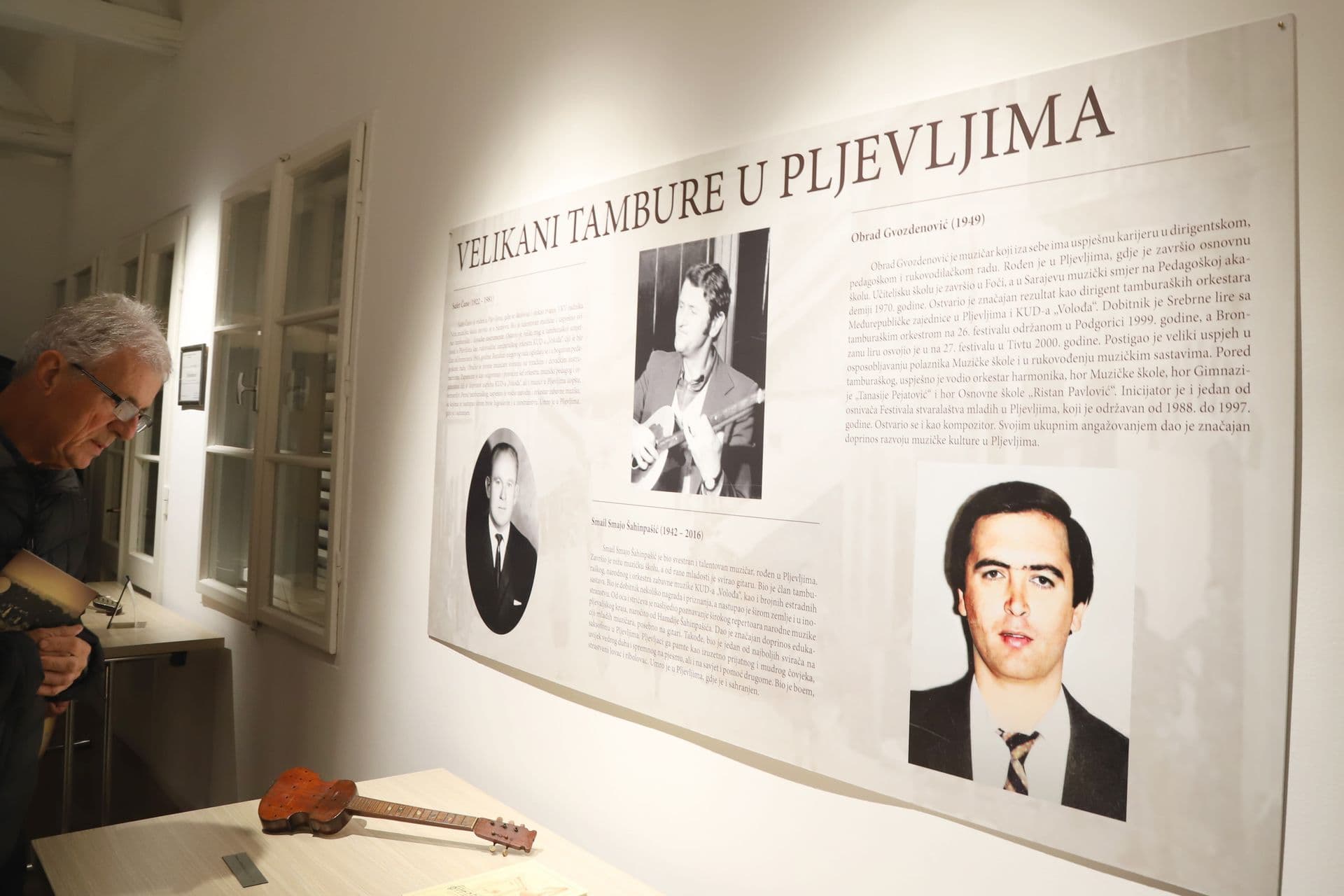
A new exhibition titled “Tambura Tradition in Pljevlja” is now showcasing the rich cultural heritage of this Montenegrin town, emphasizing the significance of preserving musical traditions for future generations. Open until December 19, 2023, at the Kuslev House, the exhibition is curated by Emir Prekic, a noted researcher and chronicler dedicated to safeguarding tambura music in northern Montenegro.
The exhibition presents a multifaceted exploration of over a century of tambura music development in Pljevlja. Through a combination of photographs, historical documents, musical instruments, audio recordings, and personal testimonies, it captures the evolution of this musical form from informal gatherings in cafés to modern orchestras, highlighting its role in shaping the town’s identity.
Prekic, who is also the founder and conductor of the City Tambura Orchestra of Pljevlja, has invested years in collecting materials and documenting the stories of tambura players. His work not only chronicles the music’s history but also paints an emotional and cultural portrait of a tradition that has endured numerous challenges, thanks to the enthusiasm, community spirit, and dedication of successive generations.
Understanding the Importance of Tambura Music
In an interview with Pobjeda, Prekic discussed the foundational motivations behind the exhibition. “My initial idea was to preserve and present a precious yet under-explored chapter of Pljevlja’s cultural history,” he explained. He noted that tambura tradition has been present in the town for more than a century, with traces scattered throughout private archives, musician memories, and old photographs.
When asked about the significance of tambura music for the cultural identity of Pljevlja, Prekic stated, “Tambura music represents one of the recognizable symbols of Pljevlja’s cultural heritage. Over generations, it has been an essential part of daily life—ranging from family gatherings and village celebrations to city events and artistic societies, all leaving a deep mark.”
The exhibition features notable artifacts, including the personal instruments of Hamdija Shahimpasic and Janika Balaz, both of whom began their professional careers at Radio Titograd in the 1950s—one as a vocal soloist and the other as a tambura player.
A Unique Musical Heritage
Prekic elaborated on the specific characteristics of Pljevlja’s tambura tradition compared to other areas in Montenegro and the wider region. He emphasized that Pljevlja’s tambura tradition is distinguished by its layered cultural heritage and long historical continuity. As a long-standing administrative and cultural center, the town has developed a unique urban culture where tambura music is deeply rooted.
“Unlike other Montenegrin regions where tambura practice may have a more folkloric or auxiliary character, in Pljevlja, tambura has taken on a distinctly urban, salon, and artistic tone,” he noted. This has been fostered by trained musicians and city ensembles, leading to the development of a recognizable style that is more melodic and closer to Central European and Bosnian urban musical traditions.
This local tambura heritage is a blend of various influences, including oriental, Balkan, sevdalinka, as well as Austro-Hungarian and South Slavic elements. Prekic remarked that this fusion provides the sound of Pljevlja’s tambura players with a unique warmth and elegance rarely found elsewhere in Montenegro.
Prekic highlighted the powerful connection between tambura music and local identity in Pljevlja, stating, “Tambura has been played in Pljevlja for over a century and has gradually become a recognizable symbol and a sort of brand for the town. The ‘Pljevaljski tamburasi’ and the legendary song ‘Svi pljevaljski tamburaši’ have contributed to Pljevlja’s proud title as the tambura capital of Montenegro.”
Inspiring Future Generations
The exhibition aims to inspire interest in traditional tambura music among younger generations. Prekic noted that the majority of members in the City Tambura Orchestra are minors, indicating a promising future for this musical tradition in the town.
He emphasized the importance of maintaining a living practice through active participation, stating, “It is crucial to support tambura schools, city orchestras, cultural-artistic societies, and all enthusiasts who invest time and energy into this form of intangible heritage. Instruments, photographs, and archives are precious, but the tradition truly lives only when played, sung, and passed on to younger generations.”
Prekic views exhibitions like “Tambura Tradition in Pljevlja” as vital bridges between past and present. “Its role is twofold: it documents, systematizes, and preserves traces of a rich tambura practice that has shaped Pljevlja’s identity while promoting tambura practice by bringing it closer to new generations and audiences who may have little or only superficial knowledge of it,” he concluded.
The exhibition stands as a testament to the enduring legacy of tambura music and its capacity to create connections across generations, ensuring that this treasured cultural tradition continues to thrive in Pljevlja and beyond.

Driver Banned After Hitting 84-Year-Old at Ballymena Crossing

River Island Launches Affordable Party Dress for Under £17

African Leaders Demand Immediate Release of Guinea-Bissau Election Results

Scientist Claims Alien Encounters in Final Confession

Zeta Residents Urged to Rally in Botun Amid Planned Intervention

Visionary Architect Frank Gehry Passes Away at 96

Exhibition Revives Pljevlja’s Tambura Tradition Through Generations

Investors Eye ISAs to Boost Retirement Income by 2026

Sadie Devine Brings Laughter to Belfast with New Christmas Show

Neurologist Warns Excessive Use of Supplements Can Harm Brain

Fiona Phillips’ Husband Shares Heartfelt Update on Her Alzheimer’s Journey

Brian Cox Addresses Claims of Alien Probe in 3I/ATLAS Discovery

NASA Investigates Unusual Comet 3I/ATLAS; New Findings Emerge

Scientists Examine 3I/ATLAS: Alien Artifact or Cosmic Oddity?

Kerry Katona Discusses Future Baby Plans and Brian McFadden’s Wedding

NASA Investigates Speedy Object 3I/ATLAS, Sparking Speculation

Emmerdale Faces Tension as Dylan and April’s Lives Hang in the Balance

Cole Palmer’s Cryptic Message to Kobbie Mainoo Following Loan Talks
-
 Health3 months ago
Neurologist Warns Excessive Use of Supplements Can Harm Brain
-
 Health3 months ago
Fiona Phillips’ Husband Shares Heartfelt Update on Her Alzheimer’s Journey
-
 Science2 months ago
Brian Cox Addresses Claims of Alien Probe in 3I/ATLAS Discovery
-
 Science2 months ago
NASA Investigates Unusual Comet 3I/ATLAS; New Findings Emerge
-
 Science1 month ago
Scientists Examine 3I/ATLAS: Alien Artifact or Cosmic Oddity?
-
 Entertainment5 months ago
Kerry Katona Discusses Future Baby Plans and Brian McFadden’s Wedding
-
 Science1 month ago
NASA Investigates Speedy Object 3I/ATLAS, Sparking Speculation
-
 Entertainment4 months ago
Emmerdale Faces Tension as Dylan and April’s Lives Hang in the Balance
-
 World3 months ago
Cole Palmer’s Cryptic Message to Kobbie Mainoo Following Loan Talks
-
 Science1 month ago
NASA Scientists Explore Origins of 3I/ATLAS, a Fast-Moving Visitor
-

 Entertainment2 months ago
Lewis Cope Addresses Accusations of Dance Training Advantage
-

 Entertainment4 months ago
Major Cast Changes at Coronation Street: Exits and Returns in 2025