
Entertainment
Greg Lake Reflects on His Musical Journey with ELP and King Crimson

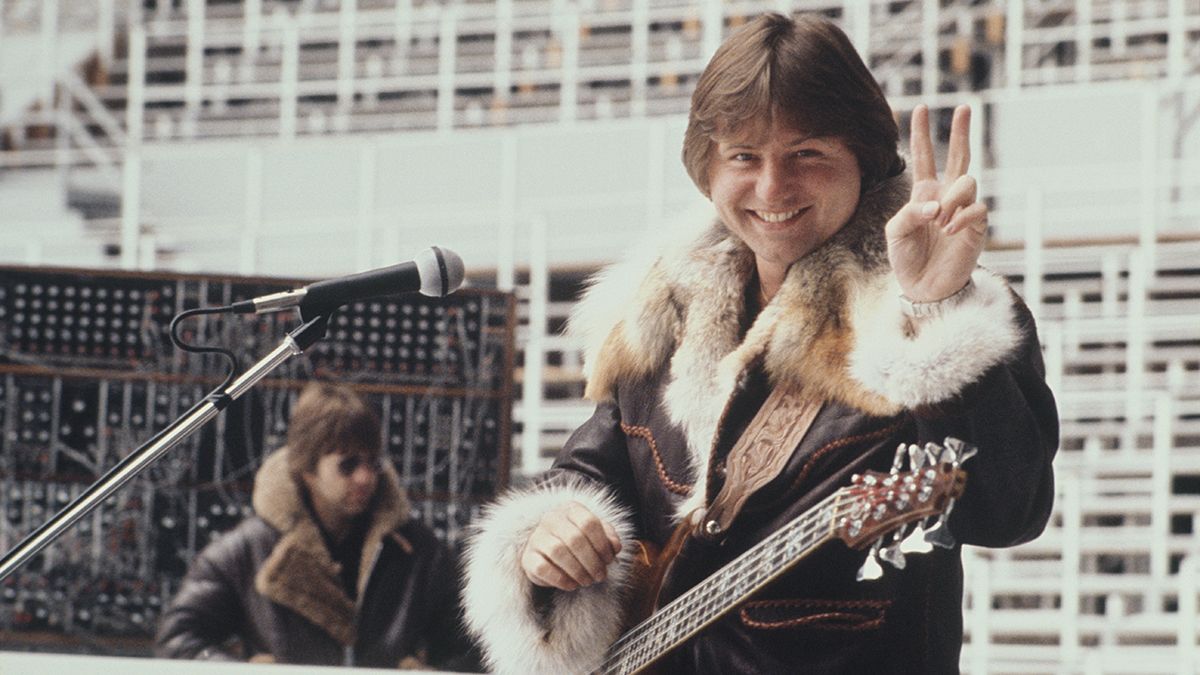
Greg Lake, the renowned musician and co-founder of the progressive rock band Emerson, Lake & Palmer (ELP), has shared insights into his musical evolution and the formative moments that shaped his career. In a conversation with Bass Player magazine in 2016, Lake recounted his transition from guitarist to bassist, a shift prompted by fellow musician Robert Fripp when he joined King Crimson.
Reflecting on his early experiences, Lake remarked, “There’s a funny sense you get when you first make a record. There’s the immediate satisfaction if it’s a hit, but when it stands the test of time, you get a different satisfaction.” This duality of success is evident in ELP’s legacy, marked by timeless tracks such as “Lucky Man,” “Karn Evil 9,” “Tarkus,” and “Fanfare for the Common Man.”
ELP, formed in 1970 after Lake’s departure from King Crimson, became one of the few progressive rock bands to achieve significant success on the Billboard charts, defying conventional Top 40 norms. King Crimson’s debut album, In the Court of the Crimson King, remains a cornerstone of the genre and a testament to Lake’s impact on music. Released in 1969, it was among the first rock albums to draw heavily from classical, jazz, and symphonic influences, steering away from traditional blues styles.
Lake’s switch from guitar to bass was not without challenges. Initially, he approached the bass with a casual attitude. “I thought, ‘Four strings, six strings… what could be the problem?’ Little did I realize that bass playing is an entirely different world,” he stated. His first rehearsal with King Crimson was a pivotal moment, where he learned the critical role of the bass within a band. Drummer Michael Giles demonstrated this by asserting, “When I play the snare drum, you don’t play. That’s how the snare cuts through.” This lesson marked the beginning of Lake’s deeper understanding of the bass guitar’s function in music.
As Lake developed his playing style, he recognized the limitations of his initial approach. He initially used tape-wound strings but found them unsatisfactory. Switching to wire-wound strings, he sought to achieve a sound reminiscent of a Steinway piano. “That’s the sound I wanted,” he explained, emphasizing the importance of tone in his bass playing.
Throughout his career, Lake has consistently preferred using a pick over fingerstyle. His background as a guitarist influenced his technique, allowing him to create a more percussive sound. He acknowledged the differences between singing and playing bass versus guitar, noting, “When you play guitar, you have the choice of whether to play or not to play. With bass, you’re going to play whether you like it or not, because you’re part of the rhythm section.”
In ELP, Lake oscillated between bass and guitar, often yearning to play the latter. He noted that while his guitar contributions were significant, the bass was essential to the band’s sound. The intricate dynamics between ELP’s members, particularly with drummer Carl Palmer, presented unique challenges. Lake described Palmer’s style as technically proficient yet less solid from a bass player’s perspective. This necessitated careful production work to ensure the bass and drums complemented each other, ultimately contributing to ELP’s distinctive identity.
Lake’s production work extended beyond ELP; he also produced King Crimson’s seminal album. He suggested that bass players often make good producers due to their broader perspective on musical arrangements. “I didn’t have any ambitions of becoming a famous producer; I just enjoyed doing it,” he stated, noting that all the records he produced achieved platinum status.
The unique sound of ELP set them apart from many rock bands of the 1970s, which predominantly drew from American musical roots. Lake explained, “We looked to European roots rather than American,” incorporating elements of folk and classical music into their compositions. This diverse musical palette helped define their sound, distinguishing ELP from their contemporaries.
Looking back on the current music landscape, Lake expressed concerns over the lack of originality in contemporary music. He preferred the term “original” over “progressive,” stating that the essence of ELP and King Crimson was about being different rather than fitting into a specific genre. “When we started, the essence was to be original, to be different. Nowadays everyone sounds the same,” he remarked, highlighting the importance of innovation in music.
Greg Lake’s reflections not only underscore his personal journey but also offer a glimpse into the evolution of progressive rock music. His experiences with ELP and King Crimson continue to resonate, emphasizing the lasting impact of originality and creativity in the music industry.

Tension Mounts for Buducnost as Coach Faces Possible Exit

World Cup Ticket Revenue Breakdown Revealed in New Analysis

Exodus Developers Confirm No AI in Matthew McConaughey’s Performance

King Charles Celebrates Support Following Cancer Recovery Update

Buducnost Faces Crucial Match as Coach Vukicevic Responds to Criticism

Labour Appoints Highland Baroness Catherine MacLeod to Lords

Researchers Uncover New Insights in Topological Photonics

US Soldiers Ambushed in Syria: Multiple Casualties Reported

Lewisham High Street Closed Following Serious Accident

Neurologist Warns Excessive Use of Supplements Can Harm Brain

Fiona Phillips’ Husband Shares Heartfelt Update on Her Alzheimer’s Journey

Brian Cox Addresses Claims of Alien Probe in 3I/ATLAS Discovery

NASA Investigates Unusual Comet 3I/ATLAS; New Findings Emerge

Scientists Examine 3I/ATLAS: Alien Artifact or Cosmic Oddity?

Lewis Cope Addresses Accusations of Dance Training Advantage

Andrew Pierce Confirms Departure from ITV’s Good Morning Britain

Kerry Katona Discusses Future Baby Plans and Brian McFadden’s Wedding

NASA Investigates Speedy Object 3I/ATLAS, Sparking Speculation
-
 Health3 months ago
Neurologist Warns Excessive Use of Supplements Can Harm Brain
-
 Health4 months ago
Fiona Phillips’ Husband Shares Heartfelt Update on Her Alzheimer’s Journey
-
 Science2 months ago
Brian Cox Addresses Claims of Alien Probe in 3I/ATLAS Discovery
-
 Science2 months ago
NASA Investigates Unusual Comet 3I/ATLAS; New Findings Emerge
-
 Science2 months ago
Scientists Examine 3I/ATLAS: Alien Artifact or Cosmic Oddity?
-
 Entertainment2 months ago
Lewis Cope Addresses Accusations of Dance Training Advantage
-
 Entertainment2 days ago
Andrew Pierce Confirms Departure from ITV’s Good Morning Britain
-
 Entertainment5 months ago
Kerry Katona Discusses Future Baby Plans and Brian McFadden’s Wedding
-
 Science2 months ago
NASA Investigates Speedy Object 3I/ATLAS, Sparking Speculation
-

 Entertainment5 months ago
Emmerdale Faces Tension as Dylan and April’s Lives Hang in the Balance
-

 World3 months ago
Cole Palmer’s Cryptic Message to Kobbie Mainoo Following Loan Talks
-

 World4 weeks ago
Bailey and Rebecca Announce Heartbreaking Split After MAFS Reunion