
Science
Scientists Unveil Evidence of Fire Use by Humans 400,000 Years Ago

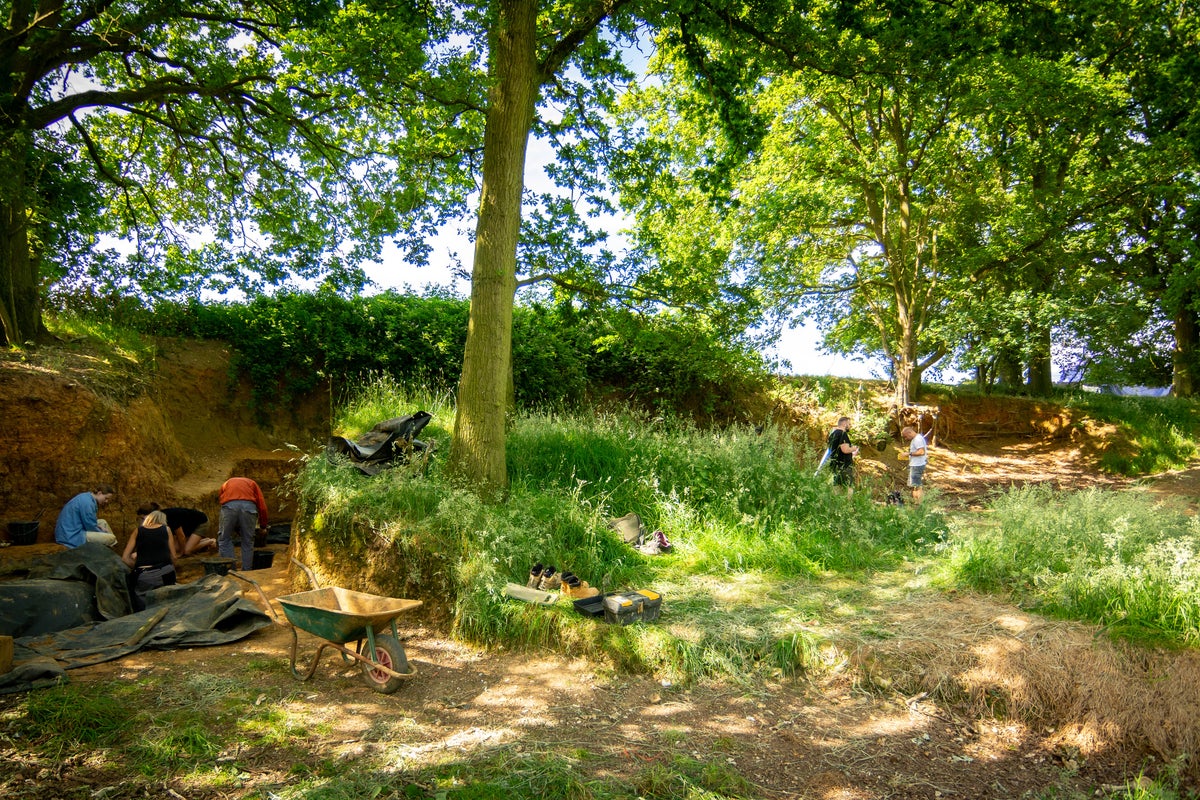
The discovery of the earliest known evidence of human fire-making has been made in Barnham, Suffolk, pushing back the timeline of this critical development in human history by a staggering 350,000 years. Researchers from the British Museum have identified fire-cracked flint, hand axes, and heated sediments at a disused clay pit, dating these findings to over 400,000 years ago.
Significantly, the team unearthed two fragments of iron pyrite, a mineral known to create sparks, indicating the intentional transportation of materials for fire production. This discovery, located between Thetford and Bury St Edmunds, challenges previous assumptions that the earliest use of fire occurred around 50,000 years ago in northern France.
Groundbreaking Research Unfolds
After four years of meticulous study, scientists led by Dr. Rob Davis, Project Curator: Pathways to Ancient Britain at the British Museum, confirmed that the heated clay at the site was not the result of natural wildfires. Geochemical analyses revealed evidence of repeated fire use, characteristic of human activity rather than random occurrences in nature.
The implications of controlled fire use are substantial, revealing how it may have played a pivotal role in enhancing survival rates among early humans. The ability to keep warm and protect against predators would have been invaluable in harsh environments. Additionally, cooking food not only made it safer to eat but also expanded the variety of available nutrition, fostering social interaction around fire-lit spaces.
Professor Chris Stringer from the Natural History Museum suggested that these fires were likely made by early Neanderthal populations, although their exact identity remains unconfirmed. He pointed out that this period coincided with an increase in brain size, crucial for the development of complex human behaviors.
Impact on Human Evolution
According to Professor Stringer, “There’s no doubt that our brains are energetically expensive. They use about 20 percent of our body energy, so having the use of fire will help release nutrition from food, which fuels the brain and supports the evolution of a larger brain.” He emphasized that while there is a significant gap of about 350,000 years until the next best evidence of fire use, it does not rule out earlier instances of fire-making.
The research suggests that the people at Barnham likely brought their fire-making skills from continental Europe, facilitated by a land bridge. Professor Stringer noted that a major cold stage around 450,000 years ago may have led to the extinction of early populations in Britain, necessitating repopulation.
“Having the use of fire would have assisted people moving into colder climates,” he explained. “It provides warmth, protection from wild animals, and enhanced nutritional access from food. This feedback loop could have stimulated brain growth and increased social interaction, possibly even contributing to the development of language.”
Describing the find as the “most exciting discovery of my 40-year career,” Professor Nick Ashton, Curator of Palaeolithic Collections at the British Museum, expressed the significance of this research. The findings are detailed in the paper titled “Earliest Evidence of Making Fire,” published in the journal Nature.
This groundbreaking research not only reshapes our understanding of human evolution but also underscores the importance of fire in early human life, revealing a crucial aspect of our development as a species.

Motorists Urged to Avoid Saintfield Road After Collision

UAE Commits $550 Million to UN Humanitarian Initiatives for 2026

Celebrate Community Spirit at Bosherston’s Festival of Angels

Scientists Unveil Evidence of Fire Use by Humans 400,000 Years Ago

Montenegro Handball Team Advances to Quarterfinals Amid Expectations

GES Unveils Show Ready – The Edit: A New Era in Exhibition Design

Blackburn Rovers Face Managerial Uncertainty Amid Pitch Issues

Expert Reveals Timing Strategy to Slash Car Insurance Costs

Explore London’s Top Free Events This Weekend: December 12-14

Neurologist Warns Excessive Use of Supplements Can Harm Brain

Fiona Phillips’ Husband Shares Heartfelt Update on Her Alzheimer’s Journey

Brian Cox Addresses Claims of Alien Probe in 3I/ATLAS Discovery

NASA Investigates Unusual Comet 3I/ATLAS; New Findings Emerge

Scientists Examine 3I/ATLAS: Alien Artifact or Cosmic Oddity?

Lewis Cope Addresses Accusations of Dance Training Advantage

Kerry Katona Discusses Future Baby Plans and Brian McFadden’s Wedding

NASA Investigates Speedy Object 3I/ATLAS, Sparking Speculation

Emmerdale Faces Tension as Dylan and April’s Lives Hang in the Balance
-
 Health3 months ago
Neurologist Warns Excessive Use of Supplements Can Harm Brain
-
 Health4 months ago
Fiona Phillips’ Husband Shares Heartfelt Update on Her Alzheimer’s Journey
-
 Science2 months ago
Brian Cox Addresses Claims of Alien Probe in 3I/ATLAS Discovery
-
 Science2 months ago
NASA Investigates Unusual Comet 3I/ATLAS; New Findings Emerge
-
 Science2 months ago
Scientists Examine 3I/ATLAS: Alien Artifact or Cosmic Oddity?
-
 Entertainment2 months ago
Lewis Cope Addresses Accusations of Dance Training Advantage
-
 Entertainment5 months ago
Kerry Katona Discusses Future Baby Plans and Brian McFadden’s Wedding
-
 Science2 months ago
NASA Investigates Speedy Object 3I/ATLAS, Sparking Speculation
-
 Entertainment4 months ago
Emmerdale Faces Tension as Dylan and April’s Lives Hang in the Balance
-

 World3 months ago
Cole Palmer’s Cryptic Message to Kobbie Mainoo Following Loan Talks
-
 Science2 months ago
NASA Scientists Explore Origins of 3I/ATLAS, a Fast-Moving Visitor
-

 World3 weeks ago
Bailey and Rebecca Announce Heartbreaking Split After MAFS Reunion