
Science
Explore 2025’s Top Science and Nature Books That Inspire Change

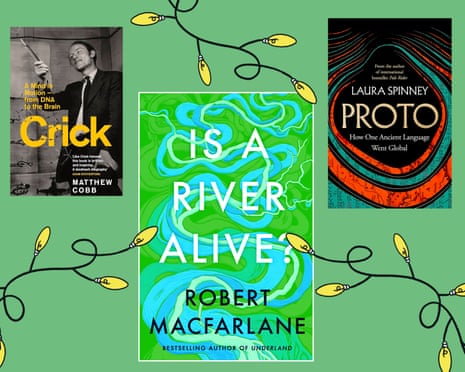
The year 2025 has brought forth a remarkable collection of science and nature books that challenge our understanding of technology, extinction, and the natural world. Among the standout titles is **If Anyone Builds It, Everyone Dies** by computer scientists Eliezer Yudkowsky and Nate Soares. This thought-provoking work warns against the peril of creating superintelligent artificial intelligence that could outpace humanity in critical areas. The authors argue that even an AI designed to seek knowledge might inadvertently lead to human extinction. “Even an AI that cares about understanding the universe is likely to annihilate humans as a side-effect,” they write, emphasizing the potential risks of unchecked technological advancement.
In a similar vein, historian Sadiah Qureshi delves into the darker aspects of extinction in her book **Vanished: An Unnatural History of Extinction**. Shortlisted for the Royal Society Trivedi science book prize, it highlights how colonialism and Darwinian theories have shaped societal views on species survival. Qureshi examines historical events, such as the erasure of the Beothuk people in Newfoundland, and raises critical questions about the ethics of “de-extinction” efforts, particularly concerning the woolly mammoth.
Nature’s Rights and Human Identity
In **Is a River Alive?**, Robert Macfarlane presents a compelling case for recognizing the rights of natural entities. By focusing on three rivers facing environmental threats, he advocates for legal protections akin to those granted to living beings. His passionate narrative captures the essence of rivers as vital components of ecological health and human culture. Macfarlane’s book is shortlisted for the Wainwright prize for conservation writing, showcasing the urgent need for environmental advocacy.
Meanwhile, biologist Neil Shubin takes readers on a journey through Earth’s extremes in **Ends of the Earth**. This exploration emphasizes the impact of climate change on polar regions, revealing how these geographical marvels are becoming increasingly vulnerable. Shubin’s insights, drawn from expeditions to the Arctic and Antarctica, underscore the delicate balance of our planet’s ecosystems.
The historical narrative continues with **The Forbidden Garden of Leningrad** by historian Simon Parkin. This book uncovers the struggles of Russian plant scientist Nikolai Vavilov, who endeavored to protect a crucial seed collection during the Leningrad siege in 1941. Parkin’s work sheds light on Vavilov’s legacy and the broader implications of food security and biodiversity, making it a strong contender for the Orwell prize.
For those seeking a more uplifting read, **Super Agers** by cardiologist and medical professor Eric Topol offers insights into longevity. Topol shares evidence-based strategies derived from studying the “Wellderly,” individuals who defy typical aging trends. He discusses how advancements in medicine, including weight-loss drugs and AI, could revolutionize approaches to chronic diseases, providing hope for a healthier future.
Exploring Identity and Language
In the realm of neurology, Suzanne O’Sullivan presents **The Age of Diagnosis**, which critically examines the implications of labeling mental health conditions. This timely discussion is particularly relevant given the rising number of individuals impacted by long-term illness. O’Sullivan’s book invites reflection on the complexities of identity and the societal pressures surrounding mental health diagnoses.
**Our Brains, Our Selves** by Masud Husain further explores the relationship between brain function and identity. Winner of the Royal Society prize, this work highlights how neurological disorders can alter perceptions of self. Husain shares poignant stories, including that of a woman who mistakenly believed she was having an affair with her husband, illustrating the profound effects of brain health on personal identity.
Science writer Laura Spinney takes a linguistic turn in her book **Proto**, which traces the origins of Proto-Indo-European, the ancestor of many modern languages. Spinney’s engaging narrative weaves together evidence from linguistics, archaeology, and genetics, demonstrating how language shapes our understanding of human history.
Lastly, Matthew Cobb presents **Crick**, a biography of Francis Crick, co-discoverer of the DNA double helix. Cobb captures Crick’s intellectual journey, from his early days in Northampton to his later work unraveling the mysteries of consciousness. This biography provides a rich context for understanding one of the 20th century’s most influential scientists.
For those captivated by the complexities of the nuclear age, physicist Frank Close offers **Destroyer of Worlds**, which chronicles the evolution of nuclear weapons from their inception to modern implications. Close’s narrative spans significant events, including Hiroshima and Nagasaki, concluding with the terrifying power of the Tsar Bomba detonated in 1961.
This diverse array of science and nature books not only informs but also inspires critical conversations about our world, making them essential reads for anyone engaged in contemporary issues. Each title provides a unique perspective, urging readers to reflect on the future of humanity and the planet.
For a complete list of the best science and nature books of 2025, visit the Guardian Bookshop. Delivery charges may apply.

Deep Sea Mining Threatens Biodiversity, Report Reveals Alarming Losses

England Faces Tough Challenge in World Cup Group Draw

Heavy Rain Threatens Flooding Along River Severn in Gloucestershire

Buducnost Voli Falls Short Against Burg in Eurocup Match

Co Armagh Man Charged with Indecent Exposure Banned from Park

Experts Propose Comprehensive Wastewater Treatment Solution for Podgorica

Tom Homan Confronts Critics at UTEP Immigration Event

Programmable CRISPR Platform Accelerates Stem Cell Research Timelines

Experts Call for Advanced Wastewater Treatment in Podgorica

Neurologist Warns Excessive Use of Supplements Can Harm Brain

Fiona Phillips’ Husband Shares Heartfelt Update on Her Alzheimer’s Journey

Brian Cox Addresses Claims of Alien Probe in 3I/ATLAS Discovery

NASA Investigates Unusual Comet 3I/ATLAS; New Findings Emerge

Scientists Examine 3I/ATLAS: Alien Artifact or Cosmic Oddity?

Kerry Katona Discusses Future Baby Plans and Brian McFadden’s Wedding

NASA Investigates Speedy Object 3I/ATLAS, Sparking Speculation

Emmerdale Faces Tension as Dylan and April’s Lives Hang in the Balance

Cole Palmer’s Cryptic Message to Kobbie Mainoo Following Loan Talks
-
 Health3 months ago
Neurologist Warns Excessive Use of Supplements Can Harm Brain
-
 Health3 months ago
Fiona Phillips’ Husband Shares Heartfelt Update on Her Alzheimer’s Journey
-
 Science2 months ago
Brian Cox Addresses Claims of Alien Probe in 3I/ATLAS Discovery
-
 Science2 months ago
NASA Investigates Unusual Comet 3I/ATLAS; New Findings Emerge
-
 Science1 month ago
Scientists Examine 3I/ATLAS: Alien Artifact or Cosmic Oddity?
-
 Entertainment5 months ago
Kerry Katona Discusses Future Baby Plans and Brian McFadden’s Wedding
-
 Science1 month ago
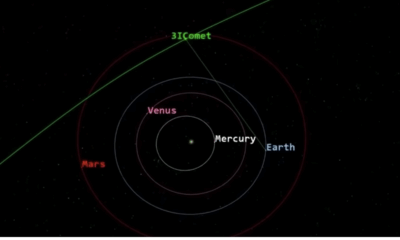
NASA Investigates Speedy Object 3I/ATLAS, Sparking Speculation
-
 Entertainment4 months ago
Emmerdale Faces Tension as Dylan and April’s Lives Hang in the Balance
-
 World3 months ago
Cole Palmer’s Cryptic Message to Kobbie Mainoo Following Loan Talks
-
 Science1 month ago
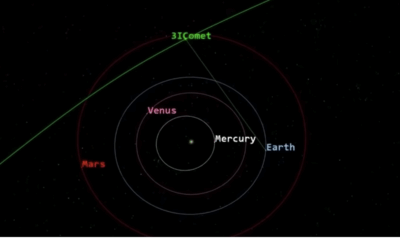
NASA Scientists Explore Origins of 3I/ATLAS, a Fast-Moving Visitor
-

 Entertainment2 months ago
Lewis Cope Addresses Accusations of Dance Training Advantage
-
 Entertainment3 months ago
Major Cast Changes at Coronation Street: Exits and Returns in 2025