
Politics
Putin Engages India in Talks on Defence and Energy Issues

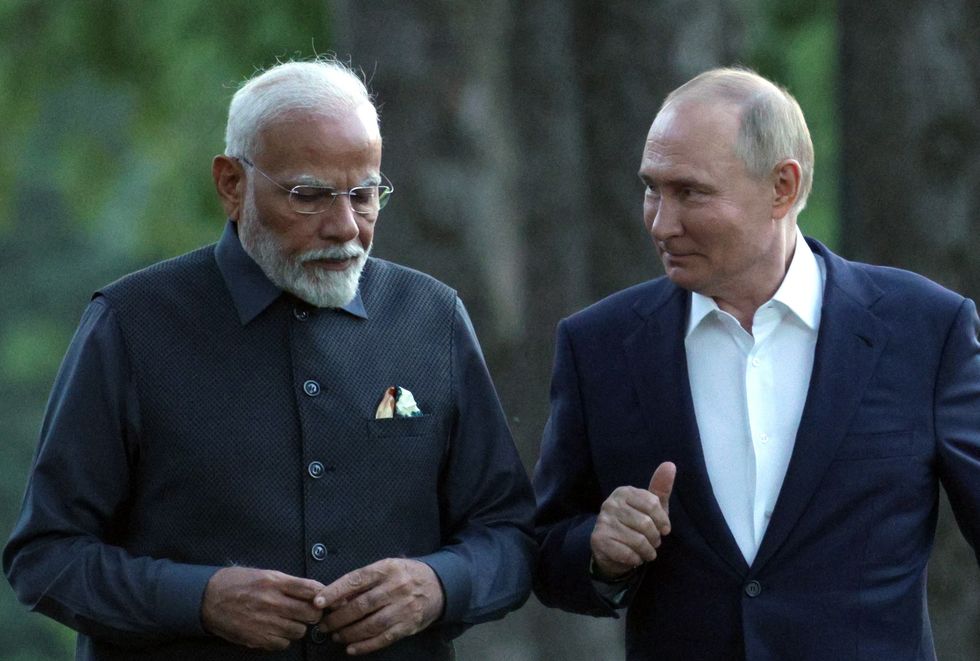
Russian President Vladimir Putin is set to commence a two-day visit to India on August 24, 2024, with a focus on enhancing cooperation in defence and trade. This marks Putin’s first trip to India since the onset of the Ukraine conflict. Accompanying him will be a delegation that includes Defence Minister Andrei Belousov. The discussions are expected to centre on military collaborations and energy trade, particularly in light of India’s ongoing purchases of Russian oil, which have drawn scrutiny from the United States.
Putin’s visit comes at a pivotal time for India, which has faced increasing pressure from Washington regarding its energy imports. The Russian leader will meet with Indian Prime Minister Narendra Modi for a private dinner on the evening of his arrival, followed by a formal summit and business session the next day. Key topics on the agenda include the potential for a fighter jet deal and the ongoing supply of Russia’s advanced S-400 air defence systems, which has been a point of negotiation since a deal was struck in 2018.
Exploring Defence Cooperation
Kremlin spokesman Dmitry Peskov highlighted that the S-400 systems hold “an important place on the agenda.” Currently, India operates three units of the S-400, with two additional units pending delivery, which has been delayed due to sanctions imposed on Russia following its military actions in Ukraine. Furthermore, discussions may include the co-production of Russia’s Su-57 fighter jets, as India continues to rely heavily on defence imports while also seeking to bolster its domestic manufacturing capabilities.
Historically, Russia has been India’s principal arms supplier, though the Stockholm International Peace Research Institute reports a significant decline in this dependency. Russia’s share of India’s arms imports decreased from 76 percent in the period between 2009 and 2013 to 36 percent from 2019 to 2023. This shift underscores India’s efforts to diversify its supply sources and reduce reliance on foreign arms.
India’s burgeoning status as the world’s most populous nation has coincided with its increased purchases of Russian crude oil, providing significant savings while positioning Russia as a key player in the global oil market after losing European buyers. Despite recent reductions in crude oil purchases due to sanctions on companies like Rosneft and Lukoil, Indian officials remain cautious about how new energy or defence deals with Russia might impact ongoing trade discussions with the United States.
Trade Relations Under Scrutiny
The trade dynamics between India and Russia have grown increasingly complex. Bilateral trade reached $68.7 billion in the fiscal year 2024-25, nearly six times the pre-pandemic levels. However, Indian exports to Russia comprised only $4.88 billion, indicating a significant trade imbalance. Indian officials are urging Russia to improve market access for sectors such as pharmaceuticals, automobiles, and services to address this disparity.
Analysts, including Nandan Unnikrishnan from the Observer Research Foundation, suggest that while there may be a reduction in energy purchases due to U.S. pressure, the overall trajectory of India-Russia relations is likely to remain stable. He noted, “Both countries need each other at the strategic level.”
Putin’s visit is viewed as an opportunity for both leaders to address not only bilateral issues but also broader global concerns, including the ongoing situation in Ukraine. Harsh V Pant from King’s College London describes the visit as an effort to “reset their relationship at a critical geopolitical moment for both,” highlighting the significance of the meeting against the backdrop of international tensions.
As discussions unfold, the Indian foreign ministry has characterized the India-Russia relationship as the “most stable relationship in modern times,” despite the shifting geopolitical landscape. Officials acknowledge the complexities involved but emphasize the importance of viewing the summit in its bilateral context. This meeting represents not just another annual summit but a reaffirmation of long-standing ties between the two nations.

Deep Sea Mining Threatens Biodiversity, Report Reveals Alarming Losses

England Faces Tough Challenge in World Cup Group Draw

Heavy Rain Threatens Flooding Along River Severn in Gloucestershire

Buducnost Voli Falls Short Against Burg in Eurocup Match

Co Armagh Man Charged with Indecent Exposure Banned from Park

Experts Propose Comprehensive Wastewater Treatment Solution for Podgorica

Tom Homan Confronts Critics at UTEP Immigration Event

Programmable CRISPR Platform Accelerates Stem Cell Research Timelines

Experts Call for Advanced Wastewater Treatment in Podgorica

Neurologist Warns Excessive Use of Supplements Can Harm Brain

Fiona Phillips’ Husband Shares Heartfelt Update on Her Alzheimer’s Journey

Brian Cox Addresses Claims of Alien Probe in 3I/ATLAS Discovery

NASA Investigates Unusual Comet 3I/ATLAS; New Findings Emerge

Scientists Examine 3I/ATLAS: Alien Artifact or Cosmic Oddity?

Kerry Katona Discusses Future Baby Plans and Brian McFadden’s Wedding

NASA Investigates Speedy Object 3I/ATLAS, Sparking Speculation

Emmerdale Faces Tension as Dylan and April’s Lives Hang in the Balance

Cole Palmer’s Cryptic Message to Kobbie Mainoo Following Loan Talks
-
 Health3 months ago
Neurologist Warns Excessive Use of Supplements Can Harm Brain
-
 Health3 months ago
Fiona Phillips’ Husband Shares Heartfelt Update on Her Alzheimer’s Journey
-
 Science2 months ago
Brian Cox Addresses Claims of Alien Probe in 3I/ATLAS Discovery
-
 Science2 months ago
NASA Investigates Unusual Comet 3I/ATLAS; New Findings Emerge
-
 Science1 month ago
Scientists Examine 3I/ATLAS: Alien Artifact or Cosmic Oddity?
-
 Entertainment5 months ago
Kerry Katona Discusses Future Baby Plans and Brian McFadden’s Wedding
-
 Science1 month ago
NASA Investigates Speedy Object 3I/ATLAS, Sparking Speculation
-
 Entertainment4 months ago
Emmerdale Faces Tension as Dylan and April’s Lives Hang in the Balance
-
 World3 months ago
Cole Palmer’s Cryptic Message to Kobbie Mainoo Following Loan Talks
-
 Science1 month ago
NASA Scientists Explore Origins of 3I/ATLAS, a Fast-Moving Visitor
-

 Entertainment2 months ago
Lewis Cope Addresses Accusations of Dance Training Advantage
-

 Entertainment3 months ago
Major Cast Changes at Coronation Street: Exits and Returns in 2025