
Politics
Alina Habba Steps Down as U.S. Attorney for New Jersey

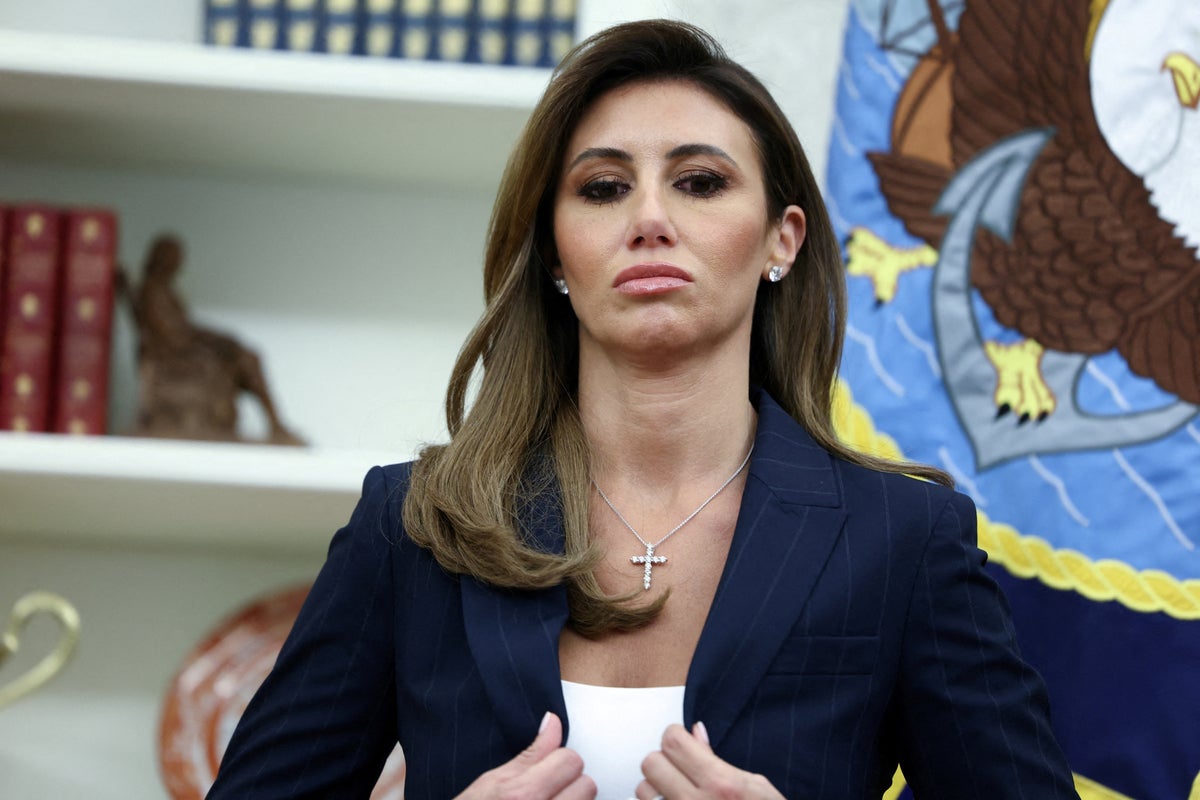
Donald Trump’s former personal attorney, Alina Habba, will resign as U.S. Attorney for New Jersey following a federal appeals court ruling that deemed her appointment unlawful. This decision culminates a series of legal challenges surrounding the Trump administration’s influence on judicial appointments. The appeals court confirmed a lower court’s decision, effectively disqualifying Habba from her position.
In her resignation statement, Habba expressed her commitment to the office and her intention to transition to a role as a senior advisor to Pam Bondi, the Attorney General of Florida. She stated her decision was made “to protect the stability and integrity of the office which I love,” but emphasized that compliance with the court’s ruling should not be viewed as a defeat. “You can take the girl out of New Jersey, but you cannot take New Jersey out of the girl,” she added, signaling her determination to remain active in legal affairs.
Pam Bondi acknowledged the challenges faced by Habba, indicating that the appeals court ruling made it “untenable for her to effectively run her office.” Bondi criticized what she described as “politicized judges” who paused trials crucial for addressing violent crime. She also noted that government lawyers would seek further review of the appellate court’s decision, expressing confidence it would be reversed. According to Bondi, Habba intends to return to the office should this appeal be successful.
The legal turmoil surrounding Habba’s appointment reflects broader issues within the Trump administration’s efforts to maintain loyal legal appointees across various jurisdictions. Similar rulings have arisen in cases involving Trump-backed U.S. attorneys in locations like Los Angeles, Nevada, and Virginia. In Virginia, for instance, a judge disqualified U.S. Attorney Lindsey Halligan, asserting that her appointment was also unlawful. The court found that actions taken under Halligan’s leadership constituted “unlawful exercises of executive power.”
Habba’s tenure as acting U.S. Attorney began after a brief stint as a counselor to the president earlier in 2023. However, her appointment was contentious from the start. Following her initial 120-day term which ended in July 2023, New Jersey’s federal trial judges nominated a successor. In a controversial move, Bondi blocked this nomination, reaffirming Habba’s position as the state’s top prosecutor.
The legality of Habba’s continued service was challenged by a group of defendants in New Jersey, who argued that her authority to prosecute was compromised once her term expired. They contended that the “illegitimacy” of her appointment undermined fundamental due process rights. The appeals court judges ruled that Habba could not serve in an “acting” capacity, as only the first assistant in place when the vacancy arises may assume the duties of the U.S. Attorney under the Federal Vacancies Reform Act.
This situation has sparked significant debate about the intersection of politics and the judiciary, particularly concerning the appointments of federal prosecutors. With Habba’s resignation, the Trump administration faces yet another setback in its efforts to consolidate power within the Justice Department. As this story develops, the implications of these judicial decisions will likely continue to unfold, affecting the landscape of legal governance in New Jersey and beyond.

Researchers Uncover Brain Activity Linking Nicotine Withdrawal to Pain Sensitivity

Local Musicians Release Runrig Cover to Support Highland Hospice

Alina Habba Steps Down as U.S. Attorney for New Jersey

Whistleblower Claims Trump Has Evidence of Alien Life

Manchester United and City Discover FA Cup Third Round Opponents

Replacement Work on A83 at Strone Point Begins December 15

Irena Sara Manovic Launches Book ‘I Am Already Flying’ in Podgorica

Centra Culcavy Launches Revamped Store with £470,000 Investment

STEGA Denies Knowledge of Criminal Charges Against Citizens

Neurologist Warns Excessive Use of Supplements Can Harm Brain

Fiona Phillips’ Husband Shares Heartfelt Update on Her Alzheimer’s Journey

Brian Cox Addresses Claims of Alien Probe in 3I/ATLAS Discovery

NASA Investigates Unusual Comet 3I/ATLAS; New Findings Emerge

Scientists Examine 3I/ATLAS: Alien Artifact or Cosmic Oddity?

Lewis Cope Addresses Accusations of Dance Training Advantage

Kerry Katona Discusses Future Baby Plans and Brian McFadden’s Wedding

NASA Investigates Speedy Object 3I/ATLAS, Sparking Speculation

Emmerdale Faces Tension as Dylan and April’s Lives Hang in the Balance
-
 Health3 months ago
Neurologist Warns Excessive Use of Supplements Can Harm Brain
-
 Health3 months ago
Fiona Phillips’ Husband Shares Heartfelt Update on Her Alzheimer’s Journey
-
 Science2 months ago
Brian Cox Addresses Claims of Alien Probe in 3I/ATLAS Discovery
-
 Science2 months ago
NASA Investigates Unusual Comet 3I/ATLAS; New Findings Emerge
-
 Science2 months ago
Scientists Examine 3I/ATLAS: Alien Artifact or Cosmic Oddity?
-
 Entertainment2 months ago
Lewis Cope Addresses Accusations of Dance Training Advantage
-
 Entertainment5 months ago
Kerry Katona Discusses Future Baby Plans and Brian McFadden’s Wedding
-
 Science1 month ago
NASA Investigates Speedy Object 3I/ATLAS, Sparking Speculation
-
 Entertainment4 months ago
Emmerdale Faces Tension as Dylan and April’s Lives Hang in the Balance
-

 World3 months ago
Cole Palmer’s Cryptic Message to Kobbie Mainoo Following Loan Talks
-
 Science1 month ago
NASA Scientists Explore Origins of 3I/ATLAS, a Fast-Moving Visitor
-

 Entertainment4 months ago
Major Cast Changes at Coronation Street: Exits and Returns in 2025