
Science
Harvard Expert Addresses Concerns Over 3I/ATLAS Comet’s Toxicity

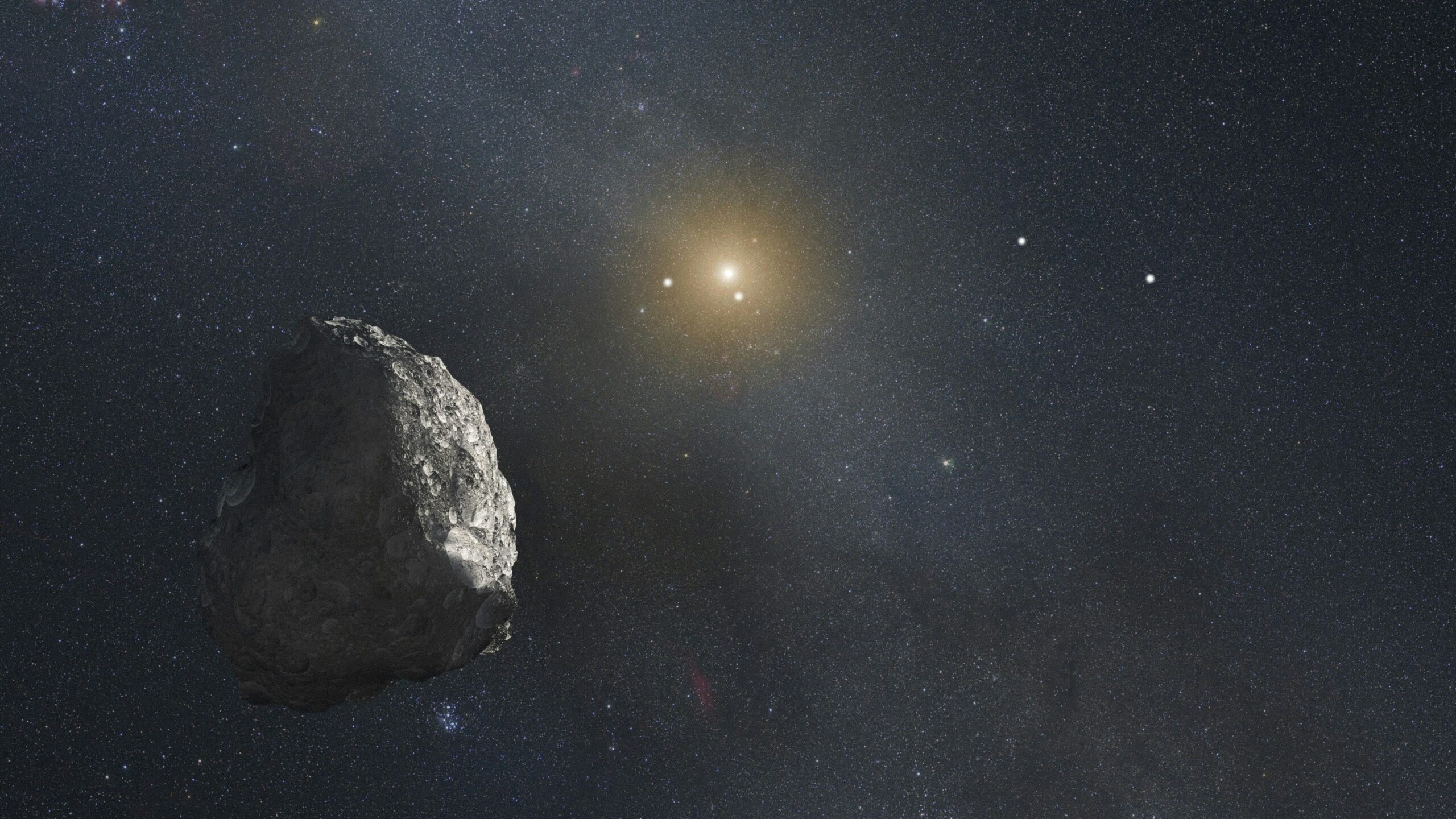
The interstellar object known as 3I/ATLAS raised alarm among scientists and the public alike when it passed closest to Earth on December 19, 2025. Harvard astrophysicist Avi Loeb has sought to calm fears regarding the potential toxicity of the comet, which has been under scrutiny since its discovery by the ATLAS survey telescope in Chile on July 1, 2025. Concerns arose from the comet’s unusual chemical composition and the massive gas plume surrounding it, which includes lethal substances such as cyanide and hydrogen cyanide.
Loeb’s analysis suggests that the comet’s behavior could be likened to a “cyanide tablet,” emphasizing the extreme concentration of these toxic gases. The presence of hydrogen cyanide is particularly alarming, as it was used as a chemical weapon during the First World War. This comparison has led to speculation about whether any debris from the comet could enter Earth’s atmosphere. However, Loeb reassures that the physics of our solar system provides a protective barrier.
Scientific Insights on 3I/ATLAS
Data from the Atacama Large Millimeter/Submillimeter Array (ALMA) has revealed substantial amounts of methanol and hydrogen cyanide in 3I/ATLAS, contributing to the unsettling notion that the object could be a “cosmic serial killer.” With an estimated nucleus diameter of up to 46 kilometers (28 miles), 3I/ATLAS is significantly larger than previous interstellar visitors, such as 2I/Borisov.
Despite the potential dangers, Loeb notes that the solar wind acts as a natural shield, sweeping away any gases emitted by the object. Observations from the James Webb Space Telescope indicate that 3I/ATLAS is shedding carbon dioxide at a rate of 129 kilograms per second. Given its closest approach of approximately 170 million miles, any toxic gases are unlikely to reach Earth.
Loeb emphasizes that even the physical debris from 3I/ATLAS poses minimal risk. He theorizes that tiny dust particles, smaller than a micrometre, would be pushed away by solar radiation pressure. Larger fragments, measuring less than three feet in diameter, would likely disintegrate harmlessly as meteors upon entering Earth’s atmosphere. He estimates that fewer than one million large objects have been released by the comet in recent months, and even the closest would not approach within ten times Earth’s radius, a distance safely beyond our gravitational influence.
Unraveling Possible Origins
There remains a compelling aspect to 3I/ATLAS that captivates the scientific community: its high eccentricity of 6.1 and alignment with the ecliptic plane provoke questions about its origins. Loeb has previously suggested that the object may not be a natural phenomenon but could instead represent an alien spacecraft, potentially deploying probes to gather intelligence on planets like Jupiter.
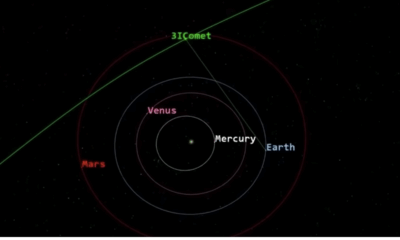
3I/ATLAS is on a trajectory toward Jupiter, expected to arrive on March 16, 2026, passing within approximately 33 million miles of the gas giant. Loeb speculates that the object could use this close encounter to “seed” Jupiter with additional probes, hinting at the involvement of an unknown extraterrestrial civilization.
As 3I/ATLAS continues its journey through our solar system, the scientific debate surrounding its nature and potential threats will likely persist. Whether viewed as a toxic comet or an advanced exploration vehicle, the object challenges our understanding of interstellar phenomena and keeps our attention focused on the mysteries of the cosmos. The data collected during its passage will contribute to ongoing discussions about what lies beyond our planetary boundaries and the implications of such discoveries for humanity.

Comet 3I/ATLAS Stirs Interest with Unusual Sunward Features

Packers Start Malik Willis as Jordan Love is Ruled Out Against Ravens

Call the Midwife’s Turner Family Faces Heartbreaking Crisis

Florida Man Arrested After Allegedly Stabbing Pregnant Wife

Precious Metals Surge as Safe Haven Demand Grows

Dr. Michael Mosley’s Evening Eating Tip Helps Women Lose Weight

Montenegro’s Health System Faces Corruption Challenges, Report Finds

Washington D.C. Faces Turmoil: Record Shutdown, Tariffs, and Policies

Astronomers Identify Nine Signals from 3I/ATLAS as Human Noise

Andrew Pierce Confirms Departure from ITV’s Good Morning Britain

Neurologist Warns Excessive Use of Supplements Can Harm Brain

Fiona Phillips’ Husband Shares Heartfelt Update on Her Alzheimer’s Journey

Brian Cox Addresses Claims of Alien Probe in 3I/ATLAS Discovery

NASA Investigates Unusual Comet 3I/ATLAS; New Findings Emerge

Gogglebox Star Helena Worthington Announces Break After Loss

Tess Daly Honoured with MBE, Announces Departure from Strictly

Scientists Examine 3I/ATLAS: Alien Artifact or Cosmic Oddity?

Lewis Cope Addresses Accusations of Dance Training Advantage
-
 Entertainment2 weeks ago
Andrew Pierce Confirms Departure from ITV’s Good Morning Britain
-
 Health4 months ago
Neurologist Warns Excessive Use of Supplements Can Harm Brain
-
 Health4 months ago
Fiona Phillips’ Husband Shares Heartfelt Update on Her Alzheimer’s Journey
-
 Science2 months ago
Brian Cox Addresses Claims of Alien Probe in 3I/ATLAS Discovery
-
 Science2 months ago
NASA Investigates Unusual Comet 3I/ATLAS; New Findings Emerge
-
 Entertainment1 week ago
Gogglebox Star Helena Worthington Announces Break After Loss
-
 Entertainment1 month ago
Tess Daly Honoured with MBE, Announces Departure from Strictly
-
 Science2 months ago
Scientists Examine 3I/ATLAS: Alien Artifact or Cosmic Oddity?
-
 Entertainment3 months ago
Lewis Cope Addresses Accusations of Dance Training Advantage
-

 Entertainment5 months ago
Kerry Katona Discusses Future Baby Plans and Brian McFadden’s Wedding
-
 Science2 months ago
NASA Investigates Speedy Object 3I/ATLAS, Sparking Speculation
-

 Entertainment5 months ago
Emmerdale Faces Tension as Dylan and April’s Lives Hang in the Balance