
Science
Ancient Comet 3I/ATLAS Passes Earth, Revealing Galactic Secrets

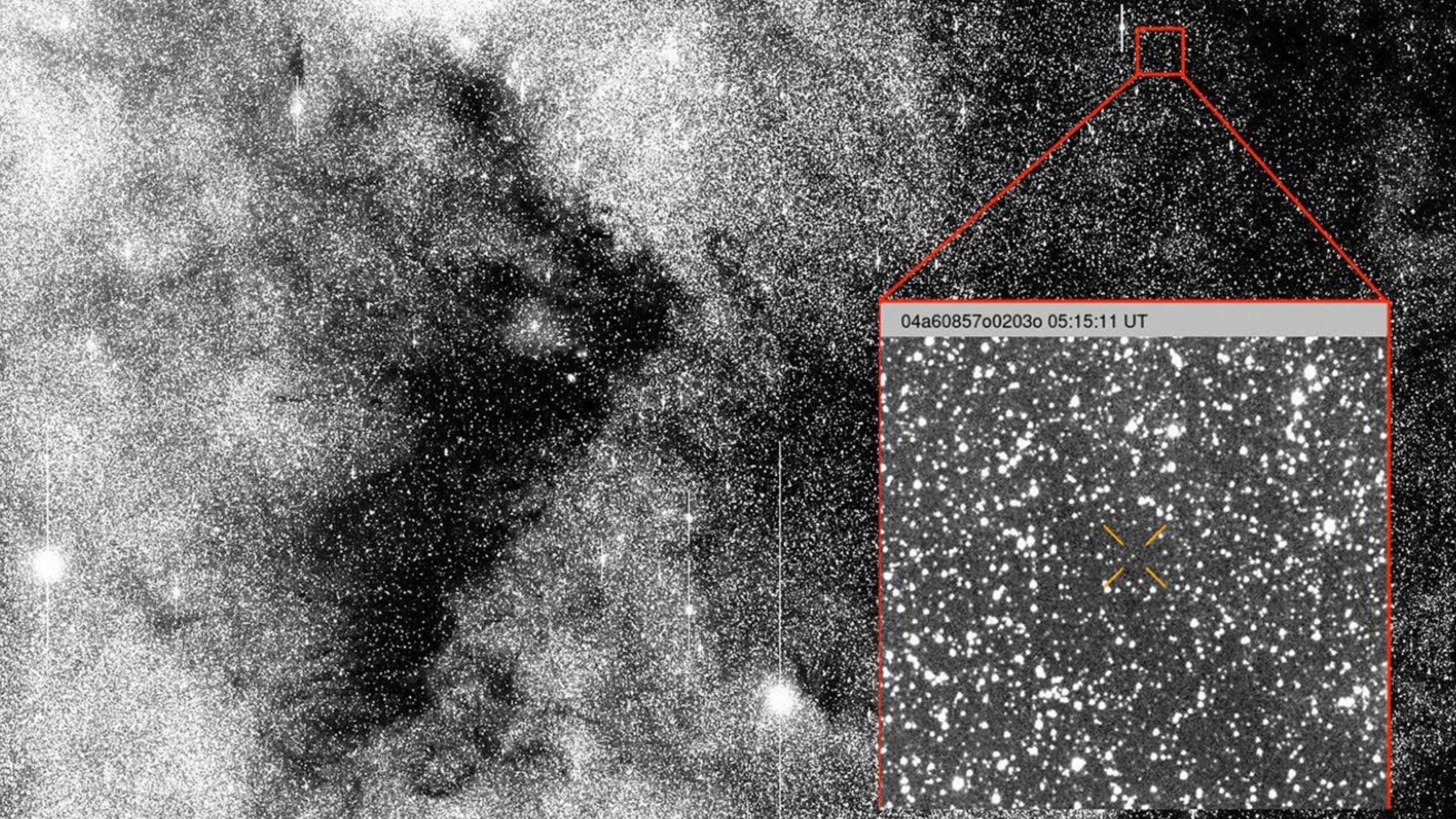
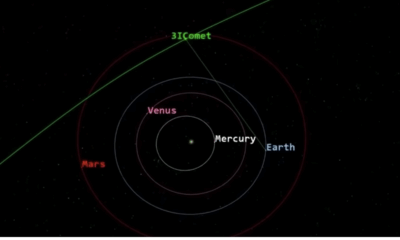
In the early hours of December 19, 2025, Comet 3I/ATLAS made its closest approach to Earth, passing at a distance of 168 million miles (approximately 1.8 astronomical units). Discovered by the Asteroid Terrestrial-impact Last Alert System (ATLAS) in Chile on July 1, 2025, this ancient comet represents a unique opportunity for astronomers to study a cosmic relic that predates our solar system.
The comet, travelling at a remarkable speed of 42 miles per second (68 km/s), follows a hyperbolic orbit with an eccentricity of 6.13. This is the highest recorded for any visitor to the solar system, indicating that 3I/ATLAS is not bound to the Sun’s gravitational pull and will eventually exit our solar system. Its journey began in the ‘thick disk’ of the Milky Way, a region rich in some of the galaxy’s oldest stars, entering our vicinity from the direction of the Sagittarius constellation.
According to Matthew Hopkins, an astronomer at the University of Oxford, the comet is estimated to be over 7.6 billion years old, with some models suggesting it could be as ancient as 11 billion years. This makes 3I/ATLAS possibly the oldest physical object ever detected by humanity, a true time capsule from a different era of galactic history. Its nucleus is estimated to measure between 0.3 and 5.6 kilometres in diameter.
Recent observations from the Gemini North telescope in Hawaii revealed a ghostly green glow emanating from the comet, a classic indicator of ‘outgassing’. This phenomenon occurs as gases evaporate, reflecting sunlight as the Sun warms the icy core of the comet. Data from the James Webb Space Telescope (JWST) and the European Space Agency’s Mars Trace Gas Orbiter confirmed that 3I/ATLAS is accelerating as it moves away from the Sun. This acceleration is due to jets of vaporised gas escaping the surface, a common behaviour among comets, rather than any artificial propulsion.
Chemical analyses conducted by JWST showed that 3I/ATLAS is notably rich in carbon dioxide, containing traces of methanol nearly four times greater than the concentration found in local comets. Additionally, it includes nickel and cyanide gas, suggesting that while this interstellar visitor hails from another star system, it is composed of the same fundamental materials—ice, rock, and dust—found in our own solar neighbourhood.
As Comet 3I/ATLAS begins its long exit from our solar system, the opportunity for observation is rapidly diminishing. The Virtual Telescope Project in Italy is scheduled to host a live YouTube webcast at 23:00 EST, offering a final chance for viewers to witness this extraordinary object as it heads towards the constellation Gemini.
While excitement surrounding the comet has led to speculation about alien technologies, the scientific evidence strongly supports its natural origin. As humanity prepares for a new era of discovery with the upcoming Vera C. Rubin Observatory, Comet 3I/ATLAS serves as a haunting reminder of our place in a vast and ancient galaxy. It is a fleeting glimpse into a deep past, here today and destined to vanish into the cosmic dark forever.

Dr. Michael Mosley’s Evening Eating Tip Helps Women Lose Weight

Montenegro’s Health System Faces Corruption Challenges, Report Finds

Washington D.C. Faces Turmoil: Record Shutdown, Tariffs, and Policies

Astronomers Identify Nine Signals from 3I/ATLAS as Human Noise

Buducnost Voli Dominates Mega 100-82 Ahead of Key Match

Beckham Family Celebrates Christmas Without Brooklyn, Shares Festive Moments

Exhaustion Unmasked: Rachel Christensen’s Hidden Health Battle

Navigate Your Rights on Unwanted Christmas Gifts with Ease

European Nations Reinforce Military Service Amid Rising Tensions

Andrew Pierce Confirms Departure from ITV’s Good Morning Britain

Neurologist Warns Excessive Use of Supplements Can Harm Brain

Fiona Phillips’ Husband Shares Heartfelt Update on Her Alzheimer’s Journey

Brian Cox Addresses Claims of Alien Probe in 3I/ATLAS Discovery

NASA Investigates Unusual Comet 3I/ATLAS; New Findings Emerge

Gogglebox Star Helena Worthington Announces Break After Loss

Scientists Examine 3I/ATLAS: Alien Artifact or Cosmic Oddity?

Tess Daly Honoured with MBE, Announces Departure from Strictly

Lewis Cope Addresses Accusations of Dance Training Advantage
-
 Entertainment2 weeks ago
Andrew Pierce Confirms Departure from ITV’s Good Morning Britain
-
 Health4 months ago
Neurologist Warns Excessive Use of Supplements Can Harm Brain
-
 Health4 months ago
Fiona Phillips’ Husband Shares Heartfelt Update on Her Alzheimer’s Journey
-
 Science2 months ago
Brian Cox Addresses Claims of Alien Probe in 3I/ATLAS Discovery
-
 Science2 months ago
NASA Investigates Unusual Comet 3I/ATLAS; New Findings Emerge
-
 Entertainment1 week ago
Gogglebox Star Helena Worthington Announces Break After Loss
-
 Science2 months ago
Scientists Examine 3I/ATLAS: Alien Artifact or Cosmic Oddity?
-
 Entertainment1 month ago
Tess Daly Honoured with MBE, Announces Departure from Strictly
-
 Entertainment3 months ago
Lewis Cope Addresses Accusations of Dance Training Advantage
-

 Entertainment5 months ago
Kerry Katona Discusses Future Baby Plans and Brian McFadden’s Wedding
-
 Science2 months ago
NASA Investigates Speedy Object 3I/ATLAS, Sparking Speculation
-

 Entertainment5 months ago
Emmerdale Faces Tension as Dylan and April’s Lives Hang in the Balance