
Science
Interstellar Comet 3I/ATLAS Shows Increased Activity Ahead of Flyby

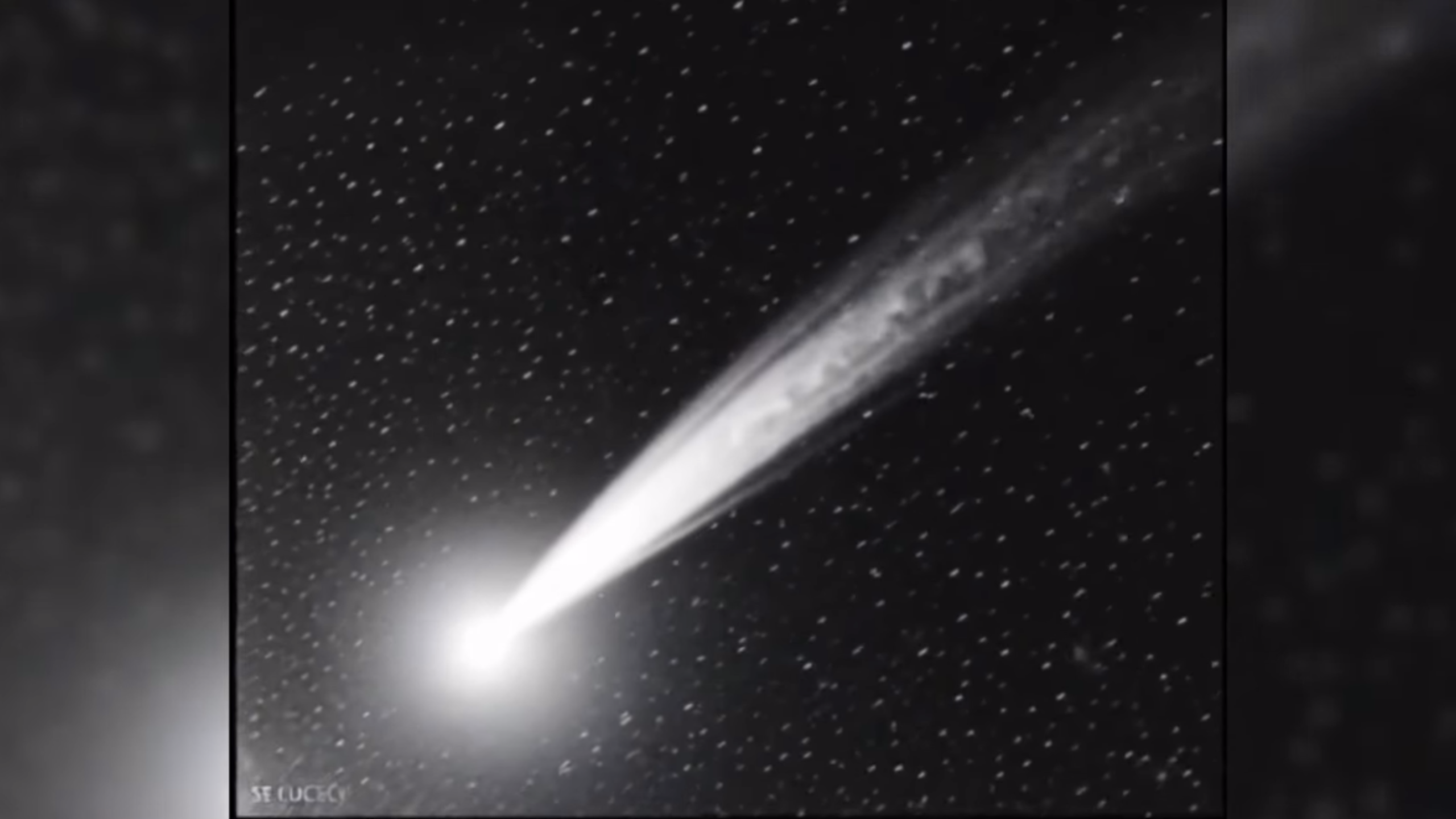
New images from NASA and the European Space Agency (ESA) indicate that interstellar comet 3I/ATLAS is exhibiting heightened activity as it approaches Earth for a flyby on December 19, 2023. The comet, which is currently about 270 million kilometres from our planet, has been racing through the inner Solar System and recent observations suggest that its close encounter with the Sun has triggered increased emissions of gas and dust.
NASA Images Capture Comet’s Brightening
The latest photographs of the comet, taken by the Hubble Space Telescope, reveal a bright nucleus surrounded by a rapidly expanding coma. This phenomenon occurs as material sublimates, or transforms from solid to gas, escaping into space. NASA explained that comets typically brighten as they heat up, and the jet-like features observed in the images suggest an active surface responding to solar radiation.
Since its confirmation as an interstellar visitor earlier this year, 3I/ATLAS has garnered significant scientific interest. NASA has detailed the comet’s size, speed, and unusual composition in a comprehensive report. The findings indicate that the nucleus measures between 440 metres and 5.6 kilometres wide, making it one of the largest interstellar objects detected to date.
ESA’s Juice Spacecraft Provides Additional Insights
The ESA’s Juice spacecraft, which is en route to Jupiter’s moons, has also contributed valuable data by capturing striking images of 3I/ATLAS from just 66 million kilometres away. This photograph highlights a glowing halo and two distinct tails, consistent with a comet undergoing rapid activity. The images were taken shortly after the comet’s closest approach to the Sun, offering researchers clearer insights into its behaviour as it warms.
Both Hubble and Juice are part of an expanding network of spacecraft monitoring the comet. Observatories across the Solar System are gathering complementary data, with each new set of images enhancing understanding of the materials that formed outside our planetary system. Scientists value this rare opportunity to study 3I/ATLAS, believed to be nearly 10 billion years old.
The comet will be visible to skilled observers during its Earth flyby, although a telescope with at least a 30-centimetre aperture is necessary due to its magnitude. Those wishing to view the comet are advised to look for it before dawn, positioned beneath the star Regulus in the constellation Leo.
Astronomers emphasize that 3I/ATLAS poses no risk during its closest approach. Nonetheless, they regard this event as an opportunity to measure how interstellar objects react to extreme heating while traversing our Solar System. The James Webb Space Telescope is expected to observe the comet again in the coming weeks, and both professional and amateur astronomers will continue to gather data from Earth.
These observations will not only enhance understanding of the comet’s current activity but will also aid in refining predictions for its future trajectory. Following its passage by Earth, 3I/ATLAS will head towards Jupiter, where a close encounter in March 2026 could alter its path. The extent of this change will likely depend on how much material the comet continues to release after its recent surge in activity.
As December approaches, scientists recognize that this will be the only time 3I/ATLAS comes this close to Earth, presenting a unique chance to study a remarkable visitor from beyond our Solar System.

Ultimate Body Factory Opens in Pittsfield, Offering New Fitness Options

UK Charities Warn New Single-Sex Space Rules Threaten Trans Health

Historic Pub Faces Transformation into Housing Amid Community Backlash

Interstellar Comet 3I/ATLAS Shows Increased Activity Ahead of Flyby

Daniel Jones Faces Long Recovery After Achilles Injury in Colts Game

Thailand Launches Airstrikes Amid Renewed Tensions with Cambodia

NASA Unveils Stunning Hubble Images of Comet 3I/ATLAS

Angryginge Crowned King of the Jungle in Emotional Finale

Sister’s Controlling Behavior Impacting Family Life: Expert Insights

Neurologist Warns Excessive Use of Supplements Can Harm Brain

Fiona Phillips’ Husband Shares Heartfelt Update on Her Alzheimer’s Journey

Brian Cox Addresses Claims of Alien Probe in 3I/ATLAS Discovery

NASA Investigates Unusual Comet 3I/ATLAS; New Findings Emerge

Scientists Examine 3I/ATLAS: Alien Artifact or Cosmic Oddity?

Kerry Katona Discusses Future Baby Plans and Brian McFadden’s Wedding

NASA Investigates Speedy Object 3I/ATLAS, Sparking Speculation

Lewis Cope Addresses Accusations of Dance Training Advantage

Emmerdale Faces Tension as Dylan and April’s Lives Hang in the Balance
-
 Health3 months ago
Neurologist Warns Excessive Use of Supplements Can Harm Brain
-
 Health3 months ago
Fiona Phillips’ Husband Shares Heartfelt Update on Her Alzheimer’s Journey
-
 Science2 months ago
Brian Cox Addresses Claims of Alien Probe in 3I/ATLAS Discovery
-
 Science2 months ago
NASA Investigates Unusual Comet 3I/ATLAS; New Findings Emerge
-
 Science1 month ago
Scientists Examine 3I/ATLAS: Alien Artifact or Cosmic Oddity?
-
 Entertainment5 months ago
Kerry Katona Discusses Future Baby Plans and Brian McFadden’s Wedding
-
 Science1 month ago
NASA Investigates Speedy Object 3I/ATLAS, Sparking Speculation
-
 Entertainment2 months ago
Lewis Cope Addresses Accusations of Dance Training Advantage
-
 Entertainment4 months ago
Emmerdale Faces Tension as Dylan and April’s Lives Hang in the Balance
-

 World3 months ago
Cole Palmer’s Cryptic Message to Kobbie Mainoo Following Loan Talks
-
 Science1 month ago
NASA Scientists Explore Origins of 3I/ATLAS, a Fast-Moving Visitor
-

 Entertainment4 months ago
Major Cast Changes at Coronation Street: Exits and Returns in 2025