
Science
NASA Discovers Sugars on Asteroid Bennu, Paving Way for Life Answers

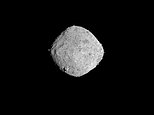
NASA has made a significant discovery by identifying essential sugars on the ancient asteroid Bennu, located over 200 million miles from Earth. This finding could provide crucial insights into the origins of life on our planet. The OSIRIS-REx spacecraft, which successfully collected samples from Bennu in October 2020, played a pivotal role in this groundbreaking research.
The presence of these sugars, known as ribose and other organic compounds, suggests that the building blocks of life may be more widespread in the universe than previously thought. This discovery aligns with the hypothesis that the essential ingredients for life could have been delivered to Earth through meteorites and comets.
Researchers from NASA’s Goddard Space Flight Center and other institutions have been studying the samples returned from Bennu to understand better the conditions in which our solar system formed. The analysis revealed that these sugars are not just remnants of Earth’s biological history but may have originated in space, hinting at the possibility of life beyond our planet.
Implications for Astrobiology
This revelation raises intriguing questions for astrobiologists. If sugars can form in space, it implies that the necessary components for life could be found on other celestial bodies. The study of Bennu’s surface and the materials collected by OSIRIS-REx underscores the potential for similar discoveries in future missions to other asteroids and moons.
Astrobiologist Michael M. Phillips, involved in the research, commented, “The discovery of these sugars on Bennu supports the idea that the ingredients for life are not unique to Earth but may exist throughout the cosmos.” This perspective opens new avenues for exploring whether life could exist elsewhere in the universe.
The research team emphasized that understanding the chemistry of these sugars is essential in unraveling the mystery of how life began on Earth. By studying the organic materials found on asteroids, scientists hope to piece together how these compounds contributed to the emergence of life.
Future Missions and Research
NASA’s ongoing exploration of asteroids is part of a broader initiative to study the early solar system. The agency plans to conduct more missions targeting other asteroids and celestial bodies to gather additional samples and data. These efforts aim to enhance our understanding of the origins of life and the conditions that foster it.
With the successful return of the Bennu samples, researchers are now poised to analyze the materials in detail. The findings from this research will likely influence future astrobiological studies and reshape our understanding of life’s potential beyond Earth.
In summary, NASA’s discovery of essential sugars on asteroid Bennu marks a pivotal moment in the quest to understand life’s origins. As scientists continue to investigate the implications of this finding, the possibility of life existing elsewhere in the universe becomes increasingly tangible. This breakthrough not only enriches our knowledge of astrobiology but also invites humanity to ponder its place in the cosmos.

Co Armagh Man Charged with Indecent Exposure Banned from Park

Experts Propose Comprehensive Wastewater Treatment Solution for Podgorica

Tom Homan Confronts Critics at UTEP Immigration Event

Programmable CRISPR Platform Accelerates Stem Cell Research Timelines

Experts Call for Advanced Wastewater Treatment in Podgorica

Kevin Sinfield Exceeds Fundraising Goal Ahead of Final Marathons

Urgent Health Warning: Rotavirus Cases Surge by 50% Globally

AI’s Impact on Education Sparks Debate Over Future Skills

Local Governments Face Deadline to Address Stray Livestock Crisis

Neurologist Warns Excessive Use of Supplements Can Harm Brain

Fiona Phillips’ Husband Shares Heartfelt Update on Her Alzheimer’s Journey

Brian Cox Addresses Claims of Alien Probe in 3I/ATLAS Discovery

NASA Investigates Unusual Comet 3I/ATLAS; New Findings Emerge

Scientists Examine 3I/ATLAS: Alien Artifact or Cosmic Oddity?

Kerry Katona Discusses Future Baby Plans and Brian McFadden’s Wedding

NASA Investigates Speedy Object 3I/ATLAS, Sparking Speculation

Emmerdale Faces Tension as Dylan and April’s Lives Hang in the Balance

Cole Palmer’s Cryptic Message to Kobbie Mainoo Following Loan Talks
-
 Health3 months ago
Neurologist Warns Excessive Use of Supplements Can Harm Brain
-
 Health3 months ago
Fiona Phillips’ Husband Shares Heartfelt Update on Her Alzheimer’s Journey
-
 Science2 months ago
Brian Cox Addresses Claims of Alien Probe in 3I/ATLAS Discovery
-
 Science1 month ago
NASA Investigates Unusual Comet 3I/ATLAS; New Findings Emerge
-
 Science1 month ago
Scientists Examine 3I/ATLAS: Alien Artifact or Cosmic Oddity?
-
 Entertainment5 months ago
Kerry Katona Discusses Future Baby Plans and Brian McFadden’s Wedding
-
 Science1 month ago
NASA Investigates Speedy Object 3I/ATLAS, Sparking Speculation
-
 Entertainment4 months ago
Emmerdale Faces Tension as Dylan and April’s Lives Hang in the Balance
-
 World3 months ago
Cole Palmer’s Cryptic Message to Kobbie Mainoo Following Loan Talks
-
 Science1 month ago
NASA Scientists Explore Origins of 3I/ATLAS, a Fast-Moving Visitor
-

 Entertainment2 months ago
Lewis Cope Addresses Accusations of Dance Training Advantage
-

 Entertainment3 months ago
Major Cast Changes at Coronation Street: Exits and Returns in 2025