
Top Stories
New Space Race Ignites Geopolitical Tensions Over Lunar Resources

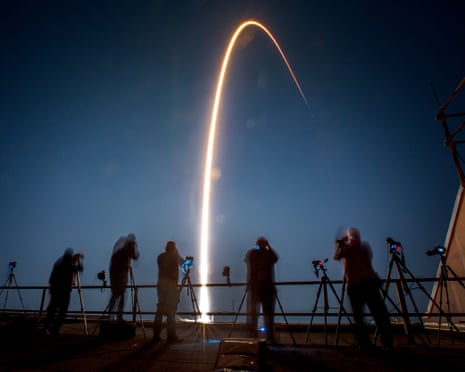
The upcoming lunar missions are set to reignite geopolitical rivalries, echoing the historical space race of the Cold War. Both the United States and a bloc led by China are positioning themselves for strategic advantage as they prepare to explore the moon’s south pole, a region believed to hold invaluable resources like water ice and solar energy. The various missions, including Nasa’s Artemis II and China’s Chang’e 7, are scheduled to launch in 2026, marking a renewed competition under the guise of “peaceful exploration.”
The moon’s south pole is gaining attention for its “peaks of eternal light,” ideal for solar arrays, alongside potential ice deposits that could support life. This area is being viewed as critical real estate in the solar system, and the rush to claim it is reminiscent of past territorial disputes on Earth. The United Nations Outer Space Treaty, established in 1967, aimed to prevent the exploitation of space by sovereign nations, but its vagueness regarding private claims has opened the door for a competition driven by private interests.
As private companies like SpaceX and initiatives from tech moguls such as Elon Musk and Jeff Bezos gain traction, a significant shift in the funding and governance of space exploration is occurring. Donald Trump’s administration has reduced state support for Nasa, which is projected to have its smallest budget since 1961, pushing for a paradigm where the private sector leads lunar exploration. This shift is formalized in the Artemis Accords, signed by over 40 nations, which aim to extend Earthly ownership structures into space.
The collaborative approach taken by China and Russia, through the International Lunar Research Station, represents a different strategy. This initiative seeks to create a lunar base under a cooperative consortium, which they argue complies with UN regulations. Both nations have emphasized their commitment to “peaceful exploration,” while also competing for lunar dominance.
Amid these developments, the potential for lunar resources raises questions about their utility. Water on the moon could be utilized for rocket fuel and sustaining life. Speculation abounds regarding the use of moon rock for construction and the viability of helium-3 as a fusion fuel. While these claims may seem speculative, they serve as justifications for increased government spending on lunar projects.
The race for reliable nuclear power on the moon is intensifying, with both the US and China-Russia alliances investing in reactor designs to support human colonies. Nasa aims to establish such infrastructure within five years, while China and Russia project their systems to be operational by 2035. This technological race is critical, as sustainable energy solutions will be necessary to support permanent human habitation.
The urgency to explore the moon stems from a pressing environmental reality. Humans are consuming natural resources at a pace that exceeds the Earth’s ability to regenerate. This situation leads to three potential solutions: enhancing efficiency, green practices in the economy, or relocating energy-intensive processes off-world. The latter option is gaining traction among technology leaders, with companies like Google proposing to establish data centers in orbit, powered by solar energy.
As the demand for computing power grows, the necessity for off-Earth energy sources becomes increasingly evident. The desire for technological advancement could morph into a new era of resource extraction, echoing the historical patterns of exploitation seen on Earth.
In literature, the themes surrounding space colonization often reflect contemporary societal issues. Kim Stanley Robinson’s science fiction novels, particularly the Red Mars trilogy, depict a future where nations and corporations vie to control new frontiers. The parallels between his fictional world and today’s lunar ambitions are striking, raising ethical questions about whether humanity will repeat its past mistakes in a new context.
The ongoing development of space law, particularly initiatives like the 2015 Space Act in the US, reflects an intention to allow resource appropriation under the guise of commercial activity. This trend may lead to the privatization of what was once considered humanity’s last commons.
The narrative of exploration should not overshadow the necessity of sustainable living on Earth. The lessons from Robinson’s works suggest that before venturing to other planets, humanity must first address its challenges at home. The path forward requires a critical examination of whether we can escape the old politics that have shaped our interactions on Earth before attempting to establish a presence elsewhere in the universe.

Nataša Bošković Resigns as Special Prosecutor Amid Controversies

How to Select a Trustworthy Travel Agency in Mississauga

MrBeast’s Minecraft Competition Faces Accusations of Cheating and Transphobia

Heysham Woman Launches Fundraiser for Life-Saving Cancer Treatment

Over 50,000 Sign Petition to Deport Nicki Minaj Amid Controversy

Emmerdale Reveals Shocking Update on Tina Dingle After 30 Years

Perfume Enthusiast Reveals Must-Have Holiday Scent

Scientist Warns of New Chemical Weapons Development in Russia

Heating Plant Shutdown Scheduled Tomorrow in Pljevlja

Andrew Pierce Confirms Departure from ITV’s Good Morning Britain

Neurologist Warns Excessive Use of Supplements Can Harm Brain

Fiona Phillips’ Husband Shares Heartfelt Update on Her Alzheimer’s Journey

Brian Cox Addresses Claims of Alien Probe in 3I/ATLAS Discovery

Gogglebox Star Helena Worthington Announces Break After Loss

NASA Investigates Unusual Comet 3I/ATLAS; New Findings Emerge

Tess Daly Honoured with MBE, Announces Departure from Strictly

Scientists Examine 3I/ATLAS: Alien Artifact or Cosmic Oddity?

Lewis Cope Addresses Accusations of Dance Training Advantage
-
 Entertainment3 weeks ago
Andrew Pierce Confirms Departure from ITV’s Good Morning Britain
-
 Health4 months ago
Neurologist Warns Excessive Use of Supplements Can Harm Brain
-
 Health4 months ago
Fiona Phillips’ Husband Shares Heartfelt Update on Her Alzheimer’s Journey
-
 Science2 months ago
Brian Cox Addresses Claims of Alien Probe in 3I/ATLAS Discovery
-
 Entertainment2 weeks ago
Gogglebox Star Helena Worthington Announces Break After Loss
-
 Science2 months ago
NASA Investigates Unusual Comet 3I/ATLAS; New Findings Emerge
-
 Entertainment2 months ago
Tess Daly Honoured with MBE, Announces Departure from Strictly
-
 Science2 months ago
Scientists Examine 3I/ATLAS: Alien Artifact or Cosmic Oddity?
-
 Entertainment3 months ago
Lewis Cope Addresses Accusations of Dance Training Advantage
-

 Entertainment6 months ago
Kerry Katona Discusses Future Baby Plans and Brian McFadden’s Wedding
-
 Science2 months ago
NASA Investigates Speedy Object 3I/ATLAS, Sparking Speculation
-

 Entertainment5 months ago
Emmerdale Faces Tension as Dylan and April’s Lives Hang in the Balance