
Politics
Concerns Rise Over Safeguards in Scotland’s Assisted Dying Bill

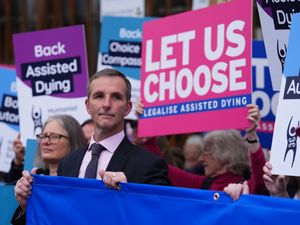
Scottish Deputy First Minister Kate Forbes has raised serious concerns regarding the safeguards in the Assisted Dying for Terminally Ill Adults (Scotland) Bill currently under consideration in the Scottish Parliament. Forbes stated that “critical amendments” aimed at enhancing protections for vulnerable individuals were not passed during a recent committee review. She emphasized that this lack of safeguards poses a significant risk that the legislation could lead to situations where individuals who wish to live might feel compelled to seek assistance in dying.
The Scottish Government has maintained a neutral position on the Bill, but Forbes made it clear that her comments reflect her personal views. She pointed to the failure to approve amendments that would specifically address issues such as identifying coercion and determining whether a person’s desire to end their life is influenced by factors unrelated to their terminal illness.
Forbes’ concerns echo those of fellow Members of the Scottish Parliament (MSPs) such as Michael Marra from Labour and Edward Mountain from the Conservative Party. On March 15, 2025, which coincided with Human Rights Day, the three politicians issued a joint statement outlining their shared apprehensions about the Bill. They argued that as it stands, the legislation “jeopardises the rights of disabled people and others in Scotland” and could create a societal environment where individuals opt for assisted dying due to a lack of support for living, such as healthcare, social care, and housing.
Despite nearly 300 proposed amendments to the Bill, only 74 were accepted, leading the trio to assert that “too many reasonable amendments have been rejected.” In their statement, they expressed a united front, stating, “As MSPs with very different political outlooks, we are united in our concerns about the Assisted Dying Bill.” They emphasized the need for compassionate and dignified care at the end of life, while worrying that the current version of the Bill could exacerbate injustice and inequality in Scotland.
During an event at Holyrood, Marra articulated his belief that the appropriate action for MSPs would be to vote against the Bill when it comes to the final vote. He remarked that the expectation had been for improved safeguards during the Bill’s detailed examination by the Health Committee, but he felt this had not materialized. “The risk of internal coercion is too great in a country as unequal as ours,” Marra stated, acknowledging the compassion behind those advocating for assisted dying.
Mountain further highlighted the pressing need for improved palliative care for terminally ill individuals. He expressed concern that a lack of available palliative care might lead some to view assisted dying as the only viable option. “If we don’t offer people proper palliative care, that is not the way forward,” he said, reinforcing the importance of providing alternative support.
In response to the criticism, Liam McArthur, the Bill’s sponsor, noted that the legislation does include “strong protections and safeguards.” He mentioned that amendments now require individuals with terminal illnesses to be at least 18 years old to seek assistance in dying, and emphasized that coercing a terminally ill person to end their life is now a criminal offense.
McArthur expressed confidence in the Bill’s provisions, asserting it represents a “compassionate, robust and well-safeguarded” pathway for Scots facing terminal illness. He highlighted that under the current ban, many terminally ill individuals take drastic measures, including ending their lives at home or traveling to places like Switzerland for assisted dying. He argued that denying people this choice places them and their families in an “intolerable position.”
The ongoing debate surrounding the Assisted Dying for Terminally Ill Adults (Scotland) Bill reflects a contentious intersection of ethical, medical, and social considerations. As the final vote approaches, the voices of MSPs and advocates on both sides are likely to shape the future of assisted dying legislation in Scotland.

Hywel Dda Launches Learning Disability Packs in A&E Departments

Afanu Latić Receives the Prestigious Zaim Azemović Award

Concerns Rise Over Safeguards in Scotland’s Assisted Dying Bill

Scientists Map Zebra Mussel Spread Across Minnesota Lakes

Afanu Latiću Wins the Prestigious Zaim Azemović Award

Discovery of Ancient Fire Site in UK Rewrites Human History

John Logan Proposes New Dwelling on Islay Crofting Site

New House Proposal on Islay Crofting Site Sparks Community Interest

Kate Middleton Reaches Out to Meghan Markle for Family Harmony

Neurologist Warns Excessive Use of Supplements Can Harm Brain

Fiona Phillips’ Husband Shares Heartfelt Update on Her Alzheimer’s Journey

Brian Cox Addresses Claims of Alien Probe in 3I/ATLAS Discovery

NASA Investigates Unusual Comet 3I/ATLAS; New Findings Emerge

Scientists Examine 3I/ATLAS: Alien Artifact or Cosmic Oddity?

Lewis Cope Addresses Accusations of Dance Training Advantage

Kerry Katona Discusses Future Baby Plans and Brian McFadden’s Wedding

NASA Investigates Speedy Object 3I/ATLAS, Sparking Speculation

Emmerdale Faces Tension as Dylan and April’s Lives Hang in the Balance
-
 Health3 months ago
Neurologist Warns Excessive Use of Supplements Can Harm Brain
-
 Health4 months ago
Fiona Phillips’ Husband Shares Heartfelt Update on Her Alzheimer’s Journey
-
 Science2 months ago
Brian Cox Addresses Claims of Alien Probe in 3I/ATLAS Discovery
-
 Science2 months ago
NASA Investigates Unusual Comet 3I/ATLAS; New Findings Emerge
-
 Science2 months ago
Scientists Examine 3I/ATLAS: Alien Artifact or Cosmic Oddity?
-
 Entertainment2 months ago
Lewis Cope Addresses Accusations of Dance Training Advantage
-
 Entertainment5 months ago
Kerry Katona Discusses Future Baby Plans and Brian McFadden’s Wedding
-
 Science2 months ago
NASA Investigates Speedy Object 3I/ATLAS, Sparking Speculation
-
 Entertainment4 months ago
Emmerdale Faces Tension as Dylan and April’s Lives Hang in the Balance
-

 World3 months ago
Cole Palmer’s Cryptic Message to Kobbie Mainoo Following Loan Talks
-

 Science2 months ago
NASA Scientists Explore Origins of 3I/ATLAS, a Fast-Moving Visitor
-

 Entertainment4 months ago
Major Cast Changes at Coronation Street: Exits and Returns in 2025