
Science
Vera C. Rubin Observatory to Discover 50 More Interstellar Comets

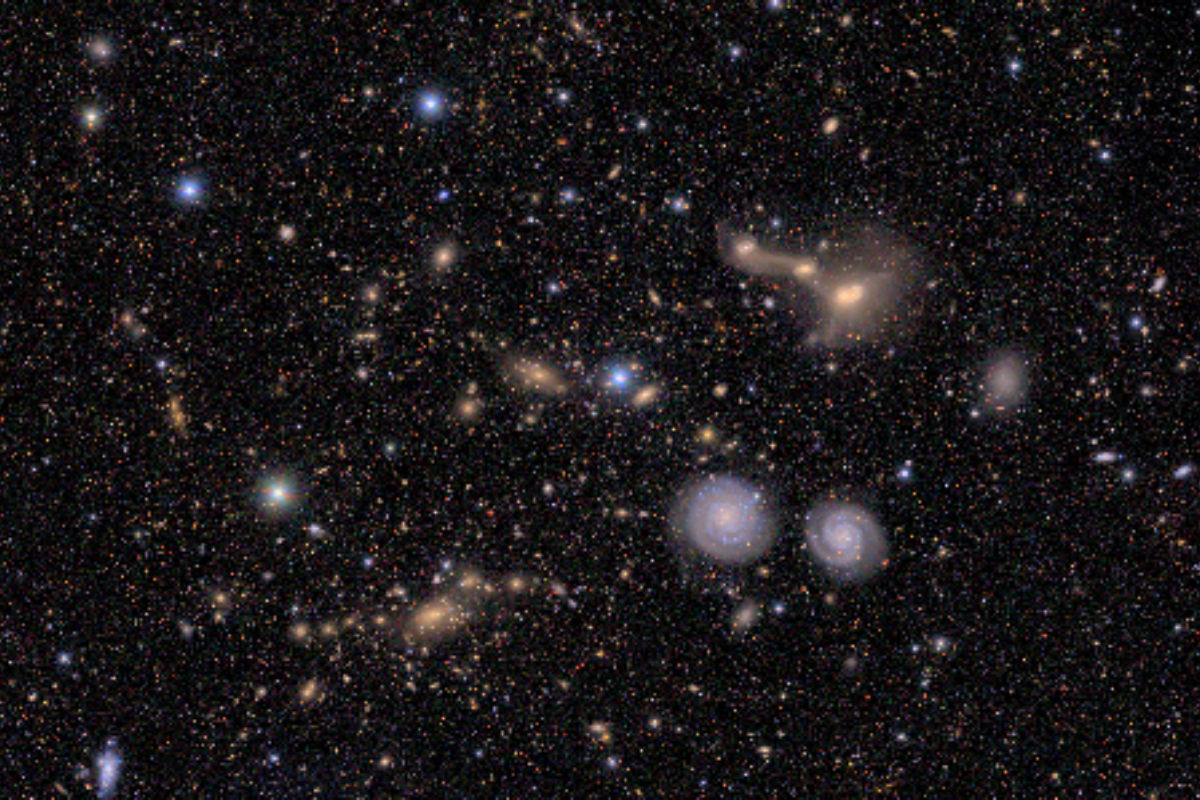
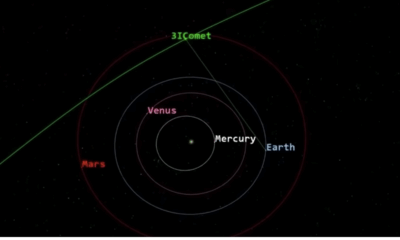
The Vera C. Rubin Observatory in Chile is set to revolutionize the way astronomers detect interstellar comets, with predictions indicating the potential discovery of up to 50 new objects resembling 3I/ATLAS (formally designated C/2025 N1) during its ten-year mission. This development follows the arrival of 3I/ATLAS, the third confirmed interstellar visitor, which is currently making its way back into the depths of space after its closest approach to Earth on December 19, 2025.
The arrival of 3I/ATLAS marks a significant moment in the study of interstellar objects. When the first known interstellar visitor, ‘Oumuamua, passed through our solar system in 2017, it sparked intense interest and left many questions unanswered. Fast forward to late 2025, and the conversation has shifted dramatically; rather than pondering if we will find another interstellar object, the focus is now on how many we can identify.
At the core of this transformation is the Rubin Observatory’s Legacy Survey of Space and Time (LSST). Equipped with the world’s largest digital camera, boasting an impressive 3,200-megapixel resolution, the observatory is designed to scan the entire visible southern sky every few nights. Current estimates suggest that approximately seven interstellar objects traverse the inner solar system annually; however, previous detection capabilities limited our understanding. The Rubin Observatory aims to enhance this detection rate significantly.
Early simulations predict that the observatory could identify between one and two interstellar visitors each year. Optimistic models, supported by statements from observatory representatives, indicate that the total number of discoverable objects could reach as high as 50 over the course of its mission. This potential influx of data is poised to shift interstellar studies from isolated events into a rigorous field of statistical science, with estimates suggesting approximately 10,000 such objects may currently be lurking within the orbit of Neptune.
3I/ATLAS itself has captured attention due to its unusual characteristics, providing a unique opportunity for testing new detection systems. First spotted on July 1, 2025, by the Asteroid Terrestrial-impact Last Alert System in Rio Hurtado, Chile, the comet has undergone extensive observation using various instruments, including the Hubble Space Telescope and the James Webb Space Telescope. Remarkably, the Rubin Observatory even obtained “pre-discovery” images of the comet as early as June 21, 2025, during its commissioning phase, although it was not recognized at that time.
The analysis of 3I/ATLAS has revealed it to be a carbon-rich relic, likely around 11 billion years old, originating from the Milky Way’s ancient thick disk. Unlike previous interstellar visitors, 3I/ATLAS displayed a rare “anti-tail”—a sunward-pointing spike of dust—along with gas jets indicating a rotation period of approximately 15.5 hours. These findings provide a “chemical fingerprint” reflective of a star system formed long before our own Sun existed.
The Rubin Observatory’s capacity to detect these objects early, potentially while they are still far out in the solar system, could facilitate future missions such as the European Space Agency’s Comet Interceptor. This early detection could allow for meaningful encounters with these interstellar visitors in deep space.
As 3I/ATLAS moves away from Earth, it serves as a poignant reminder of the advancements being made in astronomy. The era of merely observing occasional strays is giving way to a proactive approach, with the capability to map the debris of the galaxy as it drifts closer to our solar system. The implications for our understanding of interstellar objects are profound, potentially reshaping the landscape of astronomical research in the years to come.

Montenegro’s Economic Reform Program Projects €3.5 Billion Revenue by 2026

Analysts Assess Rolls-Royce Share Prospects for 2026

Tragic House Fire Claims Life of Man in Ballymena, Co Antrim

Montenegro Sets Economic Reform Program Aiming for €3.72 Billion by 2028

J.D. Vance Addresses Divorce Speculation and Faith Discussions

Tinubu Celebrates $1.26 Billion Funding for Lagos-Calabar Highway

Martin Scorsese Mourns Rob Reiner After Shocking Murder

Christmas Morning Joy: Baby Ava Arrives at Leicester Hospitals

Sia’s “Snowman” Surpasses Mariah Carey’s Christmas Classic on Spotify

Andrew Pierce Confirms Departure from ITV’s Good Morning Britain

Fiona Phillips’ Husband Shares Heartfelt Update on Her Alzheimer’s Journey

Neurologist Warns Excessive Use of Supplements Can Harm Brain

Brian Cox Addresses Claims of Alien Probe in 3I/ATLAS Discovery

NASA Investigates Unusual Comet 3I/ATLAS; New Findings Emerge

Gogglebox Star Helena Worthington Announces Break After Loss

Scientists Examine 3I/ATLAS: Alien Artifact or Cosmic Oddity?

Tess Daly Honoured with MBE, Announces Departure from Strictly

Lewis Cope Addresses Accusations of Dance Training Advantage
-
 Entertainment2 weeks ago
Andrew Pierce Confirms Departure from ITV’s Good Morning Britain
-
 Health4 months ago
Fiona Phillips’ Husband Shares Heartfelt Update on Her Alzheimer’s Journey
-
 Health4 months ago
Neurologist Warns Excessive Use of Supplements Can Harm Brain
-
 Science2 months ago
Brian Cox Addresses Claims of Alien Probe in 3I/ATLAS Discovery
-
 Science2 months ago
NASA Investigates Unusual Comet 3I/ATLAS; New Findings Emerge
-
 Entertainment1 week ago
Gogglebox Star Helena Worthington Announces Break After Loss
-
 Science2 months ago
Scientists Examine 3I/ATLAS: Alien Artifact or Cosmic Oddity?
-
 Entertainment1 month ago
Tess Daly Honoured with MBE, Announces Departure from Strictly
-
 Entertainment2 months ago
Lewis Cope Addresses Accusations of Dance Training Advantage
-

 Entertainment5 months ago
Kerry Katona Discusses Future Baby Plans and Brian McFadden’s Wedding
-
 Science2 months ago
NASA Investigates Speedy Object 3I/ATLAS, Sparking Speculation
-

 Entertainment5 months ago
Emmerdale Faces Tension as Dylan and April’s Lives Hang in the Balance