
Science
Astronomers Discover Unusual Methanol Emission in Comet 3I/ATLAS

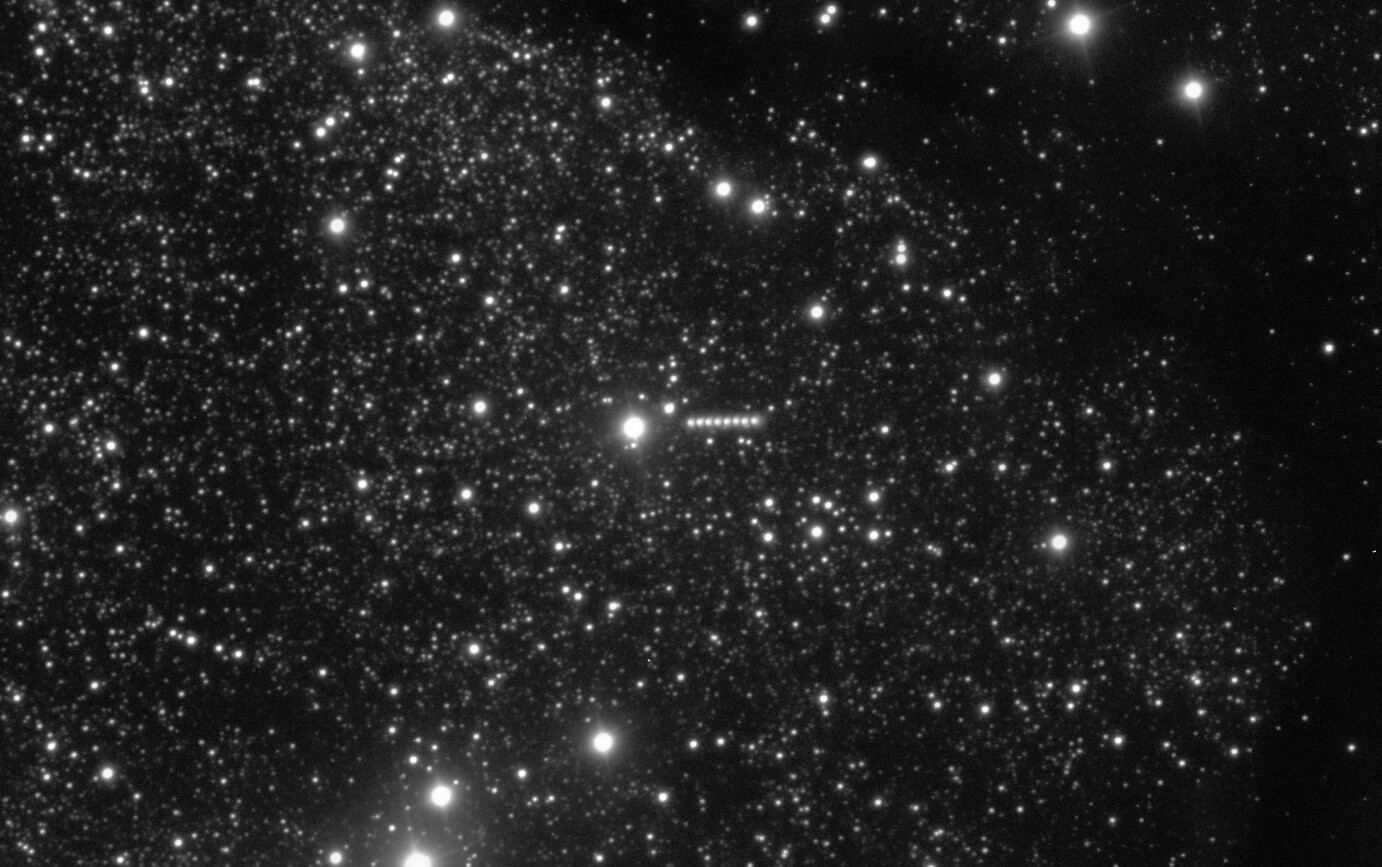
Astronomers have made a groundbreaking discovery regarding the interstellar comet 3I/ATLAS, revealing an unexpectedly high concentration of methanol not only in its nucleus but also throughout its coma. This finding challenges established theories on comet chemistry, providing new insights into the composition of such celestial bodies beyond our Solar System.
Using data from the Atacama Large Millimetre/submillimeter Array (ALMA) in Chile, researchers observed that 3I/ATLAS emits significant amounts of both methanol and hydrogen cyanide. According to Martin Cordiner of NASA’s Goddard Space Flight Centre, “Hydrogen cyanide and methanol usually appear only in small traces in our own comets. But in this interstellar object, they seem to be unusually abundant.”
The research indicates that methanol comprises approximately 8 percent of the total gas emissions from 3I/ATLAS, which is notably higher than the levels found in most comets within our Solar System. This remarkable abundance—about four times greater than usual—suggests that complex chemical processes are at play as the comet interacts with solar radiation.
Implications for Cometary Chemistry
3I/ATLAS is the third object identified as originating from beyond our Solar System, following Oumuamua and 2I/Borisov. Its hyperbolic orbit indicates that it is not gravitationally bound to the Sun, marking it as a true interstellar visitor. The unusual composition of this comet raises questions about the conditions in its parent star system, with some scientists speculating that it may have formed in a colder environment with a higher concentration of specific ices.
The presence of hydrogen cyanide, another key component of the comet’s emissions, plays a dual role in astrochemistry. While it can serve as a precursor to complex organic molecules, such as amino acids, at high concentrations, it can also be toxic.
The significance of methanol in 3I/ATLAS cannot be overstated, particularly due to its association with prebiotic chemistry. Methanol is linked to reactions that may produce amino acids and other essential organic molecules, which are critical for the formation of DNA and RNA. The discovery of these compounds in an interstellar object raises intriguing questions about the distribution of life’s building blocks across the galaxy.
Exploring the Origins of Life
As 3I/ATLAS continues its approach to Earth, the comet’s activity has intensified, a common occurrence as comets heat up in the sun’s embrace. This activity results in the sublimation of volatile ices, releasing gas and dust that form the characteristic coma and tail. Observers, including both amateur astronomers and large observatories, have captured images showcasing the comet’s bright greenish hue, attributed to the fluorescence of cyanide and other gases in sunlight.
The diverse chemical composition of 3I/ATLAS highlights the variety of objects within our galaxy and the valuable data they can provide about planetary formation and astrochemistry beyond our Solar System. The rich molecular makeup of the comet has ignited discussions among scientists regarding how these interstellar visitors might help refine models of the origins of organic compounds in space.
With numerous observatories monitoring 3I/ATLAS, researchers are keen to understand the mechanisms that lead to the formation of complex molecules in icy bodies. This exploration could yield valuable insights into the early histories of distant planetary systems.
While it remains uncertain whether the abundance of methanol in 3I/ATLAS is typical of its home star system or reflects its unique history, the comet offers an unprecedented opportunity to study an interstellar chemical environment. The findings challenge previous assumptions about cometary chemistry, underscoring the rich potential for discovery in our exploration of the cosmos.

Breaking Free: A Woman’s Journey Through Industry Toxicity

Education Ministry Partners to Combat Gambling Risks for Students

Montenegro’s Civil Initiative Responds to Serbian Church Criticism

Global Report Reveals Alarming Decline in Human Rights Standards

De Zerbi: Greenwood’s Talent Could Lead to Ballon d’Or Glory

Andrei Kanchelskis Returns to Manchester United for Special Tribute

King Charles III to Share Personal Cancer Journey in Broadcast

Knežević Threatens Political Exit Over Botunjan Protests

DNP Threatens Withdrawal from Government Over Water Plant Protests

Neurologist Warns Excessive Use of Supplements Can Harm Brain

Fiona Phillips’ Husband Shares Heartfelt Update on Her Alzheimer’s Journey

Brian Cox Addresses Claims of Alien Probe in 3I/ATLAS Discovery

NASA Investigates Unusual Comet 3I/ATLAS; New Findings Emerge

Scientists Examine 3I/ATLAS: Alien Artifact or Cosmic Oddity?

Lewis Cope Addresses Accusations of Dance Training Advantage

Kerry Katona Discusses Future Baby Plans and Brian McFadden’s Wedding

NASA Investigates Speedy Object 3I/ATLAS, Sparking Speculation

Emmerdale Faces Tension as Dylan and April’s Lives Hang in the Balance
-
 Health3 months ago
Neurologist Warns Excessive Use of Supplements Can Harm Brain
-
 Health4 months ago
Fiona Phillips’ Husband Shares Heartfelt Update on Her Alzheimer’s Journey
-
 Science2 months ago
Brian Cox Addresses Claims of Alien Probe in 3I/ATLAS Discovery
-
 Science2 months ago
NASA Investigates Unusual Comet 3I/ATLAS; New Findings Emerge
-
 Science2 months ago
Scientists Examine 3I/ATLAS: Alien Artifact or Cosmic Oddity?
-
 Entertainment2 months ago
Lewis Cope Addresses Accusations of Dance Training Advantage
-
 Entertainment5 months ago
Kerry Katona Discusses Future Baby Plans and Brian McFadden’s Wedding
-
 Science2 months ago
NASA Investigates Speedy Object 3I/ATLAS, Sparking Speculation
-
 Entertainment5 months ago
Emmerdale Faces Tension as Dylan and April’s Lives Hang in the Balance
-

 World3 months ago
Cole Palmer’s Cryptic Message to Kobbie Mainoo Following Loan Talks
-

 World4 weeks ago
Bailey and Rebecca Announce Heartbreaking Split After MAFS Reunion
-
 Science2 months ago
NASA Scientists Explore Origins of 3I/ATLAS, a Fast-Moving Visitor