
Science
Astrophysicists Scrutinize 3I/ATLAS: Interstellar Comet Defies Expectations

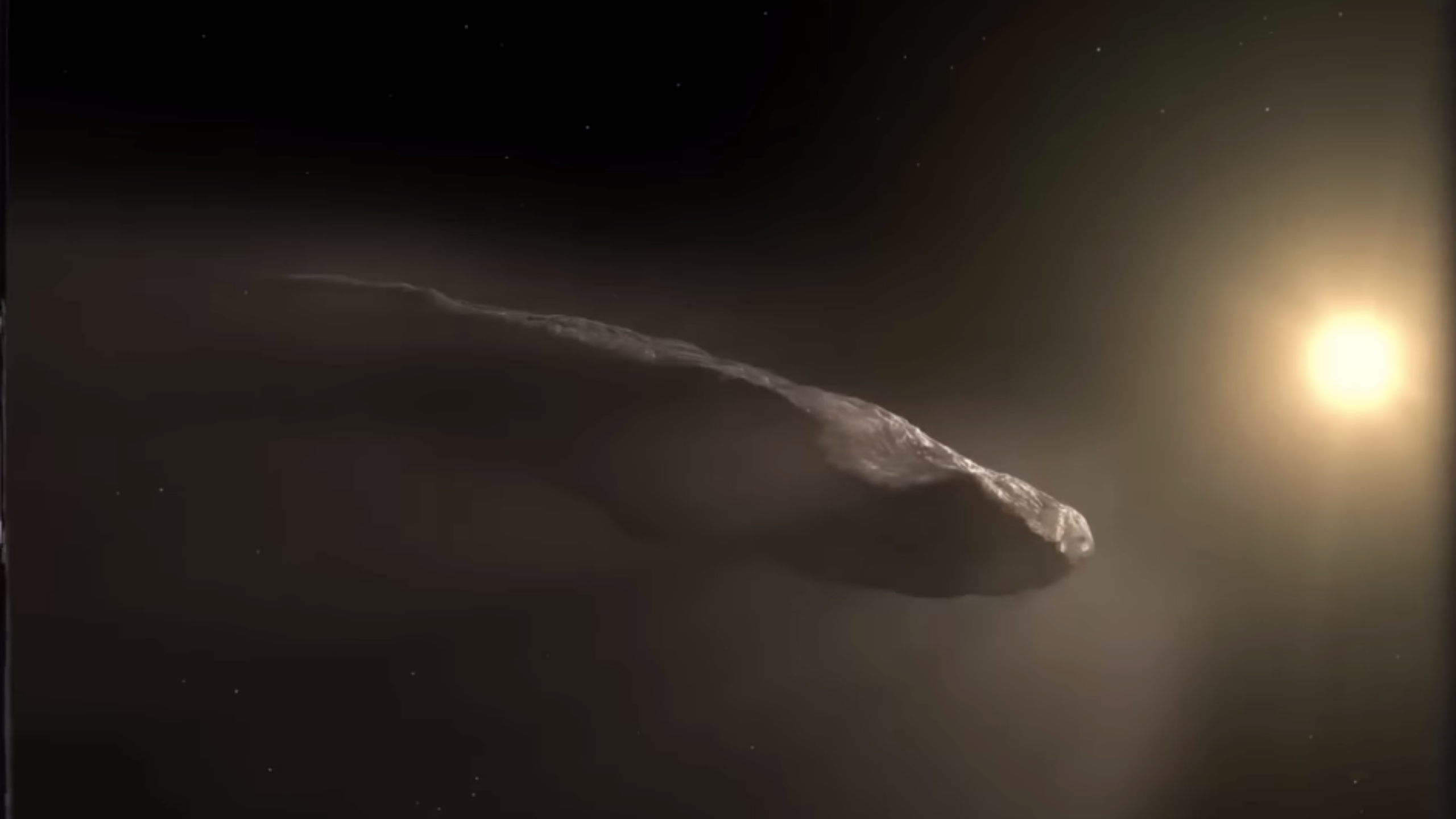
Astrophysicists are grappling with the unusual behavior of 3I/ATLAS, an interstellar comet that appears to challenge established principles of cometary physics. Unlike typical comets, which emit tails of gas and dust away from the sun, 3I/ATLAS is exhibiting a phenomenon known as an anti-tail, a feature observed through high-resolution images from the Hubble Space Telescope in July 2025. This unexpected behavior has ignited a significant debate within the scientific community, with some suggesting it could be evidence of advanced extraterrestrial technology.
The comet, which is only the third confirmed visitor from outside our solar system after ‘Oumuamua and 2I/Borisov, is exhibiting characteristics that have not been documented in previous celestial objects. The anti-tail, which is directed towards the sun, has drawn attention due to its strong, defined structure. Traditionally, an anti-tail is thought to be an optical illusion caused by the angle of observation. Yet, many scientists argue that the formation around 3I/ATLAS is too robust to be merely an illusion.
Unpacking the Anti-Tail Mystery
Renowned astrophysicist Avi Loeb from Harvard University has focused on the implications of this anomaly. He notes that the sunward glow observed in July 2025 displayed a remarkable elongation, with a corrected aspect ratio of approximately 10:1, indicating a powerful jet structure. This plume’s directional persistence has led to increasingly complicated natural explanations. Theories suggest it may stem from large dust particles, around 100 micrometres in radius, or ice fragments that sublimate too quickly to form a traditional tail.
The mechanics of the outflow present additional challenges. Typical outflow velocities for natural comets are a few hundred metres per second. However, to generate the plume observed—stretching nearly one million kilometres towards the sun—the outflow speed would need to be in the order of kilometres per second. This suggests a force far beyond what is expected from natural outgassing processes.
Researchers have also noted the structural integrity of 3I/ATLAS post-perihelion. Contrary to expectations that a comet exhibiting non-gravitational acceleration would fragment, it has remained a single, compact entity. Estimates indicate its diameter could be as much as 46 kilometres, making its mass roughly one million times greater than that of 1I/’Oumuamua.
Complex Chemical Makeup
The chemical composition adds another layer of intrigue to the mystery surrounding 3I/ATLAS. Observations reveal that the comet’s gas plume is primarily composed of carbon dioxide, comprising 87% of its mass, with only around 4% water detected. This is unusual, as water is typically a major component of known comets. Anomalies continue with findings suggesting a higher nickel content than iron, raising questions about the comet’s origin and material composition. The nickel-to-cyanide ratio is significantly larger than that observed in all known solar system comets, suggesting unique industrial processes may be at play.
As scientists work to model the transition from an anti-tail to a more conventional tail, the possibility of extraterrestrial engineering remains on the table. Adam Hibberd, a colleague of Loeb, speculated that if the anti-tail were a ‘braking thrust’ from a massive alien spacecraft, the changes observed near perihelion would align with an object executing a gravitational assist maneuver.
The ongoing observations of 3I/ATLAS pose critical questions regarding the nature of this interstellar object. The intersection of what might be exotic physics and the potential for advanced technology creates a compelling narrative that keeps researchers engaged. As the comet continues its journey back into deep space, scientists worldwide are committed to monitoring its behavior, speed, and brightness, hoping to unlock the secrets of this remarkable visitor.
The journey of 3I/ATLAS has prompted a reevaluation of the boundaries of cometary physics, challenging existing paradigms and inviting speculation about the nature of our universe. Whether this is a case of misunderstood celestial mechanics or evidence of engineering beyond our current understanding remains an open question, ensuring that the comet captures the attention of both the scientific community and the public alike.

Niksic Celebrates Cultural Legacy with Folklore Milestone

NLC Demands Urgent Wage Adjustments Amid Rising Living Costs

‘One Battle After Another’ Triumphs with Six Oscars at 98th Academy Awards

Rainy Monday in Alton Clears for Sunshine by Midweek

Residents Push for New Supermarket in Overcrowded Town

Jimmy Kimmel Critiques Trump at 98th Academy Awards Ceremony

Young People Face Job Market Challenges Due to Health Issues

Stars Shine at the 2026 Oscars: Adorable Couples Take Center Stage

Brooklyn Beckham Faces Backlash for Mother’s Day Message Snub

Andrew Pierce Confirms Departure from ITV’s Good Morning Britain

Coronation Street Reveals Audrey Roberts’ Absence Explained

Fiona Phillips’ Husband Shares Heartfelt Update on Her Alzheimer’s Journey

Gogglebox Star Helena Worthington Announces Break After Loss

Neurologist Warns Excessive Use of Supplements Can Harm Brain

Brian Cox Addresses Claims of Alien Probe in 3I/ATLAS Discovery

NASA Investigates Unusual Comet 3I/ATLAS; New Findings Emerge

EastEnders Welcomes Back Mark Fowler Jr. with New Actor

Tess Daly Honoured with MBE, Announces Departure from Strictly
-
 Entertainment6 months ago
Andrew Pierce Confirms Departure from ITV’s Good Morning Britain
-
 Entertainment3 months ago
Coronation Street Reveals Audrey Roberts’ Absence Explained
-
 Health9 months ago
Fiona Phillips’ Husband Shares Heartfelt Update on Her Alzheimer’s Journey
-
 Entertainment6 months ago
Gogglebox Star Helena Worthington Announces Break After Loss
-
 Health9 months ago
Neurologist Warns Excessive Use of Supplements Can Harm Brain
-
 Science7 months ago
Brian Cox Addresses Claims of Alien Probe in 3I/ATLAS Discovery
-
 Science7 months ago
NASA Investigates Unusual Comet 3I/ATLAS; New Findings Emerge
-
 World4 months ago
EastEnders Welcomes Back Mark Fowler Jr. with New Actor
-
 Entertainment7 months ago
Tess Daly Honoured with MBE, Announces Departure from Strictly
-

 Health4 months ago
Gyles Brandreth Shares Heartfelt Journey Following Grandson’s Cancer Diagnosis
-

 Entertainment9 months ago
Major Cast Changes at Coronation Street: Exits and Returns in 2025
-

 World7 months ago
EastEnders’ Nicola Mitchell Faces Life-Changing Pregnancy Twist