
World
Discover 5 Iconic Quadjets Still Flying in Commercial Aviation

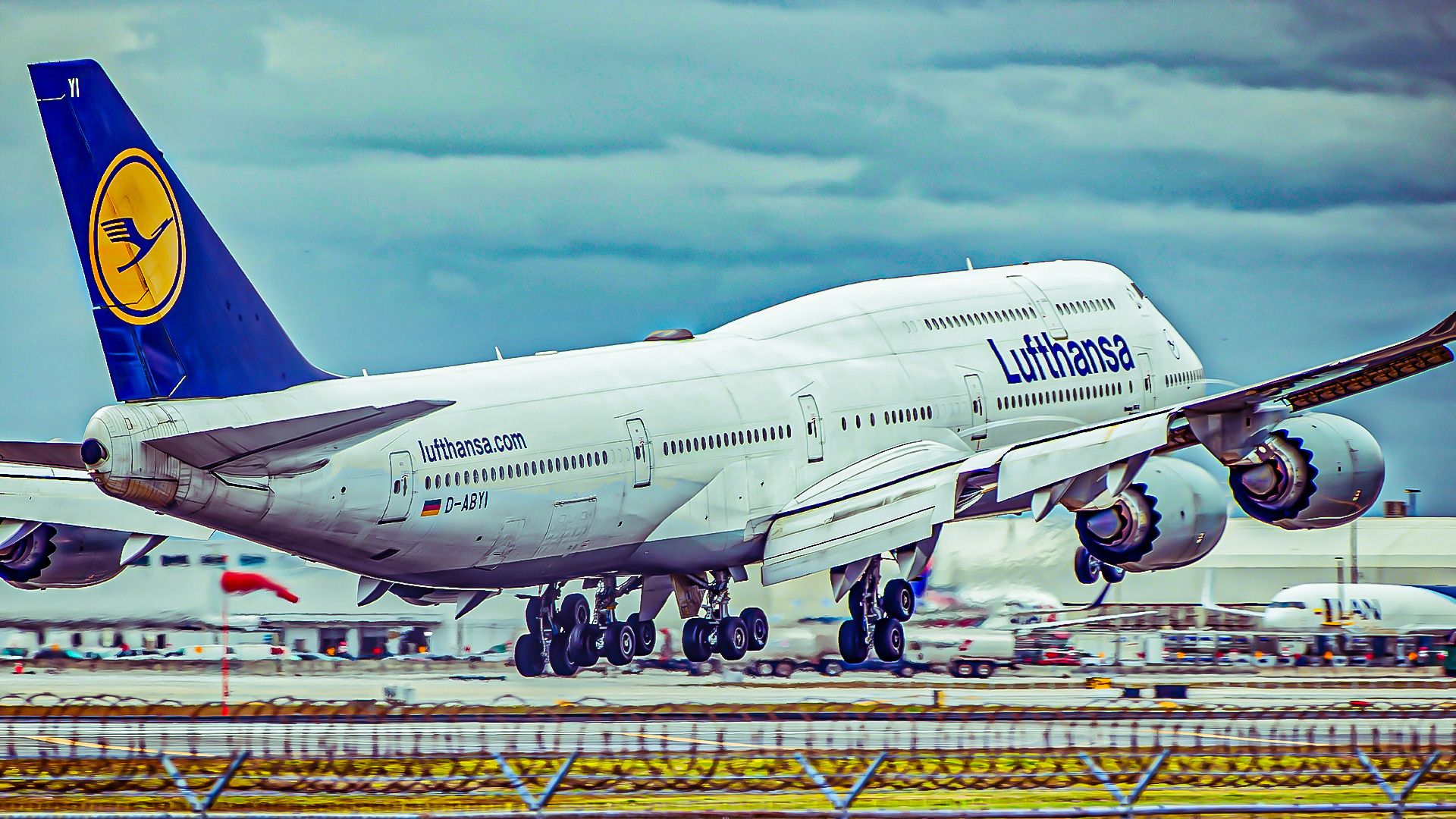
The era of quadjets in commercial aviation is dwindling, with iconic models like the Boeing 747 and Airbus A380 gradually being phased out. Despite this trend, several airlines continue to operate these legendary aircraft, offering enthusiasts a chance to experience their unique features before they disappear entirely. This article explores five notable quadjets still in service, highlighting their history and ongoing presence in the skies.
The Boeing 747: The Queen of the Skies
The Boeing 747, which first took to the skies on February 9, 1969, has a storied legacy. It was introduced into service in January 1970 with Pan American World Airways (Pan Am). Over its production run from 1967 to 2023, a total of 1,574 units were built across 20 variants. The 747-400 variant was particularly popular, known for its three-class configuration and capacity to serve long-haul routes.
The aircraft’s distinctive partial double-deck design and raised cockpit made it an unmistakable presence at airports around the world. It has logged more than 118 million flight hours and nearly 23 million flight cycles, according to data from Boeing. Currently, airlines like Lufthansa, Air China, and Korean Air continue to operate the 747 on scheduled passenger flights, while the 747-8F variant remains in cargo service, with Atlas Air receiving deliveries as recently as January 2023.
The Airbus A380: A Double-Decker Marvel
First entering service in 2007, the Airbus A380 holds the title of the world’s largest passenger aircraft. The A380 is a four-engine aircraft with a full-length double-deck, designed to alleviate congestion at busy airports. Since its first flight on April 27, 2005, it has completed over 800,000 flights, carrying more than 300 million passengers globally.
Despite the end of production in 2021, ten airlines still operate the A380, with Emirates leading the pack with 123 units. The A380’s groundbreaking design and capacity of up to 575 passengers allow it to serve high-demand routes effectively. Although the development cost of the aircraft reached $25 billion, this investment was never fully recouped by Airbus, leading to the aircraft’s eventual retirement from production.
Modern Alternatives: The Boeing 777 and 787, Airbus A350
While quadjets like the 747 and A380 face declining numbers, modern twin-engine aircraft are stepping in to fill the void. The Boeing 777, which first flew in June 1994, remains a popular choice among airlines due to its range and fuel efficiency. As of October 2023, 1,772 Boeing 777s have been built, with Emirates and Qatar Airways being the largest operators.
The 777 is currently in production with multiple variants, including the 777-300ER, which is known for its capacity of up to 550 passengers. The latest iteration, the 777X, is expected to begin deliveries in 2027, featuring advanced technology and improved fuel efficiency.
The Boeing 787 Dreamliner, which entered service in October 2011, signifies a shift towards more fuel-efficient aircraft. Composed of composite materials, the Dreamliner is celebrated for its large windows and lower cabin altitude. Over 1,200 Dreamliners have been delivered, with airlines like All Nippon Airways and United Airlines leading in operational fleets.
Finally, the Airbus A350, introduced in January 2015, has become a strong competitor in the long-haul market. With a range of up to 8,700 nautical miles and advanced aerodynamics, the A350 aims to meet the demands of modern air travel. Major operators include Singapore Airlines and Turkish Airlines, with the global fleet having completed 1.58 million flights to date.
As the aviation industry evolves towards more sustainable and efficient aircraft, the legacy of quadjets like the 747 and A380 continues to inspire a new generation of aviation enthusiasts. With several still in operation, there remains a unique opportunity to experience these iconic aircraft before they fully retire from commercial service.

Niksic Celebrates Cultural Legacy with Folklore Milestone

NLC Demands Urgent Wage Adjustments Amid Rising Living Costs

‘One Battle After Another’ Triumphs with Six Oscars at 98th Academy Awards

Rainy Monday in Alton Clears for Sunshine by Midweek

Residents Push for New Supermarket in Overcrowded Town

Jimmy Kimmel Critiques Trump at 98th Academy Awards Ceremony

Young People Face Job Market Challenges Due to Health Issues

Stars Shine at the 2026 Oscars: Adorable Couples Take Center Stage

Brooklyn Beckham Faces Backlash for Mother’s Day Message Snub

Andrew Pierce Confirms Departure from ITV’s Good Morning Britain

Fiona Phillips’ Husband Shares Heartfelt Update on Her Alzheimer’s Journey

Neurologist Warns Excessive Use of Supplements Can Harm Brain

Gogglebox Star Helena Worthington Announces Break After Loss

Brian Cox Addresses Claims of Alien Probe in 3I/ATLAS Discovery

NASA Investigates Unusual Comet 3I/ATLAS; New Findings Emerge

EastEnders Welcomes Back Mark Fowler Jr. with New Actor

Tess Daly Honoured with MBE, Announces Departure from Strictly

Coronation Street Reveals Audrey Roberts’ Absence Explained
-
 Entertainment3 months ago
Andrew Pierce Confirms Departure from ITV’s Good Morning Britain
-
 Health7 months ago
Fiona Phillips’ Husband Shares Heartfelt Update on Her Alzheimer’s Journey
-
 Health6 months ago
Neurologist Warns Excessive Use of Supplements Can Harm Brain
-
 Entertainment3 months ago
Gogglebox Star Helena Worthington Announces Break After Loss
-
 Science5 months ago
Brian Cox Addresses Claims of Alien Probe in 3I/ATLAS Discovery
-
 Science5 months ago
NASA Investigates Unusual Comet 3I/ATLAS; New Findings Emerge
-
 World2 months ago
EastEnders Welcomes Back Mark Fowler Jr. with New Actor
-
 Entertainment4 months ago
Tess Daly Honoured with MBE, Announces Departure from Strictly
-
 Entertainment2 weeks ago
Coronation Street Reveals Audrey Roberts’ Absence Explained
-

 World4 months ago
Bailey and Rebecca Announce Heartbreaking Split After MAFS Reunion
-

 Entertainment8 months ago
Kerry Katona Discusses Future Baby Plans and Brian McFadden’s Wedding
-

 Health2 months ago
Sue Radford Reveals Weight Loss Journey, Losing Two Stone