
Business
Middle Eastern Nations Invest Billions in Clean Energy Initiatives

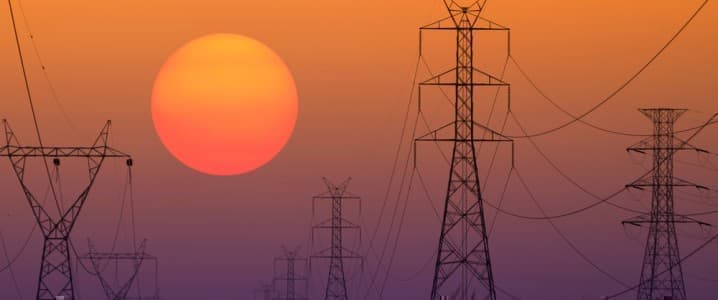
Several Middle Eastern countries are actively pursuing extensive national strategies to diversify their energy sources and diminish reliance on fossil fuels. This significant shift is driven by a desire to transition from economies heavily dependent on oil and gas revenues to more sustainable energy models. The United Arab Emirates (UAE), Saudi Arabia, and Qatar are among the leaders in this multibillion-dollar clean energy initiative.
Historically, oil and gas production has generated substantial revenue for many nations in the region, enabling rapid infrastructure development and improvements in citizens’ quality of life. However, as the global community increasingly pivots towards renewable energy sources, these countries are recognizing the need for long-term economic diversification.
Investment in Renewable Energy and Clean Technologies
Public investment has surged, accelerating the growth of renewable energy capacity across the Middle East and North Africa (MENA). By 2035, solar photovoltaic capacity in the region is expected to increase tenfold, while renewable energy sources will contribute 25 percent to the region’s electricity generation. Additionally, nuclear energy capacity is projected to triple during this period.
In the UAE, the government has set ambitious targets, aiming for net-zero carbon emissions by 2050, in line with the goals of the Paris Agreement. The energy mix is projected to consist of 44 percent alternative energy, 38 percent gas, 12 percent clean coal, and 6 percent nuclear power. The UAE plans to create 50,000 new jobs and increase renewable energy capacity to 14 gigawatts (GW) by 2030, with an interim goal of achieving a 30 percent share of alternative energy in the total mix by 2031.
Currently, the UAE is home to three of the largest solar plants globally, including the Mohammed bin Rashid Al Maktoum Solar Park in Dubai, which aims to power 800,000 homes by 2030. In 2023, the government launched its first wind power initiative, a 104 MW project spread across four locations. Furthermore, the UAE is developing its nuclear energy sector and has set a goal to become one of the leading producers of green hydrogen by 2031.
The UAE is also investing significantly in carbon capture technology to mitigate the environmental impact of its fossil fuel industry. The state-owned oil company, ADNOC, is currently working on the largest carbon capture project in the MENA region, which is expected to capture 1.5 million tonnes of carbon annually if successful.
Saudi Arabia and Qatar’s Clean Energy Goals
Saudi Arabia is making substantial investments in clean energy, committing over $40 billion annually from its Public Investment Fund (PIF) to various diversification projects. The Kingdom aims for renewable energy to constitute 50 percent of its energy generation by 2030. This ambitious goal will be supported by investments in wind and solar power, with renewable energy capacity expected to reach 90 GW by the end of the decade.
In June 2023, Air Products reported that the NEOM Green Hydrogen Project in Saudi Arabia was approximately 80 percent complete. This development will include a large-scale green hydrogen production facility, powered by solar and wind farms, along with a dedicated transmission network. Once operational, expected within two years, it will reportedly be the world’s largest renewable-powered ammonia complex.
Qatar has also set a target to reduce greenhouse gas emissions by 25 percent by 2030, driven by the Qatar National Renewable Energy Strategy (QNRES). The government aims to install 4 GW of utility-scale renewable energy capacity by 2030, primarily through solar farm development.
Kuwait has established a goal of generating 15 percent of its total energy needs from renewable sources by 2030, backed by an investment of $99 million in the 10 MW Sidrah 500 solar plant. Projections indicate that Kuwait’s cumulative solar capacity could reach 2.9 GW by 2030, a significant increase from its current capacity of just 50 MW, with potential growth to 10.1 GW by 2035, according to figures from Rystad Energy.
The MENA region’s commitment to expanding renewable energy capacity marks a clear effort to reduce dependence on fossil fuels and bolster economic diversification. While some countries, notably the UAE and Saudi Arabia, are advancing rapidly towards their green energy targets, others are also making significant strides in the transition to a more sustainable energy future.

Niksic Celebrates Cultural Legacy with Folklore Milestone

NLC Demands Urgent Wage Adjustments Amid Rising Living Costs

‘One Battle After Another’ Triumphs with Six Oscars at 98th Academy Awards

Rainy Monday in Alton Clears for Sunshine by Midweek

Residents Push for New Supermarket in Overcrowded Town

Jimmy Kimmel Critiques Trump at 98th Academy Awards Ceremony

Young People Face Job Market Challenges Due to Health Issues

Stars Shine at the 2026 Oscars: Adorable Couples Take Center Stage

Brooklyn Beckham Faces Backlash for Mother’s Day Message Snub

Andrew Pierce Confirms Departure from ITV’s Good Morning Britain

Coronation Street Reveals Audrey Roberts’ Absence Explained

Fiona Phillips’ Husband Shares Heartfelt Update on Her Alzheimer’s Journey

Gogglebox Star Helena Worthington Announces Break After Loss

Neurologist Warns Excessive Use of Supplements Can Harm Brain

Brian Cox Addresses Claims of Alien Probe in 3I/ATLAS Discovery

NASA Investigates Unusual Comet 3I/ATLAS; New Findings Emerge

EastEnders Welcomes Back Mark Fowler Jr. with New Actor

Tess Daly Honoured with MBE, Announces Departure from Strictly
-
 Entertainment6 months ago
Andrew Pierce Confirms Departure from ITV’s Good Morning Britain
-
 Entertainment3 months ago
Coronation Street Reveals Audrey Roberts’ Absence Explained
-
 Health10 months ago
Fiona Phillips’ Husband Shares Heartfelt Update on Her Alzheimer’s Journey
-
 Entertainment6 months ago
Gogglebox Star Helena Worthington Announces Break After Loss
-
 Health9 months ago
Neurologist Warns Excessive Use of Supplements Can Harm Brain
-
 Science8 months ago
Brian Cox Addresses Claims of Alien Probe in 3I/ATLAS Discovery
-
 Science8 months ago
NASA Investigates Unusual Comet 3I/ATLAS; New Findings Emerge
-
 World5 months ago
EastEnders Welcomes Back Mark Fowler Jr. with New Actor
-
 Entertainment7 months ago
Tess Daly Honoured with MBE, Announces Departure from Strictly
-

 Health4 months ago
Gyles Brandreth Shares Heartfelt Journey Following Grandson’s Cancer Diagnosis
-

 Entertainment10 months ago
Major Cast Changes at Coronation Street: Exits and Returns in 2025
-

 World7 months ago
EastEnders’ Nicola Mitchell Faces Life-Changing Pregnancy Twist