
Health
New Insights on AMPK Isoforms Reveal Complex Role in Alzheimer’s

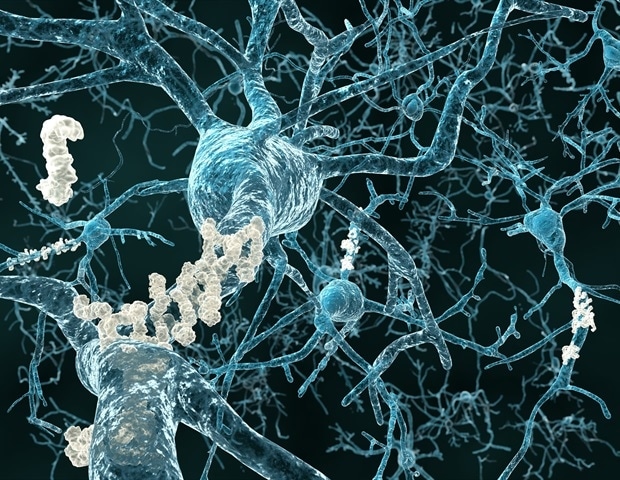
A recent mini-review published in *Brain Medicine* by Dr. Tao Ma and his team at **Wake Forest University School of Medicine** uncovers significant findings regarding the role of two isoforms of AMP-activated protein kinase (AMPK) in **Alzheimer’s disease**. This analysis highlights how these isoforms, despite sharing similar structures, have distinct and sometimes opposing effects on cognitive function and disease progression. The review suggests that this complexity may explain the varied outcomes observed in pharmacological treatments targeting AMPK, which is crucial for cellular energy regulation.
Understanding the enzyme AMPK is vital, as it serves as a central hub for energy management in cells. Neurons, particularly, have high energy demands, relying on AMPK to balance anabolic and catabolic processes. During the progression of Alzheimer’s disease, both cellular energy levels and protein synthesis are disrupted, leading to synaptic dysfunction and ultimately neurodegeneration.
Distinct Isoforms, Distinct Pathways
The review focuses on the two isoforms of AMPK, known as α1 and α2, which are encoded by different genes. Although they share about 90 percent homology, they influence cognitive function differently. Dr. Ma remarked, “For years, the field has treated AMPK as a single entity when investigating its role in Alzheimer’s disease. Our synthesis of recent studies reveals that the two AMPKα isoforms can have opposing effects on synaptic plasticity and cognitive function.”
The research proposes two separate pathways through which these isoforms impact Alzheimer’s pathology. In cases of familial Alzheimer’s or amyloid-β accumulation, overexpression of AMPKα1 leads to hyperphosphorylation of eukaryotic elongation factor 2, which inhibits essential protein synthesis. Conversely, in late-onset Alzheimer’s, reduced levels of AMPKα2 result in abnormal activation of eukaryotic initiation factor 2α.
Insights from Human and Animal Studies
Investigations of postmortem brain tissue from Alzheimer’s patients revealed a notable increase in AMPKα1 expression and a decrease in AMPKα2 when compared to age-matched controls. This specific alteration was not evident in other neurodegenerative diseases, indicating a unique disruption of AMPK signaling in Alzheimer’s. Additionally, transgenic mouse models demonstrated that suppressing AMPKα1 could restore learning and memory deficits, while reducing AMPKα2 in healthy mice led to cognitive impairment.
One of the more perplexing issues in Alzheimer’s research has been the mixed effects of the diabetes medication metformin, which activates AMPK. Some studies have shown that metformin may mitigate Alzheimer’s-related changes, while others indicate it could elevate the risk of cognitive decline. The authors propose that metformin’s effects may vary depending on which AMPK isoform is activated in different cell types.
Potential therapeutic avenues are emerging from this isoform-specific understanding. Dr. Ma emphasized, “The functional dichotomy between the two AMPKα isoforms opens new therapeutic possibilities that were previously hidden when we viewed AMPK as a monolithic target.”
Future Research Directions
The review highlights several promising research directions, including the development of small-molecule drugs that specifically target AMPK isoforms and the potential use of these isoforms as biomarkers in blood or cerebrospinal fluid. Investigating the roles of AMPK isoforms in the central nervous system compared to peripheral systems, along with their specific expression patterns in various brain regions, is expected to reveal further therapeutic opportunities.
Preliminary studies indicate significant decreases in AMPKα1 levels in plasma samples from Alzheimer’s patients compared to healthy individuals, suggesting that isoform-specific measurements could enhance diagnostic approaches.
The implications of these findings extend to broader drug development considerations. Different pharmacological agents interact with AMPK isoforms in distinct ways, with some preferentially activating either α1 or α2 complexes. Such selectivity, previously overlooked, may explain why various AMPK modulators yield different clinical outcomes.
The research was supported by grants from the **National Institutes of Health** and the **Cure Alzheimer’s Fund**, with contributions from co-authors including Helena R. Zimmermann and Hannah M. Jester of Wake Forest University School of Medicine, and Dr. Robert Vassar from **Northwestern University Feinberg School of Medicine**. This comprehensive review serves as a crucial synthesis of current knowledge regarding AMPK isoforms in Alzheimer’s disease, providing a framework for future investigations that could enhance understanding and treatment of this devastating condition.

Discover Tonight’s Waning Gibbous Moon on March 7

George Russell Claims Pole Position as Mercedes Sweeps Australian GP Qualifying

Andrew Mountbatten-Windsor Detained Amid Plans to Leave UK

Alton Weather Update: Overcast Today, Partly Cloudy Tomorrow

From Chocolates to Cannabis: A Historic Transformation in Great Barrington

Emotional Turmoil Unfolds in Emmerdale: Cain’s Cancer Revelation

Gatorade Launches Lower Sugar Line, Eliminates Artificial Colors

Peterborough Charity Trains Over 100 in Life-Saving Pediatric CPR

UK Sends More Military Support to Saudi Arabia Amid Regional Tensions

Andrew Pierce Confirms Departure from ITV’s Good Morning Britain

Fiona Phillips’ Husband Shares Heartfelt Update on Her Alzheimer’s Journey

Neurologist Warns Excessive Use of Supplements Can Harm Brain

Gogglebox Star Helena Worthington Announces Break After Loss

Brian Cox Addresses Claims of Alien Probe in 3I/ATLAS Discovery

NASA Investigates Unusual Comet 3I/ATLAS; New Findings Emerge

Tess Daly Honoured with MBE, Announces Departure from Strictly

EastEnders Welcomes Back Mark Fowler Jr. with New Actor

Bailey and Rebecca Announce Heartbreaking Split After MAFS Reunion
-
 Entertainment3 months ago
Andrew Pierce Confirms Departure from ITV’s Good Morning Britain
-
 Health6 months ago
Fiona Phillips’ Husband Shares Heartfelt Update on Her Alzheimer’s Journey
-
 Health6 months ago
Neurologist Warns Excessive Use of Supplements Can Harm Brain
-
 Entertainment3 months ago
Gogglebox Star Helena Worthington Announces Break After Loss
-
 Science5 months ago
Brian Cox Addresses Claims of Alien Probe in 3I/ATLAS Discovery
-
 Science5 months ago
NASA Investigates Unusual Comet 3I/ATLAS; New Findings Emerge
-
 Entertainment4 months ago
Tess Daly Honoured with MBE, Announces Departure from Strictly
-
 World2 months ago
EastEnders Welcomes Back Mark Fowler Jr. with New Actor
-
 World4 months ago
Bailey and Rebecca Announce Heartbreaking Split After MAFS Reunion
-

 Entertainment8 months ago
Kerry Katona Discusses Future Baby Plans and Brian McFadden’s Wedding
-

 Health1 month ago
Sue Radford Reveals Weight Loss Journey, Losing Two Stone
-

 Entertainment7 days ago
Coronation Street Reveals Audrey Roberts’ Absence Explained