
Politics
Hong Kong’s Press Freedom Erodes as Jimmy Lai Faces Life Sentence

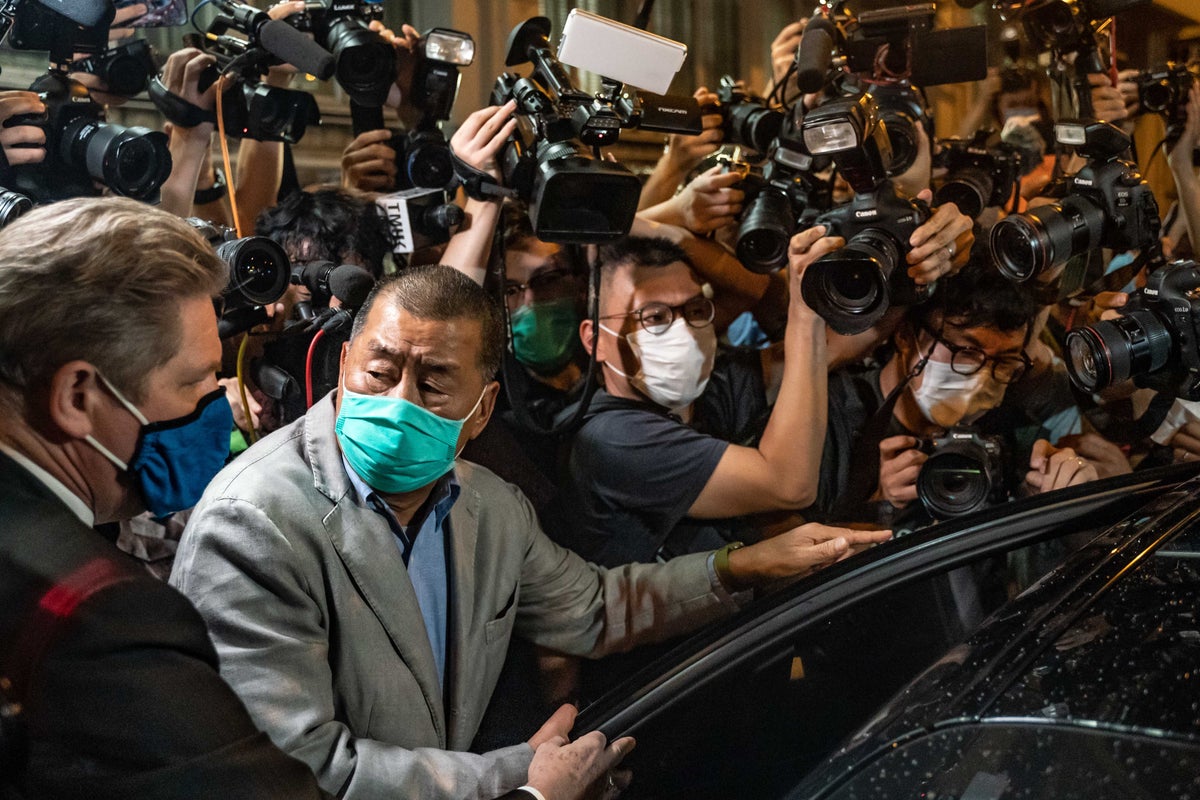
The recent conviction of Jimmy Lai, founder of the now-defunct Apple Daily, has underscored the alarming decline of press freedom in Hong Kong. Sentenced on sedition charges following a protracted 140-day trial, Lai’s fate symbolizes the broader suppression of journalism in a city once recognized for its vibrant media landscape. This ruling not only marks a significant escalation in government control but also formalizes a reality where self-censorship and fear dominate the newsroom atmosphere.
Since the police raid on the Apple Daily newsroom in June 2021, journalists in Hong Kong have navigated an increasingly hostile environment. The impact of Lai’s conviction has permeated daily editorial choices, leading to cautious reporting on sensitive topics. Editors now focus on identifying unobtrusive boundaries that protect both their staff and their sources. Tom Grundy, founding editor of Hong Kong Free Press, articulated this sentiment: “Nothing has changed because everything has already changed. The changes are baked in.”
The atmosphere of fear is so pervasive that only a handful of journalists were willing to speak openly about their experiences, with many opting for anonymity to avoid government retaliation. The gradual erosion of press freedom is evident. According to the Hong Kong Journalist Association, the local press has become increasingly reluctant to challenge political power or the police, which are now viewed as too sensitive to address.
The conviction of Lai, who could face a life sentence, has heightened political pressure on UK Prime Minister Sir Keir Starmer. Starmer, the first UK leader to visit China in eight years, is urged to discuss Lai’s case directly with Chinese President Xi Jinping. With Lai’s health deteriorating after over 1,850 days in detention, there is a growing call for intervention on behalf of the British citizen.
The current media landscape in Hong Kong appears deceptively calm, devoid of the dramatic police interventions seen previously. Yet, Selina Chang, chair of the Hong Kong Journalist Association, notes a more insidious form of coercion exists. Journalists face anonymous threats, accusations of anti-China activity, and even targeted tax audits that serve to stifle dissent and self-censoring practices.
The national security law, imposed in 2020, has acted as a catalyst for this climate of fear. The law criminalizes acts perceived as secession, subversion, or collusion with foreign forces, and its vague language intensifies uncertainty within the media sector. Critics argue that the guilty verdict against Lai was predetermined, and the judicial proceedings were more of a façade than a genuine exercise in justice.
The Apple Daily raid, which involved nearly 500 police officers, resulted in the arrests of Lai and senior staff, leading to the newspaper’s swift closure. This event has been described by many as a significant blow to freedom of expression in Hong Kong. Since then, at least 14 other media outlets have ceased operations, and numerous journalists have been arrested, as reported by Human Rights Watch.
The chilling effects extend beyond local media. A journalist working for a foreign outlet commented on the pressure now felt by international news organizations, stating that they too have become part of the government’s calculations. Following a tragic incident in Tai Po on December 3, 2022, national security officials summoned representatives from foreign media outlets to caution them against perceived anti-China activities.
The pervasive climate of fear has led to a shift in how journalists operate. Many now seek legal advice prior to publication, reflecting the unpredictable nature of the national security framework. This legal ambiguity has resulted in a nervousness previously unseen in Hong Kong’s media environment.
Reports indicate that government representatives have even approached advertising departments within media organizations, warning them against unfavorable coverage, which could lead to the withholding of advertising budgets. As one journalist noted, this situation illustrates the stark difference in values between Hong Kong and mainland China, with some asserting that conditions in Hong Kong have become even stricter than those on the mainland.
Officially, the Hong Kong government denies any decline in press freedom. State-aligned media outlets, including China Daily and Global Times, have defended the trial of Lai, insisting it is unrelated to journalism. Editorials have rejected claims of judicial bias and accused Western media of misrepresenting the situation.
While Apple Daily once boasted sales of up to one million copies daily, the narrative surrounding its closure has shifted dramatically. Lai has consistently maintained his innocence, asserting that the newspaper provided a voice for the people of Hong Kong.
Supporters of Lai, including friends and international figures, emphasize that his real offense lies in his moral stance and refusal to remain silent. Robert Sirico, a US-based Catholic priest and friend of Lai, expressed concern for Lai’s well-being, noting the heavy security presence during court appearances and the emotional toll it takes on those involved.
The broader implications of Lai’s case extend beyond his individual plight. As a journalist involved in the media landscape expressed, the crackdown on Apple Daily signifies a watershed moment for Hong Kong’s media industry. The repercussions have been severe, with numerous journalists losing their jobs and facing an uncertain future.
For those remaining in the field, Lai’s situation serves as a grim reminder of the limits of free speech in Hong Kong. As Grundy succinctly stated, “We are still here. For all the compromises we have to make, and for all the risks we have to face, we feel it’s better to be in than out.” This sentiment encapsulates the resilience of journalists striving to capture the realities of a changing city, even amidst overwhelming challenges.

Niksic Celebrates Cultural Legacy with Folklore Milestone

NLC Demands Urgent Wage Adjustments Amid Rising Living Costs

‘One Battle After Another’ Triumphs with Six Oscars at 98th Academy Awards

Rainy Monday in Alton Clears for Sunshine by Midweek

Residents Push for New Supermarket in Overcrowded Town

Jimmy Kimmel Critiques Trump at 98th Academy Awards Ceremony

Young People Face Job Market Challenges Due to Health Issues

Stars Shine at the 2026 Oscars: Adorable Couples Take Center Stage

Brooklyn Beckham Faces Backlash for Mother’s Day Message Snub

Andrew Pierce Confirms Departure from ITV’s Good Morning Britain

Coronation Street Reveals Audrey Roberts’ Absence Explained

Fiona Phillips’ Husband Shares Heartfelt Update on Her Alzheimer’s Journey

Neurologist Warns Excessive Use of Supplements Can Harm Brain

Gogglebox Star Helena Worthington Announces Break After Loss

Brian Cox Addresses Claims of Alien Probe in 3I/ATLAS Discovery

NASA Investigates Unusual Comet 3I/ATLAS; New Findings Emerge

EastEnders Welcomes Back Mark Fowler Jr. with New Actor

Tess Daly Honoured with MBE, Announces Departure from Strictly
-
 Entertainment5 months ago
Andrew Pierce Confirms Departure from ITV’s Good Morning Britain
-
 Entertainment2 months ago
Coronation Street Reveals Audrey Roberts’ Absence Explained
-
 Health8 months ago
Fiona Phillips’ Husband Shares Heartfelt Update on Her Alzheimer’s Journey
-
 Health8 months ago
Neurologist Warns Excessive Use of Supplements Can Harm Brain
-
 Entertainment5 months ago
Gogglebox Star Helena Worthington Announces Break After Loss
-
 Science7 months ago
Brian Cox Addresses Claims of Alien Probe in 3I/ATLAS Discovery
-
 Science7 months ago
NASA Investigates Unusual Comet 3I/ATLAS; New Findings Emerge
-
 World4 months ago
EastEnders Welcomes Back Mark Fowler Jr. with New Actor
-
 Entertainment6 months ago
Tess Daly Honoured with MBE, Announces Departure from Strictly
-
 Health3 months ago
Gyles Brandreth Shares Heartfelt Journey Following Grandson’s Cancer Diagnosis
-

 World6 months ago
EastEnders’ Nicola Mitchell Faces Life-Changing Pregnancy Twist
-

 Health8 months ago
TOWIE Couple Sophie Kasaei and Jordan Brook Pursue Fertility Treatment Abroad