
Politics
Liberal Democrats Aim for Victory in 2026 Amid Political Shifts

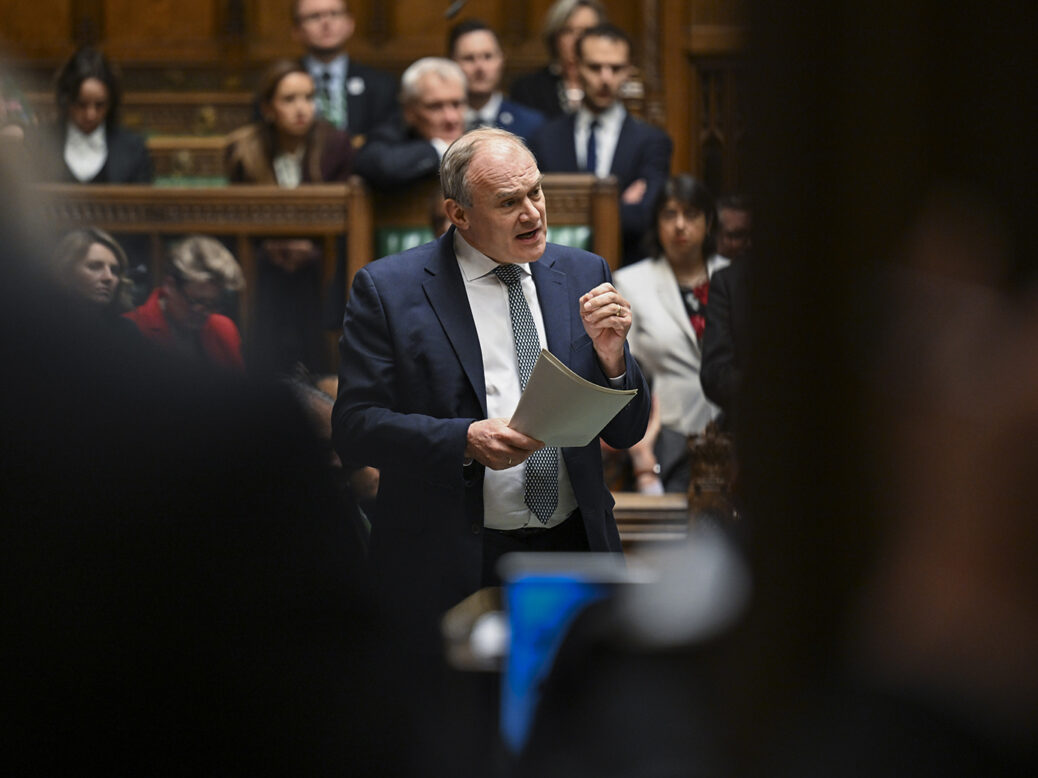
On December 9, 2025, the Liberal Democrats marked a significant milestone when a Ten Minute Rule bill, introduced by the party’s spokesperson for Brexit, passed in a tie-break vote. The bill urges the UK government to initiate discussions on joining a tailored customs union with the European Union. Following the vote, party leader Ed Davey hailed it as a “historic victory,” despite the limited media coverage it received. While the legislation is unlikely to progress further, the atmosphere within the party remains buoyant.
The Liberal Democrats, with 72 MPs, are currently the third-largest party in the UK Parliament. Despite their numerical strength, they struggle to gain the media attention necessary to convey their message effectively in an increasingly fragmented political landscape. Davey enjoys high favorability ratings among party leaders and often emerges victorious in head-to-head polls, yet Reform UK has captured the public’s attention as the de facto opposition party.
At the party’s conference in Bournemouth in September, Davey sought to redefine the Liberal Democrats’ position by framing them directly against Nigel Farage, the leader of Reform UK. His speech mentioned Farage thirty times, a strategy that garnered coverage but raised concerns about whether the party’s identity was overly defined by its opposition.
The emergence of the Green Party, led by popular figure Zach Polanski, further complicates the political landscape. Activists within the Liberal Democrats express a desire for a bolder communication style, which contrasts with Davey’s more measured approach. As the party prepares for the local elections in 2026, it faces a unique challenge: how to effectively convey its identity in a multi-party environment.
The Liberal Democrats have adopted a hyper-local strategy, one that party insiders argue is a strength rather than a weakness. This approach has been emphasized by the launch of a new regional media team aimed at promoting local successes. Despite frustrations over limited coverage from major broadcasters, the party believes that local issues resonate deeply with constituents.
Recent local election results demonstrate the efficacy of this strategy. In the May elections, while Reform UK gained prominence, the Liberal Democrats capitalized on the unpopularity of the traditional major parties. In by-elections throughout the year, they secured more council seats than both Labour and the Conservatives combined. Notably, in November, the party triumphed in Preston and gained seats from both the Greens and Conservatives in Surrey.
Local issues, such as a significant illegal rubbish pile in Kidlington and water supply disruptions in Tunbridge Wells, have allowed the Liberal Democrats to highlight their commitment to community concerns. Davey’s visits to these sites have helped reinforce the party’s message and differentiate it from the perceived inaction of local authorities controlled by Reform.
Within the broader context, the Liberal Democrats are positioning themselves as the primary alternative to Reform UK, especially in areas where dissatisfaction with the traditional parties is palpable. A party source asserted, “It’s between us and Reform,” emphasizing their role as a viable opposition in local councils across the UK.
Despite the successes, concerns linger about the party’s ability to articulate a strong national message. Critics point out that the focus on local issues may leave voters uncertain about what the Liberal Democrats truly stand for. The party’s historical strength in presenting a clear, top-down message has waned since its peak during the Brexit debates under Jo Swinson.
As the ramifications of Brexit continue to unfold, the Liberal Democrats have begun to leverage public sentiment regarding its costs. Recent research indicates that the economic impacts of Brexit are becoming increasingly evident, with estimates suggesting a loss of £90 billion annually in tax revenue. Polls show that support for Brexit has dwindled, with a majority now favoring closer ties with the EU.
The Liberal Democrats recognize this shift as an opportunity. Al Pinkerton, the party’s Europe spokesperson, highlighted the need for the government to address economic growth and the cost of living, suggesting that the current political climate may be ripe for a renewed discussion on EU relations.
As the 2026 elections approach, the Liberal Democrats are determined to capitalize on these dynamics. Party insiders express a sense of optimism, stating that their grassroots victories will translate into broader national success. With Farage representing a formidable opponent, the party aims to redefine itself as a key player in the political arena, focusing on the issues that matter most to voters.
In the coming months, the Liberal Democrats will strive to clarify their identity and reinforce their position as a credible alternative in a rapidly changing political environment.

Physicists Discover Method to Create Axions in Fusion Reactors

Art Exhibition “Colors of Recovery” Showcases Healing Through Creativity

Tess Daly Celebrates Guinness Record Before Leaving Strictly Come Dancing

Art Exhibition “Colors of Recovery” Showcases Patient Creativity

Understanding Employee Rights: A Comprehensive Overview

Christmas Chaos: 17 Hilarious Holiday Mishaps Shared Online

Study Reveals Why Women Face Higher IBS Risk, Offers New Treatment Insights

Municipality Plans Project to Address 800 Tons of Waste Tires

Labour Proposes Anti-Misogyny Courses for Boys, Sparks Outrage

Neurologist Warns Excessive Use of Supplements Can Harm Brain

Fiona Phillips’ Husband Shares Heartfelt Update on Her Alzheimer’s Journey

Andrew Pierce Confirms Departure from ITV’s Good Morning Britain

Brian Cox Addresses Claims of Alien Probe in 3I/ATLAS Discovery

NASA Investigates Unusual Comet 3I/ATLAS; New Findings Emerge

Scientists Examine 3I/ATLAS: Alien Artifact or Cosmic Oddity?

Lewis Cope Addresses Accusations of Dance Training Advantage

Kerry Katona Discusses Future Baby Plans and Brian McFadden’s Wedding

NASA Investigates Speedy Object 3I/ATLAS, Sparking Speculation
-
 Health3 months ago
Neurologist Warns Excessive Use of Supplements Can Harm Brain
-
 Health4 months ago
Fiona Phillips’ Husband Shares Heartfelt Update on Her Alzheimer’s Journey
-
 Entertainment1 week ago
Andrew Pierce Confirms Departure from ITV’s Good Morning Britain
-
 Science2 months ago
Brian Cox Addresses Claims of Alien Probe in 3I/ATLAS Discovery
-
 Science2 months ago
NASA Investigates Unusual Comet 3I/ATLAS; New Findings Emerge
-
 Science2 months ago
Scientists Examine 3I/ATLAS: Alien Artifact or Cosmic Oddity?
-
 Entertainment2 months ago
Lewis Cope Addresses Accusations of Dance Training Advantage
-
 Entertainment5 months ago
Kerry Katona Discusses Future Baby Plans and Brian McFadden’s Wedding
-
 Science2 months ago
NASA Investigates Speedy Object 3I/ATLAS, Sparking Speculation
-

 Entertainment5 months ago
Emmerdale Faces Tension as Dylan and April’s Lives Hang in the Balance
-

 World3 months ago
Cole Palmer’s Cryptic Message to Kobbie Mainoo Following Loan Talks
-

 World1 month ago
Bailey and Rebecca Announce Heartbreaking Split After MAFS Reunion