
Science
European-Japanese Mission to Mercury Set for 2026 Launch

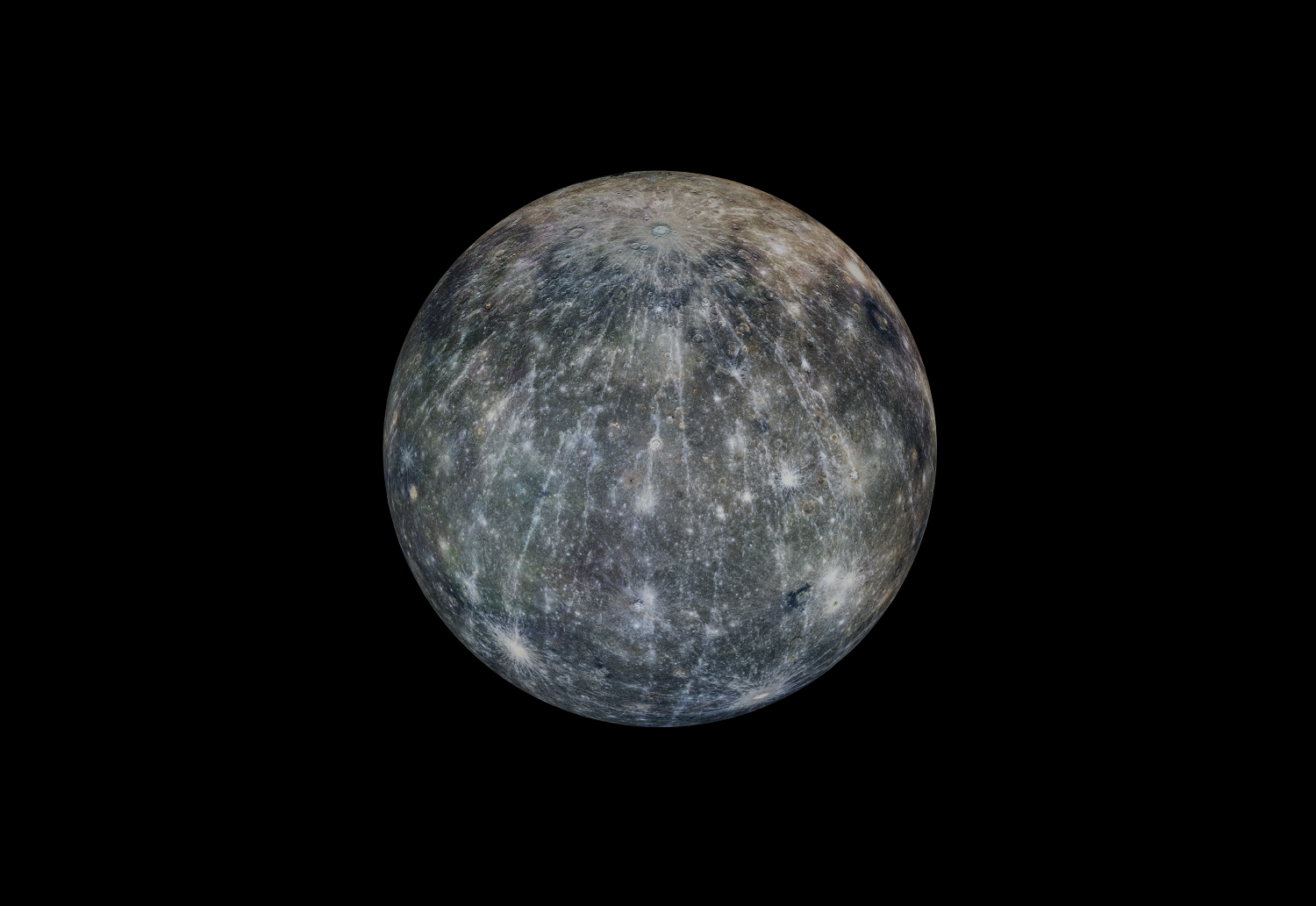
A groundbreaking European-Japanese space mission, known as BepiColombo, is scheduled to arrive at Mercury in 2026. This mission aims to explore the enigmatic planet, which has puzzled scientists for decades regarding its formation and existence. Mercury, characterized by its small size, metallic composition, and proximity to the Sun, challenges conventional models of how rocky planets develop.
The exploration is crucial as Mercury is not only the closest planet to the Sun but also the second-densest planet, primarily due to its substantial metallic core, which constitutes nearly 85% of its radius. This core-dominant structure raises significant questions about the planet’s formation history and its divergence from the typical characteristics of rocky planets like Earth and Venus.
Unraveling Planetary Mysteries
Mercury’s surface presents a harsh environment, with daytime temperatures soaring to 430 °C and plummeting to -180 °C at night. Its landscape is marked by craters and ancient lava flows, revealing a cold and desolate appearance. Yet, beneath this seemingly simple exterior lies a complex geological history that contradicts established planetary formation theories.
Historically, the first insights into Mercury’s structure came from the NASA Mariner 10 mission in the 1970s, which unveiled its dense core and peculiar internal structure. The subsequent Messenger mission, conducted from 2011 to 2015, further complicated the understanding of the planet by identifying volatile elements on its surface that should have been vaporized by intense solar radiation. This discovery suggests that Mercury may have undergone processes capable of retaining surface-bound volatiles, a puzzling notion given its proximity to the Sun.
Several theories have emerged to explain Mercury’s unique characteristics. One prominent idea posits that Mercury was once larger, potentially similar to Mars, and lost a significant portion of its surface due to a massive impact early in its history. This theory aligns with the planet’s high concentrations of certain elements, such as potassium and thorium, which are typically found in more distant planets. However, the mechanics of such a collision remain contentious, as the required impact velocities are not feasible given the dynamics of early Solar System objects.
The BepiColombo Mission’s Goals
The upcoming BepiColombo mission consists of two spacecraft: the Mercury Planetary Orbiter, provided by the European Space Agency (ESA), and the Mercury Magnetospheric Orbiter from the Japan Aerospace Exploration Agency (JAXA). The mission aims to conduct detailed mapping of Mercury’s surface composition, gravitational field, and magnetic properties.
One of the primary objectives is to analyze the planet’s interior structure, particularly its core composition, which holds vital clues to its formation. The mission is expected to provide insights into past geological activity by examining surface and subsurface materials. Moreover, its gravity measurements will help delineate the distribution and density of Mercury’s materials, refining existing models of its internal evolution.
The instruments onboard will also scrutinize the volatile elements and mineralogy on Mercury’s surface, aiming to resolve the mystery of how these materials persist in such a hostile environment. Prior flybys have already revealed a scarred surface with evidence of past geological activity, but the most significant revelations await the operational phase of the orbiters.
Despite the promise of BepiColombo, scientists are still pushing for more direct analysis of Mercury. A sample-return or lander mission has long been proposed, though these endeavors face substantial technical and financial challenges. Meanwhile, meteorites known as aubrites, believed to have originated from Mercury’s crust, could offer indirect insights into its composition.
The anticipated arrival of BepiColombo in 2026 represents a pivotal moment in planetary science, providing an opportunity to explore the complexities of Mercury and potentially reshape our understanding of how planets form and evolve. As researchers prepare for this mission, they hope to uncover answers that have eluded scientists for years, further illuminating the intricate tapestry of our Solar System.

Niksic Celebrates Cultural Legacy with Folklore Milestone

NLC Demands Urgent Wage Adjustments Amid Rising Living Costs

‘One Battle After Another’ Triumphs with Six Oscars at 98th Academy Awards

Rainy Monday in Alton Clears for Sunshine by Midweek

Residents Push for New Supermarket in Overcrowded Town

Jimmy Kimmel Critiques Trump at 98th Academy Awards Ceremony

Young People Face Job Market Challenges Due to Health Issues

Stars Shine at the 2026 Oscars: Adorable Couples Take Center Stage

Brooklyn Beckham Faces Backlash for Mother’s Day Message Snub

Andrew Pierce Confirms Departure from ITV’s Good Morning Britain

Coronation Street Reveals Audrey Roberts’ Absence Explained

Fiona Phillips’ Husband Shares Heartfelt Update on Her Alzheimer’s Journey

Gogglebox Star Helena Worthington Announces Break After Loss

Neurologist Warns Excessive Use of Supplements Can Harm Brain

Brian Cox Addresses Claims of Alien Probe in 3I/ATLAS Discovery

NASA Investigates Unusual Comet 3I/ATLAS; New Findings Emerge

EastEnders Welcomes Back Mark Fowler Jr. with New Actor

Tess Daly Honoured with MBE, Announces Departure from Strictly
-
 Entertainment6 months ago
Andrew Pierce Confirms Departure from ITV’s Good Morning Britain
-
 Entertainment3 months ago
Coronation Street Reveals Audrey Roberts’ Absence Explained
-
 Health9 months ago
Fiona Phillips’ Husband Shares Heartfelt Update on Her Alzheimer’s Journey
-
 Entertainment5 months ago
Gogglebox Star Helena Worthington Announces Break After Loss
-
 Health9 months ago
Neurologist Warns Excessive Use of Supplements Can Harm Brain
-
 Science7 months ago
Brian Cox Addresses Claims of Alien Probe in 3I/ATLAS Discovery
-
 Science7 months ago
NASA Investigates Unusual Comet 3I/ATLAS; New Findings Emerge
-
 World4 months ago
EastEnders Welcomes Back Mark Fowler Jr. with New Actor
-
 Entertainment6 months ago
Tess Daly Honoured with MBE, Announces Departure from Strictly
-

 Health4 months ago
Gyles Brandreth Shares Heartfelt Journey Following Grandson’s Cancer Diagnosis
-

 Entertainment9 months ago
Major Cast Changes at Coronation Street: Exits and Returns in 2025
-

 World7 months ago
EastEnders’ Nicola Mitchell Faces Life-Changing Pregnancy Twist