
Science
New Barocaloric Cooling Technique Promises Greener Refrigeration

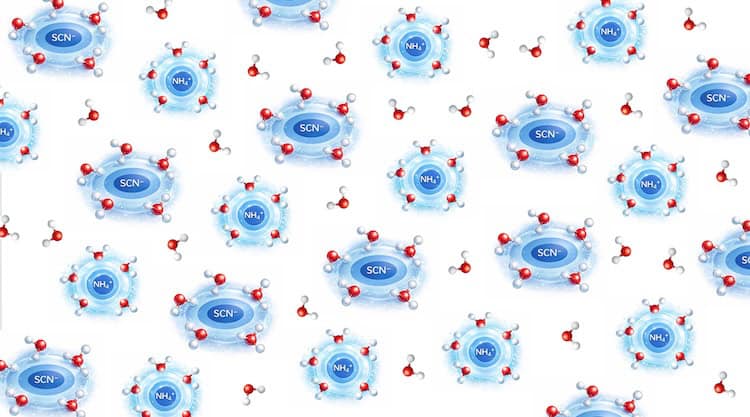
A groundbreaking cooling technique developed by researchers from the Institute of Metal Research at the Chinese Academy of Sciences offers a promising, environmentally friendly alternative to traditional refrigeration. This innovative method, based on dissolution barocaloric cooling, achieves a cooling capacity of 67 J/g and an efficiency of nearly 77%, enabling a temperature reduction of 27 K in just 20 seconds.
Traditional refrigeration methods largely rely on vapour-compression technology, a process that has been utilized since the 19th century. This approach involves a liquid refrigerant evaporating into a gas, absorbing heat from its environment, and subsequently being converted back into a liquid by a compressor. While effective, this system is energy-intensive and has reached near its maximum efficiency limits, as defined by the Carnot limit. Furthermore, the refrigerants used often have harmful environmental effects.
Revolutionizing Cooling with Barocaloric Techniques
In recent years, researchers have shifted attention toward caloric cooling, which manipulates entropy within materials through various means, including mechanical forces and applied pressure. Among these techniques, barocaloric cooling stands out as particularly promising. Yet, many existing barocaloric materials are solid, leading to slow heat transfer and limited cooling capacity.
The new system overcomes these limitations by utilizing a fundamental thermodynamic process known as endothermic dissolution. This process occurs when a salt is dissolved in a solvent; it requires energy, resulting in a temperature drop. A team led by metallurgist and materials scientist Bing Li discovered a way to reverse this cooling process by applying pressure. They specifically used the salt ammonium thiocyanate (NH4SCN) dissolved in water.
By applying pressure to the solution, the salt precipitates out, an exothermic reaction that aligns with Le Chatelier’s principle. Upon releasing the pressure, the salt re-dissolves almost instantaneously, resulting in a significant temperature drop of nearly 27 K at room temperature and up to 54 K at higher temperatures.
The choice of ammonium thiocyanate is strategic; it acts as a chaotropic agent, disrupting hydrogen bonding and enhancing solubility in water. Its sizable enthalpy of solution further contributes to the dramatic cooling effect. Notably, it demonstrates a high sensitivity to pressure levels in the range of hundreds of megapascals, making it compatible with standard hydraulic systems.
Applications and Future Prospects
According to Li, the technique detailed in the journal Nature could pave the way for similar non-phase transition cooling methods. The use of aqueous NH4SCN barocaloric cooling is particularly suited for high-temperature applications, such as thermal management in AI data centres. Other potential applications include air conditioning systems for vehicles and buildings.
Despite its promise, several challenges must be addressed before this technology can be commercialized. The corrosive nature of NH4SCN poses risks to refrigerator components, and the high pressures needed in the current system could lead to long-term damage. To tackle these issues, the research team plans to investigate other near-saturated solutions at the atomic level, focusing on their responses to pressure.
“Such fundamental studies are vital if we are to optimize the performance of these fluids as refrigerants,” Li stated.
This research represents a significant step toward more sustainable refrigeration technologies, potentially reshaping the landscape of cooling solutions for various industries. As interest in environmentally friendly technologies continues to grow, the barocaloric cooling technique could play a crucial role in meeting future energy efficiency demands.

Niksic Celebrates Cultural Legacy with Folklore Milestone

NLC Demands Urgent Wage Adjustments Amid Rising Living Costs

‘One Battle After Another’ Triumphs with Six Oscars at 98th Academy Awards

Rainy Monday in Alton Clears for Sunshine by Midweek

Residents Push for New Supermarket in Overcrowded Town

Jimmy Kimmel Critiques Trump at 98th Academy Awards Ceremony

Young People Face Job Market Challenges Due to Health Issues

Stars Shine at the 2026 Oscars: Adorable Couples Take Center Stage

Brooklyn Beckham Faces Backlash for Mother’s Day Message Snub

Andrew Pierce Confirms Departure from ITV’s Good Morning Britain

Coronation Street Reveals Audrey Roberts’ Absence Explained

Fiona Phillips’ Husband Shares Heartfelt Update on Her Alzheimer’s Journey

Neurologist Warns Excessive Use of Supplements Can Harm Brain

Gogglebox Star Helena Worthington Announces Break After Loss

Brian Cox Addresses Claims of Alien Probe in 3I/ATLAS Discovery

NASA Investigates Unusual Comet 3I/ATLAS; New Findings Emerge

EastEnders Welcomes Back Mark Fowler Jr. with New Actor

Tess Daly Honoured with MBE, Announces Departure from Strictly
-
 Entertainment5 months ago
Andrew Pierce Confirms Departure from ITV’s Good Morning Britain
-
 Entertainment2 months ago
Coronation Street Reveals Audrey Roberts’ Absence Explained
-
 Health8 months ago
Fiona Phillips’ Husband Shares Heartfelt Update on Her Alzheimer’s Journey
-
 Health8 months ago
Neurologist Warns Excessive Use of Supplements Can Harm Brain
-
 Entertainment5 months ago
Gogglebox Star Helena Worthington Announces Break After Loss
-
 Science7 months ago
Brian Cox Addresses Claims of Alien Probe in 3I/ATLAS Discovery
-
 Science7 months ago
NASA Investigates Unusual Comet 3I/ATLAS; New Findings Emerge
-
 World4 months ago
EastEnders Welcomes Back Mark Fowler Jr. with New Actor
-
 Entertainment6 months ago
Tess Daly Honoured with MBE, Announces Departure from Strictly
-

 Health3 months ago
Gyles Brandreth Shares Heartfelt Journey Following Grandson’s Cancer Diagnosis
-

 World6 months ago
EastEnders’ Nicola Mitchell Faces Life-Changing Pregnancy Twist
-

 Health8 months ago
TOWIE Couple Sophie Kasaei and Jordan Brook Pursue Fertility Treatment Abroad