
Sports
Idrissa Gueye’s Clash with Michael Keane Sparks Memories of On-Field Altercations

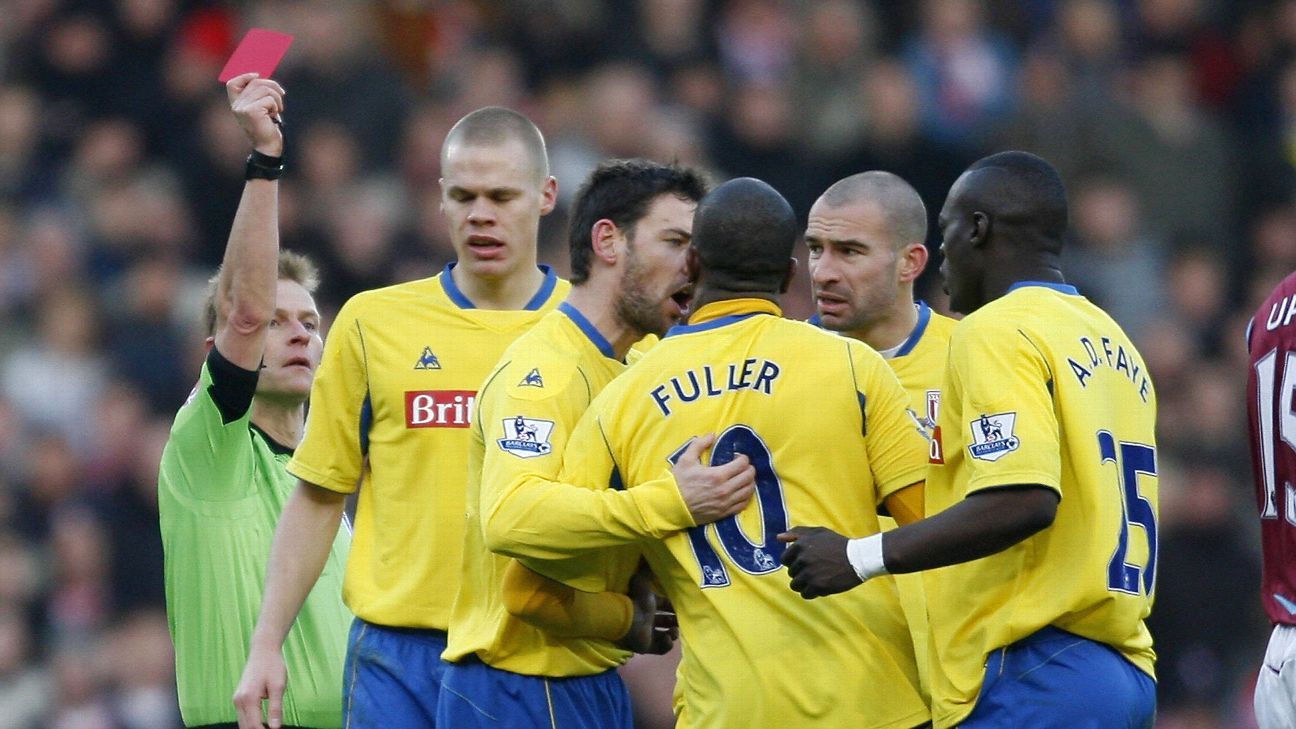
A recent incident between Idrissa Gueye and Michael Keane during a match has reignited discussions about infamous on-field clashes between teammates in football. The altercation unfolded during a game when Gueye raised his hand after being pushed away by Keane. This moment of tension highlights how competitive emotions can boil over in high-stakes environments.
The dynamics of team sports can often lead to conflicts, as seen in several notable incidents throughout football history. One such example occurred in December 2008, when Stoke City striker Ricardo Fuller was sent off for slapping his captain, Andy Griffin, during a 2-1 defeat against West Ham United. The incident erupted as the Potters prepared to kick off after a controversial equaliser from Carlton Cole. Fuller described Griffin as “very rude and disrespectful,” leading to a three-match ban and a team meeting called by Stoke manager Tony Pulis to address the matter.
Another infamous clash took place in April 2005, when Newcastle United teammates Lee Bowyer and Kieron Dyer were involved in a physical confrontation during a 3-0 home defeat against Aston Villa. In a heated moment, Dyer grabbed Bowyer by the throat, resulting in both players trading punches before being separated by defender Gareth Barry. The referee, Barry Knight, dismissed both players from the match, and they later faced media scrutiny under the watchful eye of manager Graeme Souness.
The tension between teammates can also lead to unexpected injuries. In November 1995, Graeme Le Saux and David Batty of Blackburn Rovers found themselves in a scuffle during a Champions League match against Spartak Moscow. After a collision while trying to reach a pass from Mike Newell, their disagreement escalated, resulting in Le Saux breaking his left hand and Batty sustaining a blow to the cheek from captain Tim Sherwood.
Conflicts can also arise from a lack of teamwork. Tottenham Hotspur goalkeeper Hugo Lloris and forward Son Heung-min experienced a heated exchange during a Premier League match against Everton in July 2020. As the half-time whistle blew, Lloris confronted Son for failing to track back, leading to a confrontation that required intervention from teammates Harry Kane and Eric Dier. Despite the heated moment, the two embraced after the match concluded.
Historical on-field clashes also include the January 1979 FA Cup tie between Charlton Athletic’s Derek Hales and Mike Flanagan, who exchanged blows after Flanagan made a disparaging remark about Hales’ failure to pass the ball. Both players received red cards for their actions.
In August 1994, Hearts players Craig Levein and Graeme Hogg became embroiled in a disagreement during a pre-season friendly match. Following a near-concession situation, punches were thrown, resulting in Hogg suffering a broken nose and both players being sent off. The Scottish Football Association later levied bans of ten and twelve matches against the two players.
These incidents reflect the competitive nature of football and how intense emotions can lead to regrettable moments on the pitch. As seen with Gueye and Keane, even the most well-coordinated teams can experience friction, underscoring the importance of teamwork and communication in high-pressure situations.

Breaking Free: A Woman’s Journey Through Industry Toxicity

Education Ministry Partners to Combat Gambling Risks for Students

Montenegro’s Civil Initiative Responds to Serbian Church Criticism

Global Report Reveals Alarming Decline in Human Rights Standards

De Zerbi: Greenwood’s Talent Could Lead to Ballon d’Or Glory

Andrei Kanchelskis Returns to Manchester United for Special Tribute

King Charles III to Share Personal Cancer Journey in Broadcast

Knežević Threatens Political Exit Over Botunjan Protests

DNP Threatens Withdrawal from Government Over Water Plant Protests

Neurologist Warns Excessive Use of Supplements Can Harm Brain

Fiona Phillips’ Husband Shares Heartfelt Update on Her Alzheimer’s Journey

Brian Cox Addresses Claims of Alien Probe in 3I/ATLAS Discovery

NASA Investigates Unusual Comet 3I/ATLAS; New Findings Emerge

Scientists Examine 3I/ATLAS: Alien Artifact or Cosmic Oddity?

Lewis Cope Addresses Accusations of Dance Training Advantage

Kerry Katona Discusses Future Baby Plans and Brian McFadden’s Wedding

NASA Investigates Speedy Object 3I/ATLAS, Sparking Speculation

Emmerdale Faces Tension as Dylan and April’s Lives Hang in the Balance
-
 Health3 months ago
Neurologist Warns Excessive Use of Supplements Can Harm Brain
-
 Health4 months ago
Fiona Phillips’ Husband Shares Heartfelt Update on Her Alzheimer’s Journey
-
 Science2 months ago
Brian Cox Addresses Claims of Alien Probe in 3I/ATLAS Discovery
-
 Science2 months ago
NASA Investigates Unusual Comet 3I/ATLAS; New Findings Emerge
-
 Science2 months ago
Scientists Examine 3I/ATLAS: Alien Artifact or Cosmic Oddity?
-
 Entertainment2 months ago
Lewis Cope Addresses Accusations of Dance Training Advantage
-
 Entertainment5 months ago
Kerry Katona Discusses Future Baby Plans and Brian McFadden’s Wedding
-
 Science2 months ago
NASA Investigates Speedy Object 3I/ATLAS, Sparking Speculation
-
 Entertainment5 months ago
Emmerdale Faces Tension as Dylan and April’s Lives Hang in the Balance
-

 World3 months ago
Cole Palmer’s Cryptic Message to Kobbie Mainoo Following Loan Talks
-

 World4 weeks ago
Bailey and Rebecca Announce Heartbreaking Split After MAFS Reunion
-
 Science2 months ago
NASA Scientists Explore Origins of 3I/ATLAS, a Fast-Moving Visitor