
Top Stories
NASA Rolls Out Artemis 2 Rocket for Potential February Launch

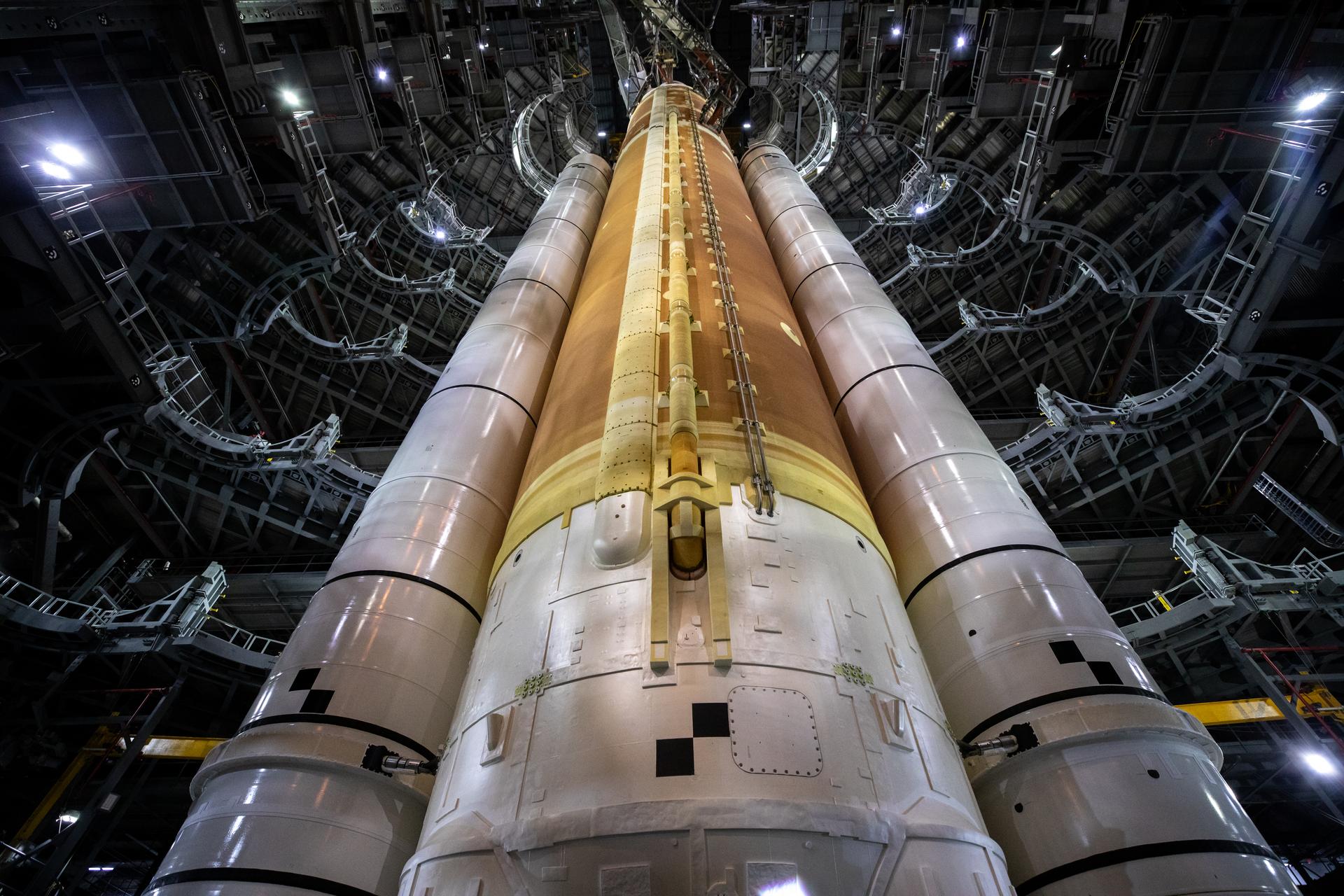
NASA has commenced the rollout of the Artemis 2 rocket to the launch pad at the Kennedy Space Centre in Florida, marking a pivotal milestone ahead of a potential launch as early as February 2024. This mission will see four astronauts embark on the first crewed journey to the Moon in over 50 years, aiming to build upon the legacy of the Apollo program.
On Saturday, the 98-metre (322-foot) Space Launch System (SLS) rocket began its journey from the Vehicle Assembly Building, traversing a distance of 4 kilometres. The move, which commenced early in the morning, concluded by nightfall. A crowd of thousands, including NASA employees and their families, gathered to witness the historic moment. Among those present were NASA Administrator Jared Isaacman and the four astronauts officially assigned to the Artemis 2 mission.
Reid Wiseman, the crew commander, expressed the significance of the occasion, stating, “What a great day to be here. It is awe-inspiring.” John Honeycutt, a NASA official, noted the unique nature of this mission, remarking, “This one feels a lot different, putting crew on the rocket and taking the crew around the moon.”
Mission Overview and Objectives
The Artemis 2 rocket, featuring an Orion crew capsule atop, weighs approximately 5 million kilograms. It was transported using a massive crawler-transporter, a vehicle that has been in service since the Apollo and shuttle eras but has been upgraded to accommodate the additional weight of the SLS rocket. This launch marks the second SLS rocket in the Artemis program; the first successfully sent an empty Orion capsule into orbit around the Moon in November 2022.
During the planned 10-day mission, astronauts will test critical life support systems, conduct medical experiments in deep space, and confirm that all spacecraft systems can sustain human life beyond low Earth orbit. The crew will also capture images of Earth and the Moon while travelling approximately 370,000 kilometres from home.
The Artemis 2 mission had previously faced delays due to issues identified during the initial test flight, including heat shield damage and other concerns with the capsule. Notably, the astronauts will not land on the Moon during this mission; that objective is reserved for the Artemis 3 mission, which is still years away.
NASA plans to conduct a fuelling test once the rocket is positioned on the launch pad, with this test potentially occurring in early February. Officials have outlined five launch opportunities within the first half of February before the schedule transitions to March. Isaacman informed reporters that there is no intention to communicate a specific launch date until the fuelling test is successfully completed.
Meet the Crew
The Artemis 2 crew includes seasoned astronauts: Christina Koch, Victor Glover, and Canadian astronaut Jeremy Hansen, alongside Wiseman. This mission will mark the first time humans have flown to the Moon since the Apollo 17 mission in 1972, which included astronauts Gene Cernan and Harrison Schmitt. Remarkably, only 12 individuals have ever walked on the Moon, all during NASA’s Apollo program between 1969 and 1972.
Wiseman reflected on the excitement surrounding the mission, stating, “They are so fired up that we are headed back to the Moon. They just want to see humans as far away from Earth as possible discovering the unknown.” As preparations continue, NASA remains focused on ensuring the success of this historic mission, which aims to pave the way for future lunar exploration.

Niksic Celebrates Cultural Legacy with Folklore Milestone

NLC Demands Urgent Wage Adjustments Amid Rising Living Costs

‘One Battle After Another’ Triumphs with Six Oscars at 98th Academy Awards

Rainy Monday in Alton Clears for Sunshine by Midweek

Residents Push for New Supermarket in Overcrowded Town

Jimmy Kimmel Critiques Trump at 98th Academy Awards Ceremony

Young People Face Job Market Challenges Due to Health Issues

Stars Shine at the 2026 Oscars: Adorable Couples Take Center Stage

Brooklyn Beckham Faces Backlash for Mother’s Day Message Snub

Andrew Pierce Confirms Departure from ITV’s Good Morning Britain

Fiona Phillips’ Husband Shares Heartfelt Update on Her Alzheimer’s Journey

Neurologist Warns Excessive Use of Supplements Can Harm Brain

Gogglebox Star Helena Worthington Announces Break After Loss

Brian Cox Addresses Claims of Alien Probe in 3I/ATLAS Discovery

NASA Investigates Unusual Comet 3I/ATLAS; New Findings Emerge

EastEnders Welcomes Back Mark Fowler Jr. with New Actor

Coronation Street Reveals Audrey Roberts’ Absence Explained

Tess Daly Honoured with MBE, Announces Departure from Strictly
-
 Entertainment4 months ago
Andrew Pierce Confirms Departure from ITV’s Good Morning Britain
-
 Health7 months ago
Fiona Phillips’ Husband Shares Heartfelt Update on Her Alzheimer’s Journey
-
 Health7 months ago
Neurologist Warns Excessive Use of Supplements Can Harm Brain
-
 Entertainment4 months ago
Gogglebox Star Helena Worthington Announces Break After Loss
-
 Science6 months ago
Brian Cox Addresses Claims of Alien Probe in 3I/ATLAS Discovery
-
 Science6 months ago
NASA Investigates Unusual Comet 3I/ATLAS; New Findings Emerge
-
 World3 months ago
EastEnders Welcomes Back Mark Fowler Jr. with New Actor
-
 Entertainment1 month ago
Coronation Street Reveals Audrey Roberts’ Absence Explained
-
 Entertainment5 months ago
Tess Daly Honoured with MBE, Announces Departure from Strictly
-

 Health7 months ago
TOWIE Couple Sophie Kasaei and Jordan Brook Pursue Fertility Treatment Abroad
-

 World5 months ago
Bailey and Rebecca Announce Heartbreaking Split After MAFS Reunion
-

 Entertainment9 months ago
Coleen Nolan Reflects on Family Tragedy and Reconciliation