
World
Greenland Prepares for Potential US Threat Amid Tensions

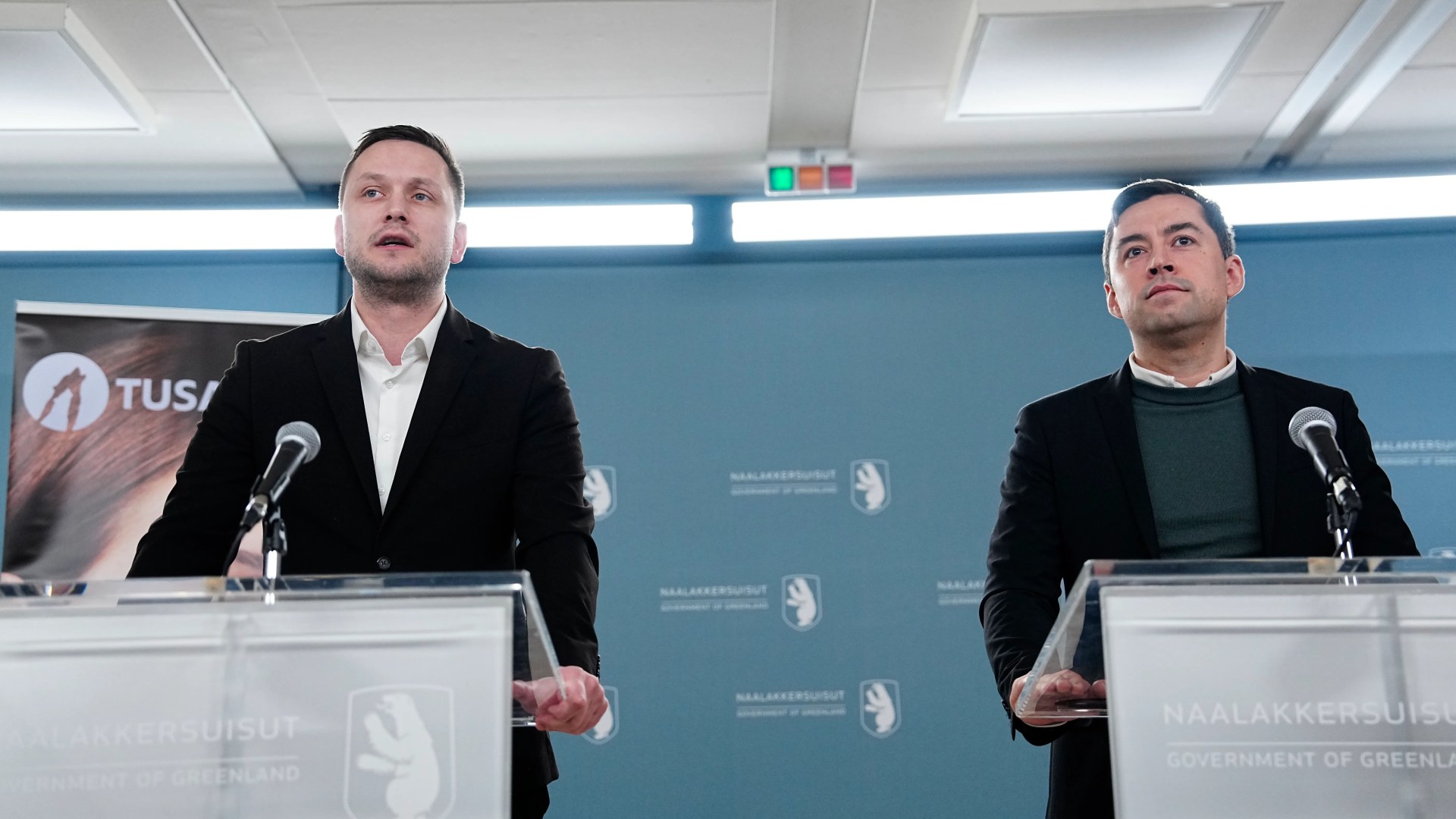
Greenland is taking precautionary measures as Prime Minister Jens-Frederik Nielsen informed citizens about the potential for an American military action, although he described such an event as “not likely.” At a press conference in Nuuk on March 12, 2024, alongside former prime minister Mute B. Egede, Nielsen announced that the government is reviewing its civil defense and emergency preparedness plans. Citizens are being advised to stockpile essential supplies, including food, for at least five days.
Nielsen emphasized the need for preparedness, stating, “We must be prepared for everything that may happen.” Greenland’s leaders reiterated that the island is part of NATO and cautioned that any escalation would have far-reaching consequences. The Prime Minister condemned Donald Trump’s recent threats made via social media, labeling them as “disrespectful.” He insisted that Greenland would respond to such issues through formal diplomatic channels.
The tension escalated following Trump’s assertions that the United States would take action regarding Greenland “whether they like it or not.” This rhetoric has raised alarms in several European capitals. In a move that could fracture alliances, Trump hinted at imposing tariffs on key European allies, including Denmark, which has historically supported Greenland’s autonomy. A proposed 10 percent import tax on goods from eight European nations could intensify diplomatic strains.
Denmark’s Prime Minister Mette Frederiksen expressed outrage over Trump’s comments, stating they constitute a direct threat to Danish sovereignty and Greenland’s right to self-determination. On March 12, she remained in Copenhagen to address parliament, cancelling her attendance at the World Economic Forum in Davos. Frederiksen stressed that neither Danes nor Greenlanders wish to be “the center of a conflict between the United States and Europe,” warning that a potential trade war would have detrimental effects on both economies.
Trump has justified his interest in Greenland as a national security issue, claiming the territory is vital for countering threats from China and Russia. In response to the escalating situation, Denmark has deployed approximately 100 soldiers to western Greenland, with Army Chief General Peter Boysen accompanying the troops. Analysts view this as a demonstration of Denmark’s commitment to addressing US security concerns, while Greenlandic leaders continue to assert that the island is not for sale.
A significant protest took place in the capital, where thousands chanted “Greenland is not for sale,” marking one of the largest demonstrations in the territory’s history. Nielsen stated that if a vote were held, Greenlanders would choose to remain part of the Danish realm.
European leaders have rallied in support of Denmark, with French President Emmanuel Macron warning of potential sanctions against individuals or institutions exerting undue pressure on the EU. The European Commission President, Ursula von der Leyen, emphasized that the transatlantic relationship is built on trust and that escalated tensions would benefit shared adversaries, asserting that the EU’s response would be “unflinching, united and proportional.”
As the situation unfolds, Trump is scheduled to speak at the World Economic Forum, where he claimed to have agreed to a meeting of the various parties. US Treasury Secretary Scott Bessent attempted to downplay the crisis, urging allies to “take a deep breath” and asserting that relations with Europe “have never been closer.”
Tensions have not only affected Greenland but have also spilled over into the UK-US relationship. The British government has defended its decision to transfer sovereignty of the Chagos Islands to Mauritius, a move that Trump criticized as “stupidity.” He reinforced his claims that the US must maintain control over Greenland.
As the diplomatic landscape shifts, US House Speaker Mike Johnson expressed hope for a resolution, stating that the US and the UK “have always been able to work through our differences calmly as friends.” As both sides navigate these turbulent waters, the implications of this conflict will likely resonate across international relations for years to come.

Niksic Celebrates Cultural Legacy with Folklore Milestone

NLC Demands Urgent Wage Adjustments Amid Rising Living Costs

‘One Battle After Another’ Triumphs with Six Oscars at 98th Academy Awards

Rainy Monday in Alton Clears for Sunshine by Midweek

Residents Push for New Supermarket in Overcrowded Town

Jimmy Kimmel Critiques Trump at 98th Academy Awards Ceremony

Young People Face Job Market Challenges Due to Health Issues

Stars Shine at the 2026 Oscars: Adorable Couples Take Center Stage

Brooklyn Beckham Faces Backlash for Mother’s Day Message Snub

Andrew Pierce Confirms Departure from ITV’s Good Morning Britain

Fiona Phillips’ Husband Shares Heartfelt Update on Her Alzheimer’s Journey

Neurologist Warns Excessive Use of Supplements Can Harm Brain

Gogglebox Star Helena Worthington Announces Break After Loss

Brian Cox Addresses Claims of Alien Probe in 3I/ATLAS Discovery

NASA Investigates Unusual Comet 3I/ATLAS; New Findings Emerge

EastEnders Welcomes Back Mark Fowler Jr. with New Actor

Coronation Street Reveals Audrey Roberts’ Absence Explained

Tess Daly Honoured with MBE, Announces Departure from Strictly
-
 Entertainment4 months ago
Andrew Pierce Confirms Departure from ITV’s Good Morning Britain
-
 Health8 months ago
Fiona Phillips’ Husband Shares Heartfelt Update on Her Alzheimer’s Journey
-
 Health7 months ago
Neurologist Warns Excessive Use of Supplements Can Harm Brain
-
 Entertainment4 months ago
Gogglebox Star Helena Worthington Announces Break After Loss
-
 Science6 months ago
Brian Cox Addresses Claims of Alien Probe in 3I/ATLAS Discovery
-
 Science6 months ago
NASA Investigates Unusual Comet 3I/ATLAS; New Findings Emerge
-
 World3 months ago
EastEnders Welcomes Back Mark Fowler Jr. with New Actor
-
 Entertainment2 months ago
Coronation Street Reveals Audrey Roberts’ Absence Explained
-
 Entertainment5 months ago
Tess Daly Honoured with MBE, Announces Departure from Strictly
-

 World5 months ago
EastEnders’ Nicola Mitchell Faces Life-Changing Pregnancy Twist
-

 Health8 months ago
TOWIE Couple Sophie Kasaei and Jordan Brook Pursue Fertility Treatment Abroad
-

 World5 months ago
Bailey and Rebecca Announce Heartbreaking Split After MAFS Reunion