
World
Survivors of Violence Against Women Share Their Stories Globally

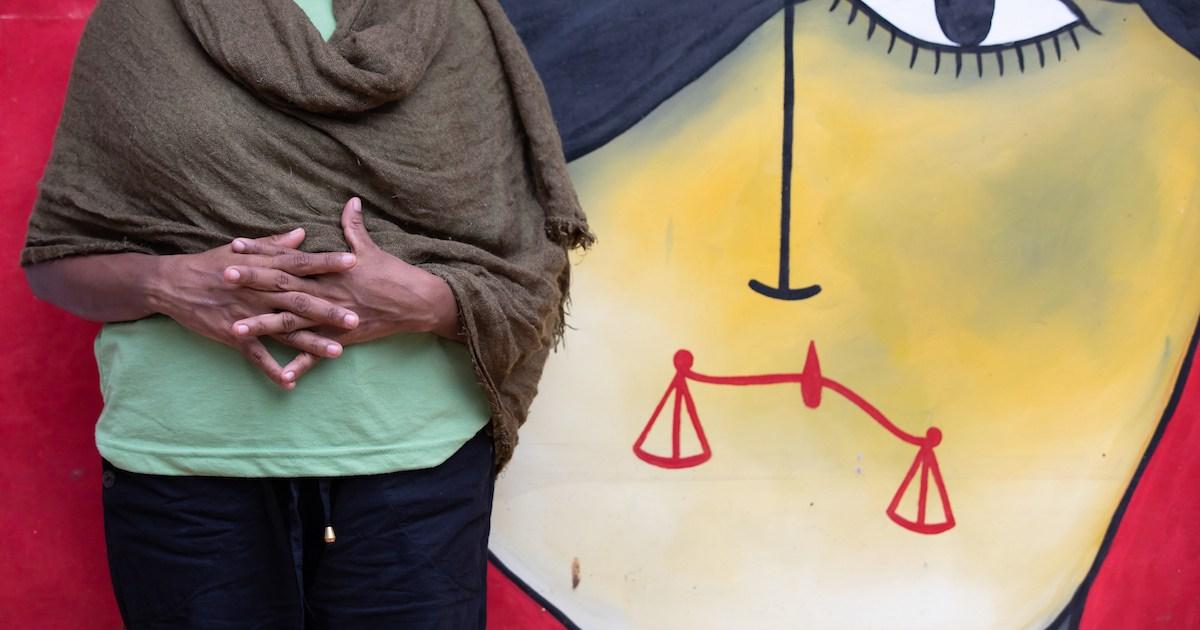
The issue of violence against women and girls (VAWG) continues to escalate, with survivors from around the world sharing harrowing accounts of their experiences. The World Health Organisation (WHO) has labeled VAWG as a “global problem of epidemic proportions,” drawing attention to the urgent need for action.
Delphine Uwamahoro, a 39-year-old Rwandan, reflects on her journey from a rural village to the capital, Kigali, where an anonymous donor from Germany sponsored her education. After completing her studies in radiology in Germany, Delphine returned home only to discover that many of her childhood friends had not been as fortunate. “Some had been forced to leave education after becoming pregnant following sexual abuse—some as young as 12,” she states. This stark contrast has motivated her to advocate for women’s rights and empowerment in her community.
According to a report by United Nations Women (UNW), nearly one in three women globally have faced physical or sexual violence in their lifetime. Mary Robinson, a prominent figure in VAWG advocacy and champion of the charity The Circle, emphasizes the gravity of the situation: “Violence against women is a global emergency. Across every continent, in every society, gender-based violence remains a tragic and persistent reality.”
Delphine’s efforts to combat this violence include founding Our Sisters’ Opportunity (OSO) in 2019. With her savings, she provided sewing machines for local women, enabling them to earn between £75 and £200 a month—an amount comparable to a doctor’s salary in her village. However, she quickly realized that financial independence did not equate to freedom, as many women were still subject to their husbands’ control over their earnings.
To address this, Delphine partnered with The Circle to create a space where women can discuss issues of power and autonomy. “We help women and girls understand power within, power around, power over,” she explains. This initiative has empowered many to recognize and resist oppressive situations.
The situation in Kenya mirrors the challenges faced in Rwanda. In 2022, Kenya’s Bureau of National Statistics reported that 45% of women aged 15 to 49 had experienced physical violence in their lifetime, predominantly from intimate partners. Alice Atieno, a survivor of kidnapping and sex trafficking by the terrorist group Al-Shabaab, shared her traumatic experience of being held captive for nine months. “Some women die there,” she recalls. “I’m one of those lucky ladies who managed to escape.”
Despite her survival, Alice faced stigma upon returning home. “I was shut out from my community due to cultural stigma around women and girls who have experienced violence.” In response, she co-founded Awer Empowerment to support survivors like herself, providing counselling and advocating for their reintegration into society.
Simona, a 15-year-old who was captured by Boko Haram in Nigeria and endured three years of abuse, also highlights the societal barriers facing survivors. After escaping with her two children, she faced rejection and isolation. “People would run away if we reached the water pump,” she recalls. Support from the Global Survivors Fund has helped her regain control over her life.
In Sri Lanka, Chamathi has endured both domestic and workplace violence. Living in a boarding house with her two sons, she struggled to break free from her abusive husband. “Because of fear, I did not report,” she states, highlighting the systemic barriers women face when seeking help. Despite these challenges, she sought assistance from the Sri Lanka Women’s Centre, which provided her with a safe space and resources to navigate her situation.
The global landscape remains bleak for women, particularly in nations where violence is rampant. Recent data from UN Women indicates that **64%** of women in Afghanistan feel unsafe going out alone, compared to only **2%** of men. Similarly, in Haiti, makeshift camps established after the 2010 earthquake continue to expose women to violence, with **20.6%** reporting knowing someone who resorted to sex work to survive.
In Colombia, where over half of the displaced population consists of women, **40%** are at heightened risk of experiencing violence from intimate partners. The Circle, founded by Annie Lennox in 2008, works to support women from marginalized communities facing economic, physical, and sexual violence.
As survivors like Delphine, Alice, Simona, and Chamathi share their stories, their resilience shines a light on the pervasive issue of VAWG. Addressing this crisis requires not only awareness but also sustained efforts to empower women and girls worldwide. The fight against gender-based violence is far from over; it demands global solidarity and action.

Niksic Celebrates Cultural Legacy with Folklore Milestone

NLC Demands Urgent Wage Adjustments Amid Rising Living Costs

‘One Battle After Another’ Triumphs with Six Oscars at 98th Academy Awards

Rainy Monday in Alton Clears for Sunshine by Midweek

Residents Push for New Supermarket in Overcrowded Town

Jimmy Kimmel Critiques Trump at 98th Academy Awards Ceremony

Young People Face Job Market Challenges Due to Health Issues

Stars Shine at the 2026 Oscars: Adorable Couples Take Center Stage

Brooklyn Beckham Faces Backlash for Mother’s Day Message Snub

Andrew Pierce Confirms Departure from ITV’s Good Morning Britain

Coronation Street Reveals Audrey Roberts’ Absence Explained

Fiona Phillips’ Husband Shares Heartfelt Update on Her Alzheimer’s Journey

Gogglebox Star Helena Worthington Announces Break After Loss

Neurologist Warns Excessive Use of Supplements Can Harm Brain

Brian Cox Addresses Claims of Alien Probe in 3I/ATLAS Discovery

NASA Investigates Unusual Comet 3I/ATLAS; New Findings Emerge

EastEnders Welcomes Back Mark Fowler Jr. with New Actor

Tess Daly Honoured with MBE, Announces Departure from Strictly
-
 Entertainment6 months ago
Andrew Pierce Confirms Departure from ITV’s Good Morning Britain
-
 Entertainment3 months ago
Coronation Street Reveals Audrey Roberts’ Absence Explained
-
 Health9 months ago
Fiona Phillips’ Husband Shares Heartfelt Update on Her Alzheimer’s Journey
-
 Entertainment5 months ago
Gogglebox Star Helena Worthington Announces Break After Loss
-
 Health9 months ago
Neurologist Warns Excessive Use of Supplements Can Harm Brain
-
 Science7 months ago
Brian Cox Addresses Claims of Alien Probe in 3I/ATLAS Discovery
-
 Science7 months ago
NASA Investigates Unusual Comet 3I/ATLAS; New Findings Emerge
-
 World4 months ago
EastEnders Welcomes Back Mark Fowler Jr. with New Actor
-
 Entertainment6 months ago
Tess Daly Honoured with MBE, Announces Departure from Strictly
-
 Health4 months ago
Gyles Brandreth Shares Heartfelt Journey Following Grandson’s Cancer Diagnosis
-

 Entertainment9 months ago
Major Cast Changes at Coronation Street: Exits and Returns in 2025
-
 World7 months ago
EastEnders’ Nicola Mitchell Faces Life-Changing Pregnancy Twist