
Science
Archaeological Study Reveals Medieval Hungarians Ate Horsemeat Longer

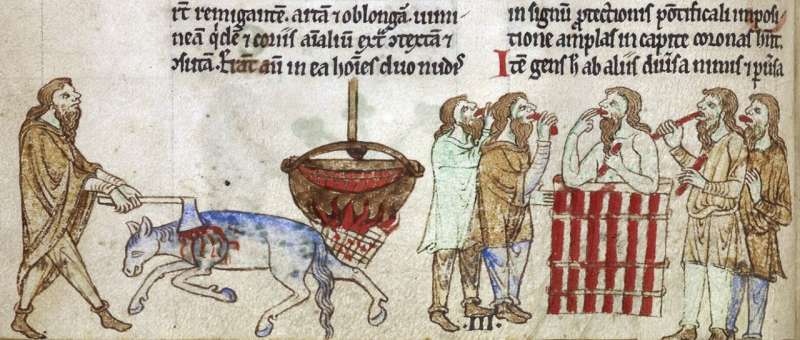
Research conducted on horse remains from medieval Hungary has revealed that the consumption of horsemeat persisted long after the nation’s conversion to Christianity. This finding challenges the widely held belief that the decline in horsemeat consumption, or hippophagy, was primarily driven by religious factors. The study, led by Professor László Bartosiewicz from Stockholm University and Dr. Erika Gál, a senior researcher at the HUN-REN Research Center for the Humanities, analyzed archaeological evidence from 198 settlements throughout Hungary.
The analysis, published in the journal Antiquity, demonstrated that horse remains were still prominently found in refuse pits, indicating continued consumption of horsemeat more than 200 years after Hungary’s conversion to Christianity around AD 1000. In some rural areas, horse bones constituted as much as one third of the identifiable livestock remains in food refuse.
Early historical narratives often linked the decline of horsemeat consumption to the adoption of Christianity, suggesting that it was viewed as impure or barbaric. Though the Church never explicitly banned the practice, medieval texts frequently associated it with the customs of non-Christian peoples. The authors of the study point out that the absence of an outright prohibition, akin to the bans on pork in Judaism and Islam, indicates a complex regional diversity in attitudes toward horsemeat consumption.
In examining the findings, Bartosiewicz and Gál noted that the decline in horsemeat consumption became more pronounced after the Mongol invasion in 1241-1242. The invasion resulted in significant population losses, with estimates suggesting that between 40% and 50% of Hungary’s population perished. As a result, the Hungarian king invited settlers from the west to repopulate the area. These newcomers, being more urbanized, did not incorporate horsemeat into their diets, instead favoring pork due to its compatibility with sedentary farming.
The research highlights that the reduction in horsemeat consumption was not a result of religious or spiritual beliefs but rather due to a combination of factors including demographic shifts brought about by the Mongol invasion and the increasing scarcity of horses, which became more valued as a symbol of wealth and military strength. The study indicates that horses were often considered valuable war booty, further limiting their availability for consumption.
The conclusions drawn by Bartosiewicz and Gál underscore the importance of archaeological findings in re-evaluating historical narratives that have often been shaped by cultural biases and misconceptions. As the authors state, “Tropes equating hippophagy with ‘barbarity’ have abounded since antiquity.” This perspective highlights the need for a nuanced understanding of historical dietary practices that reflects the complex interactions among different peoples and their environments.
In summary, the research provides compelling evidence that horsemeat consumption in medieval Hungary persisted well into the Christian era, driven by social and economic factors rather than religious condemnation. This challenges the prevailing narrative and illustrates the dynamic nature of dietary customs influenced by historical events and cultural exchanges.

Niksic Celebrates Cultural Legacy with Folklore Milestone

NLC Demands Urgent Wage Adjustments Amid Rising Living Costs

‘One Battle After Another’ Triumphs with Six Oscars at 98th Academy Awards

Rainy Monday in Alton Clears for Sunshine by Midweek

Residents Push for New Supermarket in Overcrowded Town

Jimmy Kimmel Critiques Trump at 98th Academy Awards Ceremony

Young People Face Job Market Challenges Due to Health Issues

Stars Shine at the 2026 Oscars: Adorable Couples Take Center Stage

Brooklyn Beckham Faces Backlash for Mother’s Day Message Snub

Andrew Pierce Confirms Departure from ITV’s Good Morning Britain

Coronation Street Reveals Audrey Roberts’ Absence Explained

Fiona Phillips’ Husband Shares Heartfelt Update on Her Alzheimer’s Journey

Gogglebox Star Helena Worthington Announces Break After Loss

Neurologist Warns Excessive Use of Supplements Can Harm Brain

Brian Cox Addresses Claims of Alien Probe in 3I/ATLAS Discovery

NASA Investigates Unusual Comet 3I/ATLAS; New Findings Emerge

EastEnders Welcomes Back Mark Fowler Jr. with New Actor

Tess Daly Honoured with MBE, Announces Departure from Strictly
-
 Entertainment6 months ago
Andrew Pierce Confirms Departure from ITV’s Good Morning Britain
-
 Entertainment4 months ago
Coronation Street Reveals Audrey Roberts’ Absence Explained
-
 Health10 months ago
Fiona Phillips’ Husband Shares Heartfelt Update on Her Alzheimer’s Journey
-
 Entertainment6 months ago
Gogglebox Star Helena Worthington Announces Break After Loss
-
 Health9 months ago
Neurologist Warns Excessive Use of Supplements Can Harm Brain
-
 Science8 months ago
Brian Cox Addresses Claims of Alien Probe in 3I/ATLAS Discovery
-
 Science8 months ago
NASA Investigates Unusual Comet 3I/ATLAS; New Findings Emerge
-
 World5 months ago
EastEnders Welcomes Back Mark Fowler Jr. with New Actor
-
 Entertainment7 months ago
Tess Daly Honoured with MBE, Announces Departure from Strictly
-

 Health4 months ago
Gyles Brandreth Shares Heartfelt Journey Following Grandson’s Cancer Diagnosis
-

 Entertainment10 months ago
Major Cast Changes at Coronation Street: Exits and Returns in 2025
-

 World7 months ago
EastEnders’ Nicola Mitchell Faces Life-Changing Pregnancy Twist