
World
Yamagata Declares Itself Japan’s Ramen Capital with Bold Claim

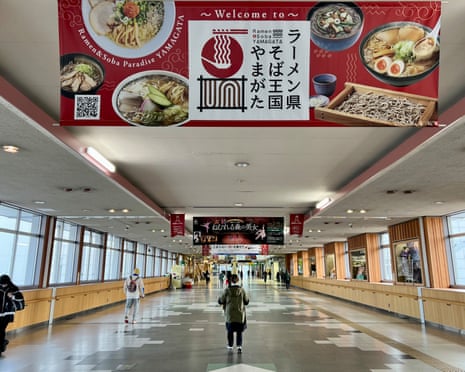
Yamagata, a city in northeastern Japan, has firmly positioned itself as the country’s ramen capital, reclaiming the title from Niigata after a concerted effort to elevate its ramen culture. The city boasts approximately 230 ramen establishments, each contributing to a vibrant culinary scene that emphasizes the importance of this beloved noodle dish in daily life.
At the heart of this ramen renaissance is Men Endo, a local favorite situated on a quiet suburban street. Here, bowls of steaming noodles are devoured with enthusiasm, creating an atmosphere filled with the sounds of slurping and satisfied conversations. On a chilly afternoon, the wait for a seat at Men Endo is minimal, a testament to its popularity. Diners can choose from a variety of options, including traditional shoyu ramen and the innovative maji soba, a dish that invites patrons to mix toppings and sauce with noodles.
According to Osamu Higuchi, assistant manager in Yamagata’s brand strategy section, the city’s commitment to ramen is evident in its social fabric. “People here don’t ask each other where they want to go for dinner, but which ramen restaurant to go to,” he stated. This dedication to dining at ramen shops rather than preparing meals at home has fortified Yamagata’s reputation, especially as households spent an average of ¥22,389 (approximately £106) on ramen last year, far surpassing Niigata’s ¥16,292.
The city’s title as ramen capital is not merely a matter of pride; it reflects a significant cultural shift. Yamagata’s ramen scene regained momentum after losing the title to Niigata in 2021, a surprise to many in the local community. Higuchi noted, “When Niigata won it was a huge shock… to be honest, it hurt our feelings.” With a government announcement for the next ranking set for early February 2025, local officials and ramen shop owners are optimistic about reclaiming their status.
Despite the enthusiasm surrounding ramen consumption, health implications have been noted. A study conducted by Yamagata University examined almost 7,000 individuals aged 40 and above, revealing that those who consume ramen three or more times each week face a mortality risk 1.52 times higher than those who eat it less frequently. The study, published in the Journal of Nutrition, Health and Aging, cautioned that while frequent ramen consumption presents potential health risks, it does not definitively indicate danger, as those at risk often have other lifestyle habits that contribute to their health status.
Higuchi himself admits to enjoying ramen excessively, having consumed 225 bowls in just one year. “I’ve been trying not to drink all of the soup, but it’s very moreish,” he acknowledged, emphasizing the effort chefs put into crafting their flavorful broths. On average, households in Yamagata are estimated to spend about ¥2,000 monthly on ramen, which many residents consider a reasonable expense for such a cherished part of their culture.
Ramen’s deep roots in Japanese society began after the Second World War, when returning soldiers brought back fond memories of the dish from their time in China. Ramen critic Rikiya Yamaji noted that Yamagata has excelled in adapting this originally foreign dish to align with Japanese tastes. “A distinctive feature of Japanese food culture is its ability to ‘localize’ dishes introduced from overseas,” he explained. Yamaji, who enjoys around 30 bowls of ramen each month, highlighted that ramen has evolved from a cheap meal to one that places greater emphasis on quality and creative ingredients.
The evolution of ramen in Yamagata can be traced back to the aftermath of the 1923 Great Kanto Earthquake, which devastated Tokyo. Many ramen chefs relocated to Yamagata, sharing their culinary expertise with local residents. As the city grew colder in winter, the demand for warm, comforting bowls of ramen surged, eventually leading to a cultural shift where ramen became a staple for both everyday meals and special occasions.
In response to losing its title, Yamagata’s ramen shop owners have come together to form an organization aimed at promoting the city as the “ramen kingdom.” Higuchi expressed confidence in the upcoming rankings, stating, “If our ramen businesses do well, then so does the local economy – farmers and soy sauce manufacturers, even the companies that produce hot towels for restaurants.”
As Yamagata continues to embrace its identity as a ramen capital, the local economy, culture, and community spirit remain intertwined. It is a city that not only celebrates its culinary heritage but also looks forward to a future where ramen continues to hold a cherished place in the hearts and bowls of its residents.

New Plans Unveiled for £1.5 Million Scottish Dark Sky Observatory

Jamie Redknapp Raises Doubts Over Semenyo’s Move to Manchester City

Mountain Lion Attack Claims Life of Medical Assistant in Colorado

16 Men Share Surprising Encounters That Challenge Sexual Norms

Chevron Negotiates License Expansion for Venezuelan Oil Exports

Popular Streamer Nadeshot Criticizes Cheating in ARC Raiders

Simple Lifestyle Changes That Could Add Years to Your Life

Billie Eilish Reveals Rare Look at Intricate Stomach Tattoo

Protesters Ignite Outrage in Minneapolis Following Fatal Shooting

Andrew Pierce Confirms Departure from ITV’s Good Morning Britain

Neurologist Warns Excessive Use of Supplements Can Harm Brain

Fiona Phillips’ Husband Shares Heartfelt Update on Her Alzheimer’s Journey

Brian Cox Addresses Claims of Alien Probe in 3I/ATLAS Discovery

Gogglebox Star Helena Worthington Announces Break After Loss

NASA Investigates Unusual Comet 3I/ATLAS; New Findings Emerge

Tess Daly Honoured with MBE, Announces Departure from Strictly

Scientists Examine 3I/ATLAS: Alien Artifact or Cosmic Oddity?

Lewis Cope Addresses Accusations of Dance Training Advantage
-
 Entertainment4 weeks ago
Andrew Pierce Confirms Departure from ITV’s Good Morning Britain
-
 Health4 months ago
Neurologist Warns Excessive Use of Supplements Can Harm Brain
-
 Health4 months ago
Fiona Phillips’ Husband Shares Heartfelt Update on Her Alzheimer’s Journey
-
 Science3 months ago
Brian Cox Addresses Claims of Alien Probe in 3I/ATLAS Discovery
-
 Entertainment3 weeks ago
Gogglebox Star Helena Worthington Announces Break After Loss
-
 Science3 months ago
NASA Investigates Unusual Comet 3I/ATLAS; New Findings Emerge
-
 Entertainment2 months ago
Tess Daly Honoured with MBE, Announces Departure from Strictly
-
 Science3 months ago
Scientists Examine 3I/ATLAS: Alien Artifact or Cosmic Oddity?
-
 Entertainment3 months ago
Lewis Cope Addresses Accusations of Dance Training Advantage
-

 World2 months ago
Bailey and Rebecca Announce Heartbreaking Split After MAFS Reunion
-

 Entertainment6 months ago
Kerry Katona Discusses Future Baby Plans and Brian McFadden’s Wedding
-

 Entertainment1 month ago
EastEnders Unveils Jasmine’s Identity as Cindy’s Life Hangs in the Balance