
Health
Researchers Identify Gene Controlling Cell Size, Unveiling New Insights

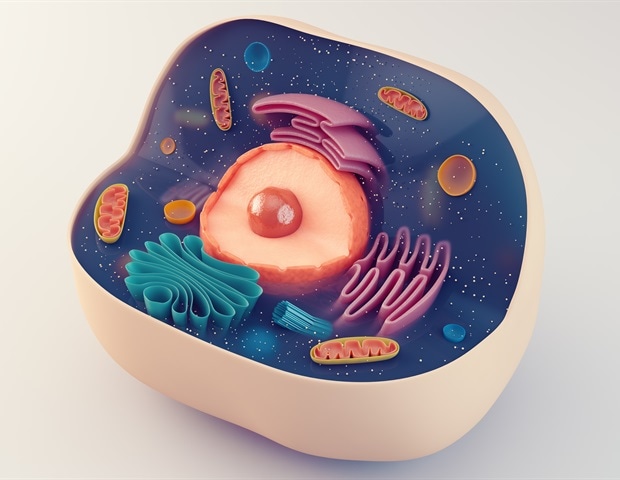
A recent study has uncovered significant insights into the genetic regulation of cell size, a crucial factor linked to various diseases. Researchers at The Hospital for Sick Children (SickKids) identified a gene known as CISTR-ACT that plays a direct role in controlling cell growth. This discovery, published in Nature Communications on March 15, 2025, highlights the importance of the non-coding genome, which has often been underestimated in its functional role.
Traditionally, scientists have struggled to understand what regulates cell size. Cells that deviate from their normal dimensions can lead to numerous health issues, including cancer and anemia. The research team, led by Dr. Philipp Maass, Senior Scientist in the Genetics & Genome Biology program at SickKids, utilized an interdisciplinary approach incorporating CRISPR/Cas9 and computational biology to explore the mechanisms of CISTR-ACT.
CISTR-ACT is categorized as a long non-coding RNA (lncRNA), distinct from genes that produce proteins. This particular RNA is part of the larger non-coding genome, which comprises approximately 98 percent of human DNA. As Dr. Maass explains, “Our study shows that long non-coding RNAs and the non-coding regions of the genome can drive important biological processes, including cell size regulation.”
The researchers discovered that CISTR-ACT not only influences cell size but also plays a significant role in gene regulation. It directs a protein known as FOSL2 to bind to other genes, impacting vital processes in brain and bone marrow development. By manipulating the levels of CISTR-ACT in preclinical models, the team observed notable effects: reduced CISTR-ACT led to larger red blood cells and altered brain structures, mirroring changes seen in human cells.
Dr. Katerina Kiriakopulos, the lead author of the study and a former PhD student in Dr. Maass’s lab, indicated the implications of their findings. “CISTR-ACT and FOSL2 control cell size much like a magnet,” she noted. “When the ‘magnet’ is removed, the cells grow, and when you put the magnet in, cells shrink. The surprising part was that we could do this across various cell types and species, showing there is a conserved function in human cells as well as our preclinical models.”
The research highlights the necessity for further exploration into how CISTR-ACT guides FOSL2 and whether other non-coding RNAs may have similar influences in different cell types and diseases. Understanding its dual function at both the DNA and RNA levels opens new avenues for potential therapeutic applications. This could lead to precision therapies for conditions where cell size plays a critical role.
Collaboration among various SickKids teams, including experts in brain research and imaging, facilitated this groundbreaking study. The ongoing efforts in Dr. Maass’s lab focus on uncovering functional regions of the non-coding genome that may affect development and disease mechanisms, such as blood pressure regulation and hypertension.
The implications of this research extend beyond academic interest, potentially influencing clinical practices in treating diseases related to cell size. As Dr. Maass concludes, the findings provide a platform for future studies aimed at translating this knowledge into effective treatments.
For further details, the full study is available in Nature Communications, under the title “LncRNA CISTR-ACT regulates cell size in human and mouse by guiding FOSL2,” DOI: 10.1038/s41467-025-67591-x.

Interstellar Comet 3I/ATLAS Approaches Earth, Captivating Scientists

Clinical Centre Suspends Patient Visits Amid Flu Season Concerns

Flood Alerts Issued for Gloucestershire as Heavy Rain Approaches

Montenegro’s Clinical Center Suspends Patient Visits Amid Health Concerns

Domestic Tourism in Scotland Sees Growth, Sparking Optimism

Holiday Dream Turns to Nightmare After Assault by Hotel Staff

Atom Computing Advances Neutral-Atom Quantum Computing Techniques

Spalding Police Arrest Man for Alleged Class A Drug Offense

Police Launch Search for Missing Woman Who Disappeared at Night

Neurologist Warns Excessive Use of Supplements Can Harm Brain

Fiona Phillips’ Husband Shares Heartfelt Update on Her Alzheimer’s Journey

Andrew Pierce Confirms Departure from ITV’s Good Morning Britain

Brian Cox Addresses Claims of Alien Probe in 3I/ATLAS Discovery

NASA Investigates Unusual Comet 3I/ATLAS; New Findings Emerge

Scientists Examine 3I/ATLAS: Alien Artifact or Cosmic Oddity?

Lewis Cope Addresses Accusations of Dance Training Advantage

Kerry Katona Discusses Future Baby Plans and Brian McFadden’s Wedding

NASA Investigates Speedy Object 3I/ATLAS, Sparking Speculation
-
 Health3 months ago
Neurologist Warns Excessive Use of Supplements Can Harm Brain
-
 Health4 months ago
Fiona Phillips’ Husband Shares Heartfelt Update on Her Alzheimer’s Journey
-
 Entertainment7 days ago
Andrew Pierce Confirms Departure from ITV’s Good Morning Britain
-
 Science2 months ago
Brian Cox Addresses Claims of Alien Probe in 3I/ATLAS Discovery
-
 Science2 months ago
NASA Investigates Unusual Comet 3I/ATLAS; New Findings Emerge
-
 Science2 months ago
Scientists Examine 3I/ATLAS: Alien Artifact or Cosmic Oddity?
-
 Entertainment2 months ago
Lewis Cope Addresses Accusations of Dance Training Advantage
-
 Entertainment5 months ago
Kerry Katona Discusses Future Baby Plans and Brian McFadden’s Wedding
-
 Science2 months ago
NASA Investigates Speedy Object 3I/ATLAS, Sparking Speculation
-

 Entertainment5 months ago
Emmerdale Faces Tension as Dylan and April’s Lives Hang in the Balance
-

 World3 months ago
Cole Palmer’s Cryptic Message to Kobbie Mainoo Following Loan Talks
-

 World1 month ago
Bailey and Rebecca Announce Heartbreaking Split After MAFS Reunion