
World
Nuclear Treaty Ends: What It Means for Global Security

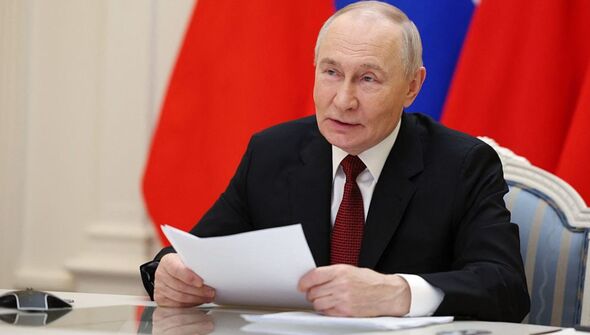
The Strategic Arms Reduction Treaty between the United States and Russia, known as New START, has officially concluded. This treaty aimed to limit the number of nuclear warheads each nation could possess to 1,550. Its termination raises concerns about a renewed nuclear arms race at a time when global stability is already precarious.
While New START has been under strain for several years, particularly after Russia suspended its participation following the invasion of Ukraine, both countries were believed to have adhered to its terms. The end of this agreement now removes essential constraints on nuclear arsenals, leading to heightened fears of nuclear confrontation.
Experts express mixed feelings about the implications of this development. On one hand, the absence of limits on nuclear weapons is inherently troubling. On the other, both Washington and Moscow have significant reasons to avoid a serious nuclear conflict, recognizing that such an encounter would yield no victors. Thus, while the immediate threat of nuclear Armageddon may not be imminent, the situation remains volatile.
Compounding these concerns is the proliferation of nuclear weapons across the globe. Currently, nine nations are confirmed to possess nuclear capabilities, including Russia, the United States, France, the United Kingdom, China, India, Pakistan, and North Korea. Israel is also widely believed to have a nuclear arsenal, although it maintains a policy of strategic ambiguity regarding its capabilities.
A critical point of contention is Iran, which has long sought to develop its nuclear capabilities. The United States, along with Israel, views this ambition as an existential threat, prompting ongoing tensions. The potential for military action against Iranian nuclear facilities underscores the seriousness of this issue.
Additionally, nuclear weapons are stationed in various countries as part of collective defense strategies. For instance, the United States has nuclear gravity bombs stored in Germany, Belgium, Italy, Turkey, and the Netherlands. Recently, the United Kingdom modified its order for F-35 aircraft to include 12 nuclear-capable models as part of its NATO commitments.
The discussion surrounding nuclear capabilities is further complicated by the potential for undisclosed nuclear ambitions. Concerns persist that militant or terrorist groups could acquire nuclear devices, though no verifiable evidence currently supports this fear.
A recent report from the British think tank Policy Exchange highlights the evolving landscape of nuclear strategy. The paper, titled “Intellectual Rearmament in the Third Nuclear Age,” emphasizes the need for NATO members, including the United Kingdom, to reassess the role of nuclear weapons in collective defense. One suggestion is that the UK might benefit from adding a fifth nuclear-capable submarine to its fleet, enhancing its deterrent capabilities.
Despite these discussions, the practicalities of commissioning another nuclear submarine in the current economic climate remain uncertain.
As the world navigates the aftermath of New START, the question of whether this signals a trend towards global conflict remains open. While the immediate threat of a nuclear war may not seem likely, the rhetoric surrounding nuclear capabilities, particularly from President Vladimir Putin regarding the situation in Ukraine, serves as a reminder of the potential for nuclear coercion.
In conclusion, while the termination of the New START treaty raises valid concerns about nuclear proliferation and global security, complacency is not an option. As noted by Lt Col Stuart Crawford, a political and defense commentator, ongoing vigilance is essential in this complex and evolving landscape.

Niksic Celebrates Cultural Legacy with Folklore Milestone

NLC Demands Urgent Wage Adjustments Amid Rising Living Costs

‘One Battle After Another’ Triumphs with Six Oscars at 98th Academy Awards

Rainy Monday in Alton Clears for Sunshine by Midweek

Residents Push for New Supermarket in Overcrowded Town

Jimmy Kimmel Critiques Trump at 98th Academy Awards Ceremony

Young People Face Job Market Challenges Due to Health Issues

Stars Shine at the 2026 Oscars: Adorable Couples Take Center Stage

Brooklyn Beckham Faces Backlash for Mother’s Day Message Snub

Andrew Pierce Confirms Departure from ITV’s Good Morning Britain

Fiona Phillips’ Husband Shares Heartfelt Update on Her Alzheimer’s Journey

Neurologist Warns Excessive Use of Supplements Can Harm Brain

Gogglebox Star Helena Worthington Announces Break After Loss

Brian Cox Addresses Claims of Alien Probe in 3I/ATLAS Discovery

NASA Investigates Unusual Comet 3I/ATLAS; New Findings Emerge

EastEnders Welcomes Back Mark Fowler Jr. with New Actor

Coronation Street Reveals Audrey Roberts’ Absence Explained

Tess Daly Honoured with MBE, Announces Departure from Strictly
-
 Entertainment4 months ago
Andrew Pierce Confirms Departure from ITV’s Good Morning Britain
-
 Health8 months ago
Fiona Phillips’ Husband Shares Heartfelt Update on Her Alzheimer’s Journey
-
 Health7 months ago
Neurologist Warns Excessive Use of Supplements Can Harm Brain
-
 Entertainment4 months ago
Gogglebox Star Helena Worthington Announces Break After Loss
-
 Science6 months ago
Brian Cox Addresses Claims of Alien Probe in 3I/ATLAS Discovery
-
 Science6 months ago
NASA Investigates Unusual Comet 3I/ATLAS; New Findings Emerge
-
 World3 months ago
EastEnders Welcomes Back Mark Fowler Jr. with New Actor
-
 Entertainment2 months ago
Coronation Street Reveals Audrey Roberts’ Absence Explained
-
 Entertainment5 months ago
Tess Daly Honoured with MBE, Announces Departure from Strictly
-

 World5 months ago
EastEnders’ Nicola Mitchell Faces Life-Changing Pregnancy Twist
-

 Health8 months ago
TOWIE Couple Sophie Kasaei and Jordan Brook Pursue Fertility Treatment Abroad
-

 World5 months ago
Bailey and Rebecca Announce Heartbreaking Split After MAFS Reunion